The passenger rail line will connect Raleigh and Richmond as part of the growing Southeast Corridor.


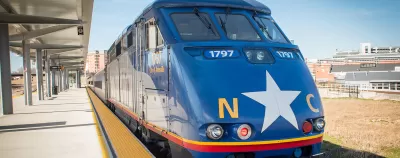
Federal and state officials celebrated the groundbreaking of a new high-speed rail line that will connect Raleigh, North Carolina and Richmond, Virginia, according to an article by Flynn Nicholls in Newsweek.
“Currently, the passenger rail route from Richmond to Raleigh is 190 miles and takes 3 hours and 45 minutes. The project aims to refurbish and extend an existing freight-only line between the two cities to create a more direct route, with the eventual intention of running a 110-mile-per-hour passenger service.”
As Nicholls explains, “The Raleigh to Wake Forest section received $1.1 billion of federal funding in December 2023. The project includes new and upgraded tracks for the 18-mile section, 11 grade separations, and the closure of multiple at-grade crossings.”
The project is part of the federally designated Southeast Corridor, which serves Florida, Georgia, North Carolina, South Carolina, Tennessee, Virginia, and Washington, D.C.
Read the full story: Construction Begins on New High-Speed Rail Line

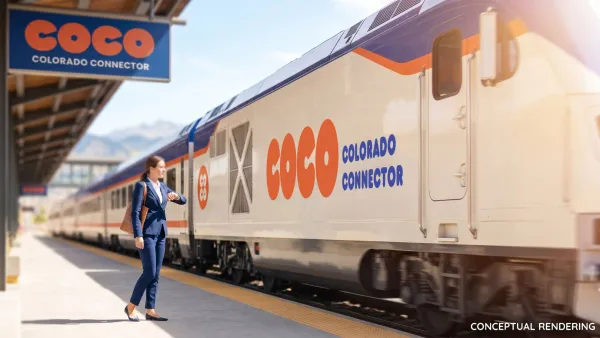
Colorado unveils fox mascot, branding for 'CoCo' high-speed rail
The new Denver-to-Fort Collins train is expected to begin service in 2029.
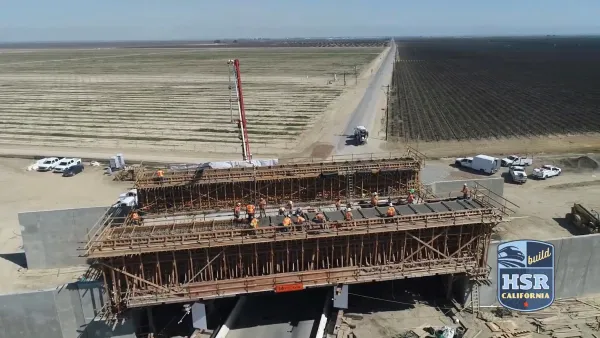
California High-Speed Rail Slashes $1.7B From 2026 Budget
The CHSRA plans to complete the Central Valley segment of the line and begin revenue service as soon as possible.
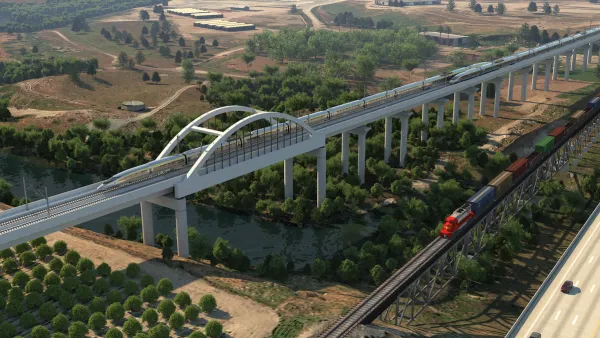
California Commits $1B Annually for 20 Years to High-Speed Rail
New legislation extends the state’s cap-and-trade program to 2045 and formalized a yearly allocation to the California high-speed rail project.

Planetizen Federal Action Tracker
A weekly monitor of how Trump’s orders and actions are impacting planners and planning in America.

The state-sanctioned urbicide of Austin
People don’t kill cities. Freeways do.

US to reduce Colorado River water deliveries to Mexico
A new Colorado Treaty amendment reduces Mexico’s Colorado River water allocation by 250,000 acre feet.

Nation's most wind-powered state turns to coal as data centers increase energy demand
For the first time in decades, Iowa has increased its generation of coal power.

NYC cools commuters with city's first rain garden above a bus stop
New York City officials say the plants in the rain garden can absorb 16 gallons of rainwater during heavy storms.

Brightline West’s future may rely on $6 billion federal loan
The company has until Nov. 2 to make a $400 million equity investment into its proposed high-speed rail line.

FREE Course: Walkable City 1: Why Walkability?
After describing his path towards focusing on walkability as the essence of good planning, Jeff Speck marches through his five principal reasons for making more walkable places.
Reinventing Malls: Planning Alchemy—Turning Gray Fields Into Gold
The course focuses on the opportunities and imperatives that shape reinvention of mall sites.

Greater Baltimore Committee
Eagle County Government
Harvard University Graduate School of Design
The Architects Foundation
University of Cincinnati Online
The Pocatello Development Authority
The Urban Renewal Agency of the City of Pocatello
Journal of the American Planning Association