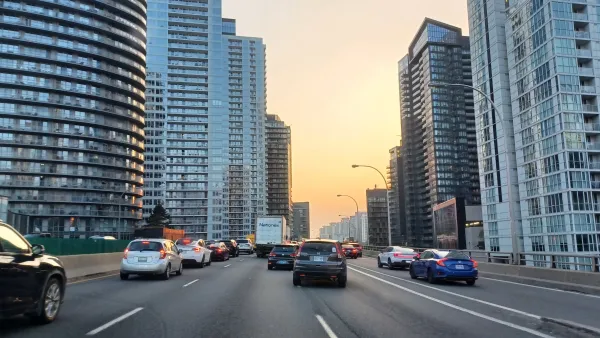
Density, weather, and access to public transportation systems play a key role in how many miles are driven in the country’s 50 largest metro areas.



A recent analysis from Replica looked at 2023 data from the 50 largest metro areas in the United States and ranked them by 3 key metrics, including vehicle miles traveled per capita, walking mode share, and daily travel minutes for capita.
The highest levels of daily driving — which also correspond with some of the lowest numbers of trips taken via walking, according to the same analysis — occurred in Southern cities with lower density that lack robust public transportation systems and where summer weather is often too hot and humid for comfortable outdoor travel. The study also found that metro areas with greater population density largely had lower daily travel times compared to lower-density metro areas.
10 Metro Areas with Highest VMT Per Capita
- Raleigh, NC: 38.1 miles per weekday
- Birmingham-Hoover, AL: 36.1 miles per weekday
- Jacksonville, FL: 36 miles per weekday
- Nashville, TN: 35.5 miles per weekday
- Charlotte, NC: 35.5 miles per weekday
- Richmond, VA: 35.5 miles per weekday
- Memphis, TN: 35.2 miles per weekday
- Atlanta, GA: 33.6 miles per weekday
- St. Louis, MO: 32.7 miles per weekday
- Oklahoma City, OK: 32.5 miles per weekday
10 Metro Areas with Lowest VMT Per Capita
- New York City, NY-NJ-PA: 14.4 miles per weekday
- Philadelphia, PA: 21.1 miles per weekday
- San Francisco-Oakland, CA: 21.7 miles per weekday
- Chicago, IL: 21.8 miles per weekday
- Boston, MA: 22.8 miles per weekday
- Seattle, WA: 22.9 miles per weekday
- Portland, OR: 23.3 miles per weekday
- Las Vegas, NV: 23.6 miles per weekday
- Miami, FL: 23.7 miles per weekday
- Los Angeles, CA: 24.2 miles per weekday
FULL STORY: 2023 MSA Rankings

New research shows vehicle miles travelled better measure of environmental impact than congestion
"We replaced something that was counterproductive with something that makes a lot more sense."

Study: Metro Systems Cut Driving Significantly More Than Other Forms of Transit
European cities with subway systems have a much lower share of car trips than cities with tram- or bus-based transit systems.

Can State Lawmakers Make the Case for Road Charges?
More state legislatures are considering fees based on vehicle miles traveled as a replacement for declining gas tax revenues.

Planetizen Federal Action Tracker
A weekly monitor of how Trump’s orders and actions are impacting planners and planning in America.

The state-sanctioned urbicide of Austin
People don’t kill cities. Freeways do.

US to reduce Colorado River water deliveries to Mexico
A new Colorado Treaty amendment reduces Mexico’s Colorado River water allocation by 250,000 acre feet.

5 New England states march closer to 800 megawatt wind energy project
Securing federal approval for the project may be complicated under the Trump administration, which has historically been hostile towards domestic wind power.

Baltimore to break ground on $50 million Transit Priority Project
The project will bring faster bus trips, safer streets and better bike connections to Baltimore.

Airbnb launches $250 million 'last-dollar financing' housing accelerator, makes first investment in Austin
The company will put $6.4 million towards affordable housing development in Texas’ capital.

FREE Course: Walkable City 1: Why Walkability?
After describing his path towards focusing on walkability as the essence of good planning, Jeff Speck marches through his five principal reasons for making more walkable places.
Reinventing Malls: Planning Alchemy—Turning Gray Fields Into Gold
The course focuses on the opportunities and imperatives that shape reinvention of mall sites.

Eagle County Government
Harvard University Graduate School of Design
Nashville Planning Department
The Architects Foundation
University of Cincinnati Online
The Pocatello Development Authority
The Urban Renewal Agency of the City of Pocatello
Journal of the American Planning Association