Two plaintiffs in Greenfield, Massachusetts, have accused city officials of violating the Takings Clause after the city foreclosed on their properties to recoup unpaid property taxes and then kept all the equity.



A federal judge has denied a motion by the city of Greenfield, Massachusetts, to dismiss a lawsuit accusing the city of taking the excess value of two homeowners’ foreclosed properties over a tax debt. According to an article in the Greenfield Reporter, the plaintiffs alleged Greenfield officials violated their rights under the Takings Clause of the Fifth and Eighth Amendments by foreclosing on three properties to recover approximately $7,339 in combined unpaid taxes and pocketing the approximately $289,000 in combined excess value collected at resale.
The city’s attorney filed the motion to dismiss, claiming the city simply followed the state statutory scheme for tax takings, but “the judge wrote that a significant factor in the case centers around whether the plaintiffs had access to a legal procedure with which they could claim the excess funds under state law,” and he also called the hundreds of thousands of dollars in excess value a “giant windfall” for the city, reports staff writer Anthony Cammalleri.
Cammalleri writes that the judge’s ruling came just days after the Massachusetts Senate passed an amendment to the state’s annual spending plan that would prohibit municipalities and private companies from taking entire equity of a home in the event of a tax lien foreclosure, aiming to bring the state’s home equity laws in line with the last year’s Tyler v. Hennepin County, Minn. Supreme Court ruling that declared this type of practice (which critics call “home equity theft”) unconstitutional.
Read the full story: Judge denies Greenfield’s bid to dismiss home equity case

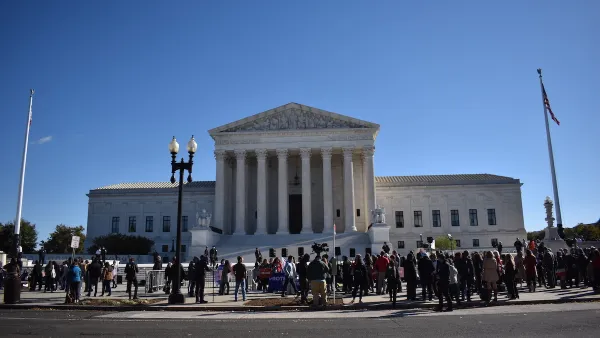
Will Supreme Court Case Lead to Lower Impact Fees — or Just More Studies?
Everybody seems to think that the recent case from California could lead to dramatically lower fees — and lower housing costs. But that's not what the court decided.
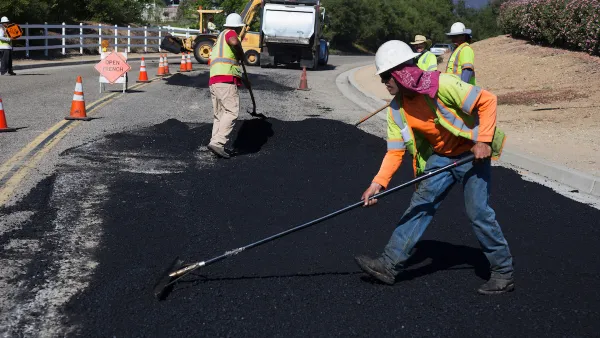
U.S. Supreme Court: California's Impact Fees May Violate Takings Clause
A California property owner took El Dorado County to state court after paying a traffic impact fee he felt was exorbitant. He lost in trial court, appellate court, and the California Supreme Court denied review. Then the U.S. Supreme Court acted.

Court Rules Against Nashville Sidewalk Ordinance
The city can no longer require developers to pay for or build sidewalks.

Planetizen Federal Action Tracker
A weekly monitor of how Trump’s orders and actions are impacting planners and planning in America.

The state-sanctioned urbicide of Austin
People don’t kill cities. Freeways do.

US to reduce Colorado River water deliveries to Mexico
A new Colorado Treaty amendment reduces Mexico’s Colorado River water allocation by 250,000 acre feet.

Nation's most wind-powered state turns to coal as data centers increase energy demand
For the first time in decades, Iowa has increased its generation of coal power.

NYC cools commuters with city's first rain garden above a bus stop
New York City officials say the plants in the rain garden can absorb 16 gallons of rainwater during heavy storms.

Brightline West’s future may rely on $6 billion federal loan
The company has until Nov. 2 to make a $400 million equity investment into its proposed high-speed rail line.

FREE Course: Walkable City 1: Why Walkability?
After describing his path towards focusing on walkability as the essence of good planning, Jeff Speck marches through his five principal reasons for making more walkable places.
Reinventing Malls: Planning Alchemy—Turning Gray Fields Into Gold
The course focuses on the opportunities and imperatives that shape reinvention of mall sites.

Greater Baltimore Committee
Eagle County Government
Harvard University Graduate School of Design
The Architects Foundation
University of Cincinnati Online
The Pocatello Development Authority
The Urban Renewal Agency of the City of Pocatello
Journal of the American Planning Association