For shared mobility to succeed, systems must tap into the connectivity and funding potential offered by closer collaboration with public transit.


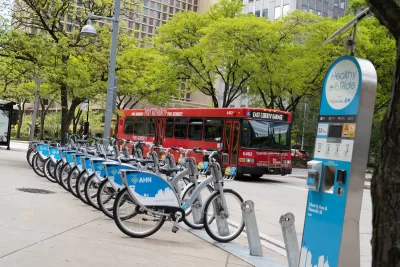
Leaders in the shared bike and scooter industry are renewing a call to better integrate micromobility with public transit to connect to public funding and create more comprehensive transit networks.
Writing in GovTech, Skip Descant describes the experiences shared by micromobility operators from around the country in a North American Bikeshare and Scootershare Association (NABSA) webinar.
In Eugene, Oregon, the nonprofit-operated bike share system relies on fare revenue for 25 percent of its income, while the rest comes from a combination of local, state, and federal sources. “In the San Francisco Bay Area, the Metropolitan Transportation Commission (MTC) invested some $20 million from its transportation electrification initiative — which generally funds the acquisition of e-buses or other forms of electrifying transportation — toward the Bay Wheels bike-share program.” E-bikes are becoming a popular addition to shared mobility fleets, making them more inclusive and accessible for more riders.
FULL STORY: To Fund Micromobility, Connect It to Public Transit


DC Bike Share Growing Fast, But Regional Gaps Remain
The wildly popular system ‘frays at its geographic edges,’ making its use less effective outside the central District.
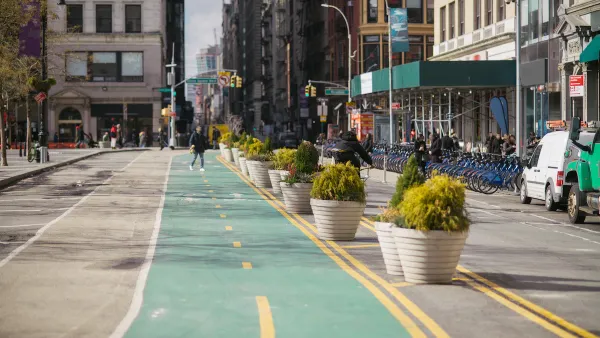
Leading Micromobility Trends for 2024: From Urban Streets to Regional Implementation
The proliferation of micromobility as a viable transportation mode offers the opportunity for cities to reimagine how they allocate public space.
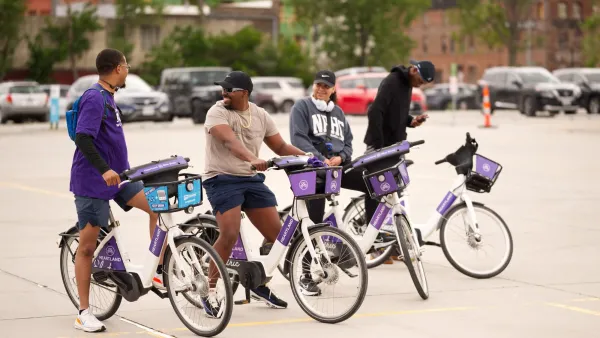
Omaha's 400 shared e-bikes are now free to all residents
Before eliminating fares for locals, the Heartland system only recovered 10%-15% of its operating costs through fare revenue.

Planetizen Federal Action Tracker
A weekly monitor of how Trump’s orders and actions are impacting planners and planning in America.

The state-sanctioned urbicide of Austin
People don’t kill cities. Freeways do.

US to reduce Colorado River water deliveries to Mexico
A new Colorado Treaty amendment reduces Mexico’s Colorado River water allocation by 250,000 acre feet.

Amtrak not solely to blame for New Jersey commuter rail's unreliability, report finds
A new study from the Garden State initiative found that NJ Transit’s budget grew 20% across a 4 year period, but reliability declined significantly over the same period.

EPA erases limits on planet-warming pollution from power plants
Under Monday’s plan, power plants would still have some limits on how much mercury, arsenic and other contaminants they can emit.

Phoenix announces new on-demand transit service, more frequent RAPID buses
Both new services will launch in October, and are part of Phoenix's Project Effective Access Solutions for Easing Congestion.

FREE Course: Walkable City 1: Why Walkability?
After describing his path towards focusing on walkability as the essence of good planning, Jeff Speck marches through his five principal reasons for making more walkable places.
Reinventing Malls: Planning Alchemy—Turning Gray Fields Into Gold
The course focuses on the opportunities and imperatives that shape reinvention of mall sites.

Eagle County Government
Harvard University Graduate School of Design
Nashville Planning Department
The Architects Foundation
University of Cincinnati Online
The Pocatello Development Authority
The Urban Renewal Agency of the City of Pocatello
Journal of the American Planning Association