Like other rural communities, Grants Pass is eager to access federal funding aimed at sustainability initiatives, but faces challenges when it comes to meeting grant requirements.



The small town of Grants Pass, Oregon is embarking on an ambitious sustainability plan “that, if implemented, would transition publicly owned buildings and vehicles to renewable energy, diversifying their power sources in case of natural disaster.”
Writing in The Daily Yonder, Claire Carlson outlines the plan, which faces financial challenges and other hurdles to achieving its goals. But adapting to climate change is an urgent need in the region: “In Roseburg, Oregon, about 70 miles north of Grants Pass, a 6.3°F increase would mean the city’s yearly average of 36 days of below-freezing temperatures would decrease to few or none, according to the analysis. Grants Pass would suffer a similar fate, drastically changing the climate it’s so famous for.”
The sustainability plan takes aim at building resilience in the remote region that could easily become isolated or cut off in an emergency situation.
Carlson points out that small, rural communities like Grants Pass often get passed over for funding opportunities due to their small staffs and lack of dedicated grant writers, as well as the inability to meet matching requirements. “This is despite the approximately $87 billion of Inflation Reduction Act money classified as rural-relevant, rural-stipulated, or rural-exclusive funding, according to an analysis from the Brookings Institute.”
Read the full story: With Limited Resources, One Small Town Plans for Climate Change
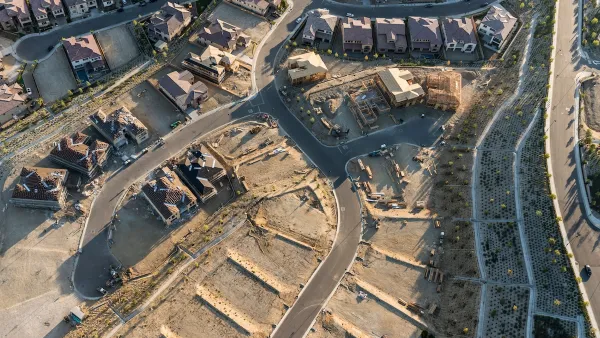
Report Outlines Strategies for Resilient Wildfire Recovery in LA
Project Recovery offers a roadmap for rebuilding more sustainable and climate-resilient communities after wildfires and other disasters.

Building Resilient Communities: Insights from the LA County Cities Summit
The Los Angeles County Cities Summit convened local leaders to share strategies for advancing sustainability, addressing climate resilience, extreme heat, and other pressing environmental challenges through policy and community-driven solutions.
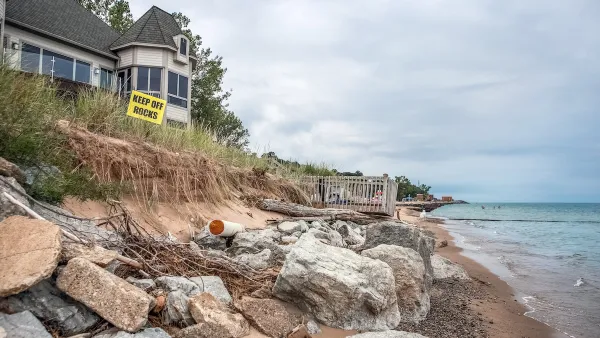
How US Cities Can Prepare for Climate Disasters
Resilience, encompassing infrastructure, governance, economic strength, and social cohesion, is critical for cities to mitigate rising climate risks like flooding, wildfires, and heat, ensuring long-term recovery and adaptability.

California plans to bury El Niño’s downpour
If the state plays its cards right, it may be able to store a billion acre-feet of El Niño’s water in aquifers.

Desperate measures: Advocates weigh draining Lake Powell to fill Colorado River
Draining the reservoir could reduce evaporation losses by a couple hundred thousand acre-feet.

Eastern Nebraska is running out of electricity
Data centers and electrification are straining eastern Nebraska’s grid, throttling economic development.

Houston gains petal-shaped cooling infrastructure to make streets more ‘delightful’
The city has installed the pavilions along 15 blocks in Houston.

After years of opposition to light rail, this L.A. city wants a $200 million station
Cerritos officials want the Southeast Gateway Line, a planned 14.5-mile light rail route through Los Angeles County, to stop in their city.

SpaceXAI may be fined $6 million for data center lacking water permits
A Mississippi agency also responds after a federal judge criticized the state’s Clean Air Act enforcement.

FREE Course: Walkable City 1: Why Walkability?
After describing his path towards focusing on walkability as the essence of good planning, Jeff Speck marches through his five principal reasons for making more walkable places.
Reinventing Malls: Planning Alchemy—Turning Gray Fields Into Gold
The course focuses on the opportunities and imperatives that shape reinvention of mall sites.


City of Rosemead
Rutgers University, Edward J. Bloustein School of Planning and Public Policy
One Hundred Miles
University of Michigan School for Environment and Sustainability (SEAS)
Hunter College, City University of New York (CUNY)
The Architects Foundation
City of Cambridge
Montrose County
The Pocatello Development Authority