The grants will fund roughly 7,500 new chargers in neighborhoods and along key freeway corridors.


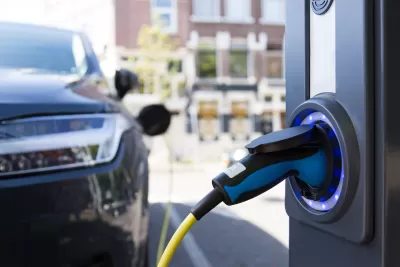
The Biden administration’s push to electrify the transportation sector continues with the announcement of $623 million in grants for electric car charging infrastructure.
According to Aarian Marshall and Matt Simon in Wired, “The funding is the latest chunk of change to be released from a total of $7.5 billion earmarked for charging and greener fueling in 2021’s Bipartisan Infrastructure Law.” The money is aimed at supporting the installation of 7,500 charging ports in primarily rural and low-income areas.
“The country currently has almost 161,000 charging ports, according to the US Department of Energy. A National Renewable Energy Laboratory study released last summer suggested the country will need 1.2 million by 2030 to meet demand from the growing national EV fleet.” Having a comprehensive network of accessible charging stations will help ease drivers’ concerns about driving range and encourage faster adoption of electric vehicles for consumers and commercial fleets. According to Marshall and Simon, “Emerging research suggests that just seeing chargers around makes drivers more likely to go electric.”
FULL STORY: The White House Just Announced a $623 Million EV-Charging Bonanza


Walmart Announces Nationwide EV Charging Network
The company plans to install electric car chargers at most of its stores by 2030.
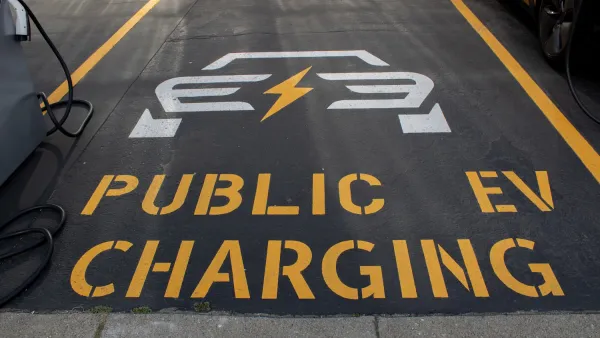
The Future of EV Charging Stations and Urban Planning
Explore the future of EV charging in cities and discover urban planning strategies for integrating electric vehicle infrastructure and promoting sustainable transportation.
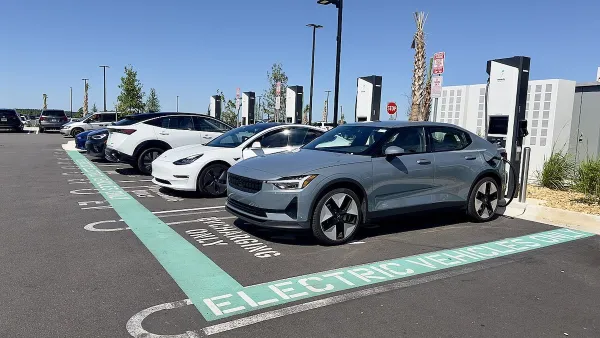
Florida Law Bars Cities From Regulating EV Chargers
Under the new law, cities cannot require charging infrastructure in local codes.

Planetizen Federal Action Tracker
A weekly monitor of how Trump’s orders and actions are impacting planners and planning in America.

The state-sanctioned urbicide of Austin
People don’t kill cities. Freeways do.

US to reduce Colorado River water deliveries to Mexico
A new Colorado Treaty amendment reduces Mexico’s Colorado River water allocation by 250,000 acre feet.

5 New England states march closer to 800 megawatt wind energy project
Securing federal approval for the project may be complicated under the Trump administration, which has historically been hostile towards domestic wind power.

Baltimore to break ground on $50 million Transit Priority Project
The project will bring faster bus trips, safer streets and better bike connections to Baltimore.

Airbnb launches $250 million 'last-dollar financing' housing accelerator, makes first investment in Austin
The company will put $6.4 million towards affordable housing development in Texas’ capital.

FREE Course: Walkable City 1: Why Walkability?
After describing his path towards focusing on walkability as the essence of good planning, Jeff Speck marches through his five principal reasons for making more walkable places.
Reinventing Malls: Planning Alchemy—Turning Gray Fields Into Gold
The course focuses on the opportunities and imperatives that shape reinvention of mall sites.

Eagle County Government
Harvard University Graduate School of Design
Nashville Planning Department
The Architects Foundation
University of Cincinnati Online
The Pocatello Development Authority
The Urban Renewal Agency of the City of Pocatello
Journal of the American Planning Association