The city hopes the free plans will streamline the permitting process for homeowners and help spur more housing construction.


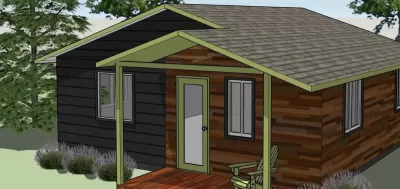
Joining cities as diverse as Raleigh, Los Angeles, and South Bend, Salem, Oregon is launching its own pre-approved accessory dwelling unit (ADU) program, which will provide residents with ‘ready build’ plans that meet code requirements.
As John Ross Ferrara reports for KOIN, the plans will be freely accessible, but homeowners must still apply and pay fees for the appropriate permits. According to a city statement, “The ready-build ADU plans lower barriers to building ADUs by providing architectural plans at no additional charge and expediting the building permit process.”
The city added, “The city conducted a Housing Needs Analysis in 2014 and has been working since then to promote housing affordability, availability, and choice.” Salem adapted its plans from the city of Eugene, which shared its own pre-approved designs.
Read the full story: City of Salem simplifies accessory-dwelling unit process with ‘ready-build’ plans
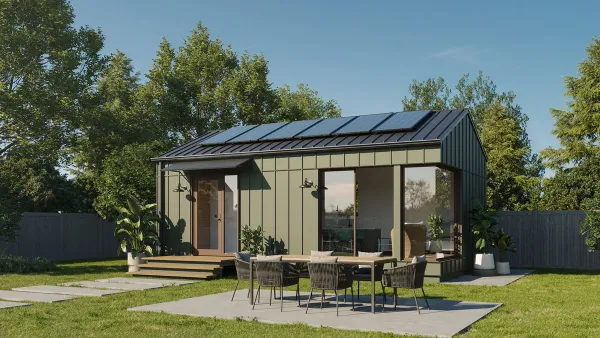
NYC’s ‘ADU for You’ Initiative Offers Pre-approved Plans and Financing Tools
The project pairs pre-approved plans with financing and other tools to help more homeowners build accessory units.

What do the Gilmore Girls, Happy Days, and Full House have in common? ADUs.
American sitcoms are full of garage apartments, attic rooms, and pool houses. Why aren't our cities?
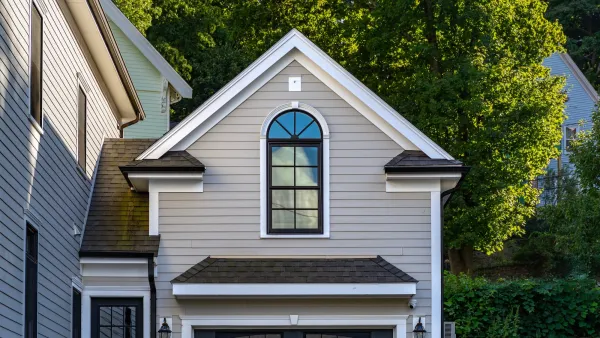
Massachusetts Zoning Reform Sparks ADU Surge
A 2024 law and a 2025 assistance program have spurred a flurry of ADU projects across the state.

Planetizen Federal Action Tracker
A weekly monitor of how Trump’s orders and actions are impacting planners and planning in America.

California plans to bury El Niño’s downpour
If the state plays its cards right, it may be able to store a billion acre-feet of El Niño’s water in aquifers.

Desperate measures: Advocates weigh draining Lake Powell to fill Colorado River
Draining the reservoir could reduce evaporation losses by a couple hundred thousand acre-feet.

In Texas, data centers are swallowing promised parkland
Residents who moved to Taylor, Texas for a rural community now have to contend with three data centers in their backyard.

How a Chicago-sized wind farm beat the odds and powered on
The project spanned five presidential administrations and a standoff with a U.S. military base.

MTA gives itself 30 days to transform pit into basketball court
The site has been under construction since 2022; the city originally estimated it would finish the court in 2024.

FREE Course: Walkable City 1: Why Walkability?
After describing his path towards focusing on walkability as the essence of good planning, Jeff Speck marches through his five principal reasons for making more walkable places.
Reinventing Malls: Planning Alchemy—Turning Gray Fields Into Gold
The course focuses on the opportunities and imperatives that shape reinvention of mall sites.

City of Rosemead
Rutgers University, Edward J. Bloustein School of Planning and Public Policy
One Hundred Miles
Hunter College, City University of New York (CUNY)
The Architects Foundation
University of Cincinnati Online
City of Cambridge
Montrose County
The Pocatello Development Authority