The state bond funding unlocks up to $2.5 billion in federal transportation funds.


A press release from Connecticut Governor Ned Lamont’s office announces $1.1 billion in state bond funding for public transit, which could bring in up to $2.5 billion in additional federal transit funding to the Constitution State.
“The $1.1 billion in state bond funding we are releasing today positions our state to create the transportation network of the future, which will connect people to jobs, employment, and all our state has to offer,” the governor said, adding, “Notably, it will support our ongoing goal of putting the infrastructure in place that will help reduce travel times between New Haven and New York.”
According to the press release, “The funding includes more than $666 million for public transportation and more than $300 million for roads and bridges.” Projects include upgrading rail infrastructure on the Northeast Corridor, repairing bridges on the state highway system, and the demolition of a parking garage at the Stamford Transportation Center, which “will allow the state to proceed with solicitation of Transit-Oriented Development projects adjacent to the station, which is the busiest rail station in the state.”

April must-reads: Top 10 articles from last month
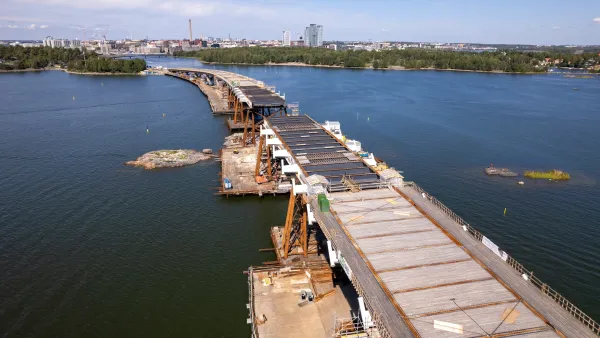
The world's longest car-free bridge opens in Finland, Amtrak's new Mardi Gras line shatters ridership predictions, and Bay Area commuters could lose a third of Caltrain stations.

Trump Administration Proposes to Divert Billions from Mass Transit to Highways; Advocates Sound Alarm
Two proposals from the Trump DOT would eliminate a federal mass transit fund and make it harder for states to allocate funding to transit projects.
Oregon Transportation Bill Saves 500 ODOT Jobs, but Leaves Future Funding Uncertain
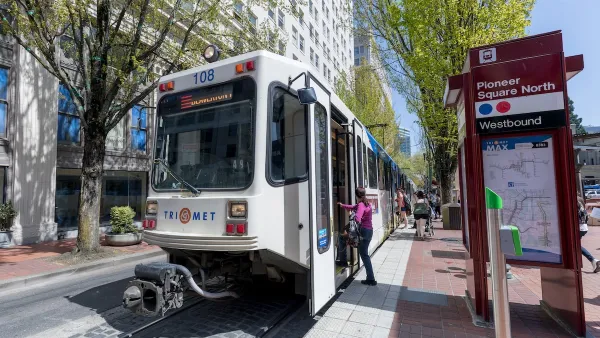
A bill passed in a special legislative session will raise over $4 billion for transportation and public transit in the next 10 years, but fails to establish a long-term funding solution.

The state-sanctioned urbicide of Austin
People don’t kill cities. Freeways do.

US to reduce Colorado River water deliveries to Mexico
A new Colorado Treaty amendment reduces Mexico’s Colorado River water allocation by 250,000 acre feet.

New Jersey’s second-largest city bans standalone data centers
Jersey City will continue to allow co-location facilities, such as those meant for research institutions that store their own data.

Amtrak not solely to blame for New Jersey commuter rail's unreliability, report finds
A new study from the Garden State Initiative found that NJ Transit’s budget grew 20% across a 4 year period, but reliability declined significantly over the same period.

EPA erases limits on planet-warming pollution from power plants
Under Monday’s plan, power plants would still have some limits on how much mercury, arsenic and other contaminants they can emit.

Phoenix announces new on-demand transit service, more frequent RAPID buses
Both new services will launch in October, and are part of Phoenix's Project Effective Access Solutions for Easing Congestion.

FREE Course: Walkable City 1: Why Walkability?
After describing his path towards focusing on walkability as the essence of good planning, Jeff Speck marches through his five principal reasons for making more walkable places.
Reinventing Malls: Planning Alchemy—Turning Gray Fields Into Gold
The course focuses on the opportunities and imperatives that shape reinvention of mall sites.

Eagle County Government
Harvard University Graduate School of Design
Nashville Planning Department
The Architects Foundation
University of Cincinnati Online
The Pocatello Development Authority
The Urban Renewal Agency of the City of Pocatello
Journal of the American Planning Association