The St. Paul City Council will soon consider a legislative package designed to increase the density of residential neighborhoods, following in the footsteps of its twin city, Minneapolis.



The St. Paul Planning Commission has signed off on zoning changes that will make it easier to build townhouses, fourplexes, and other missing middle housing typologies throughout the city.
“Under current laws, nearly half of St. Paul can be used only for single-family homes. The proposed changes aim to allow more types of housing that are compatible in size and appearance with single-family homes — a category dubbed ‘the missing middle’ by policy experts because it falls between single-family homes and large apartment buildings in terms of density,” reports Katie Galioto for the Star Tribune.
“The recommended changes would allow fourplexes throughout most of the city's residential neighborhoods — with the exception of a portion of the Highwood area, a hilly part of the Mississippi River bluff that does not have consistent city sewer or water services,” adds Galioto.
A new density bonus program would also allow developers to build up to six units for projects that include income-restricted units. And, according to Galioto, “A suite of changes to dimensional requirements are being proposed to make it feasible to build this type of housing. Standards such as those for setbacks, building height and minimum lot size would be altered to give developers more flexibility.”
St. Paul, of course, is twin city to Minneapolis, which famously went first on ending single-family zoning for residential neighborhoods with its Minneapolis 2040 Comprehensive Plan, approved in 2018. Minneapolis 2040 has been back in the news as Minneapolis touted its successes in taming inflation, which city officials have credited to its pro-housing-development reforms. St. Paul, meanwhile, has made news in recent years for setting the pace on municipal rent control, with an aggressive package of tenant protections approved by voters in 2021 that some critics say has contributed to a slow rate of multi-family housing development in that city.
With the Planning Commission’s approval, the St. Paul City Council will next consider the package of zoning reforms. Planetizen previously shared news of St. Paul’s zoning reform efforts in April 2023 and July 2023.
FULL STORY: Proposal to allow fourplexes in most parts of St. Paul heads to City Council

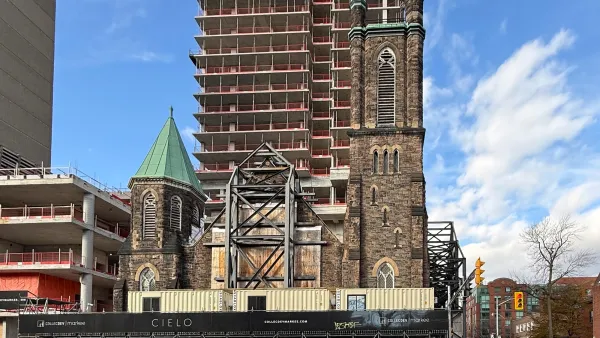
Five simple zoning changes that any city can make to increase housing affordability
Zoning for more affordable housing is not rocket science, says Donald Elliot, author of "An Even Better Way to Zone." Here’s his five-step guide to getting started.
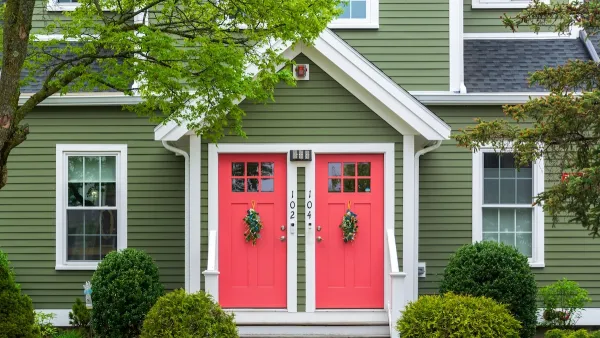
Harvard Report Cites Zoning, Construction Costs as Obstacles to New Housing
Zoning restrictions and onerous building codes make mid-sized multifamily housing prohibitively expensive or illegal to build.

Dallas Code Reform Makes Way for Missing Middle Housing
The Dallas City Council voted to change the city’s building code to allow up to eight residential units in three-story buildings.

Planetizen Federal Action Tracker
A weekly monitor of how Trump’s orders and actions are impacting planners and planning in America.

The state-sanctioned urbicide of Austin
People don’t kill cities. Freeways do.

US to reduce Colorado River water deliveries to Mexico
A new Colorado Treaty amendment reduces Mexico’s Colorado River water allocation by 250,000 acre feet.

Brightline West’s future may rely on $6 billion federal loan
The company has until Nov. 2 to make a $400 million equity investment into its proposed high-speed rail line.

LA Metro’s ultimatum: no extra buses for LA28 if federal funding isn’t imminently secured
If Metro does not provide additional buses, LA28 organizers will have to find a new way to manage Olympic traffic. LA28’s budget does not include a line item for transit.

Colorado’s Largest Data Center Could Rise Next to Homes — Without a Public Hearing
The proposed campus would consume 11 times the power of Denver International Airport; as it has across the country, opposition mounts.

FREE Course: Walkable City 1: Why Walkability?
After describing his path towards focusing on walkability as the essence of good planning, Jeff Speck marches through his five principal reasons for making more walkable places.
Reinventing Malls: Planning Alchemy—Turning Gray Fields Into Gold
The course focuses on the opportunities and imperatives that shape reinvention of mall sites.


Eagle County Government
Harvard University Graduate School of Design
Nashville Planning Department
The Architects Foundation
University of Cincinnati Online
The Pocatello Development Authority
The Urban Renewal Agency of the City of Pocatello
Journal of the American Planning Association