The state wants to accelerate the adoption of electric vehicles across the board, but concerns linger about the technology’s road readiness.


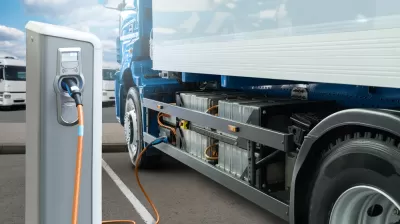
Federal officials cleared the state of California to go ahead with a plan to require that half of all heavy vehicles sold in the state be all-electric by 2035, reports Coral Davenport in The New York Times. The rule, which goes beyond federal requirements, “comes on the heels of an ambitious regulation passed last year by California that requires all new passenger vehicles sold in the state to be electric by the same target year, 2035.”
As Davenport points out, the rule could have a powerful impact on the entire automotive industry. “When it takes effect next year, the rule will pertain to sales of trucks ranging in size from delivery vans to big rigs. By 2035, 55 percent of delivery vans and small trucks, 75 percent of buses and larger trucks, and 40 percent of tractor-trailers and other big rigs sold in the state would have to be all-electric.”
The Inflation Reduction Act offers a tax credit for electric truck purchases to offset the higher cost of electric vehicles for buyers. Beyond cost, other concerns about electric trucks include the high weight of batteries and the availability of efficient charging for long-distance trips.
Read the full story: California to Require Half of All Heavy Trucks Sold by 2035 to Be Electric

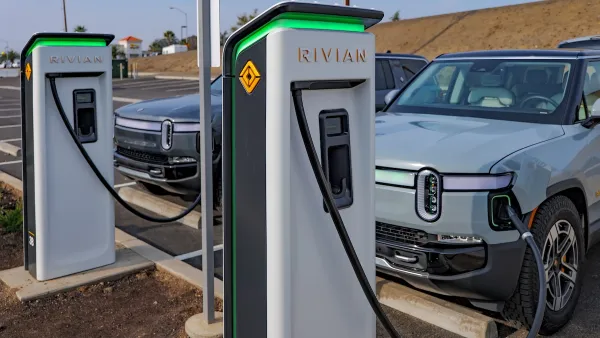
US Senate Reverses California EV Mandate
The state planned to phase out the sale of gas-powered cars by 2035, a goal some carmakers deemed impossible to meet.
How New Federal Rule Could Impact EV Adoption
An adjustment to federal pollution limits will require a greater share of low-carbon vehicles, but the rule also gives automakers some flexibility in deploying electric and hybrid cars.
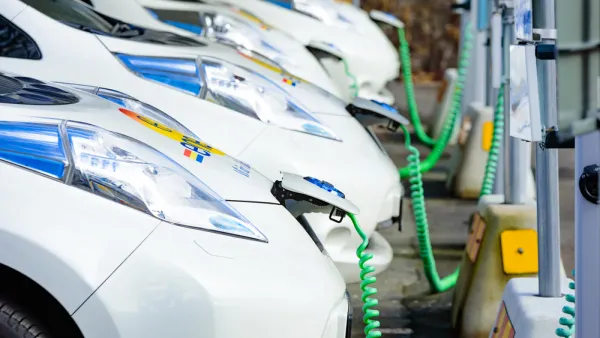
To Fight ‘Range Anxiety,’ Oregon To Invest $100 Million in Electric Vehicle Charging
The Oregon Department of Transportation plans to install EV chargers along crucial transportation corridors and expand charging options around the state to encourage more Oregonians to buy electric vehicles.

Planetizen Federal Action Tracker
A weekly monitor of how Trump’s orders and actions are impacting planners and planning in America.

The state-sanctioned urbicide of Austin
People don’t kill cities. Freeways do.

US to reduce Colorado River water deliveries to Mexico
A new Colorado Treaty amendment reduces Mexico’s Colorado River water allocation by 250,000 acre feet.

Nation's most wind-powered state turns to coal as data centers increase energy demand
For the first time in decades, Iowa has increased its generation of coal power.

NYC cools commuters with city's first rain garden above a bus stop
New York City officials say the plants in the rain garden can absorb 16 gallons of rainwater during heavy storms.

Brightline West’s future may rely on $6 billion federal loan
The company has until Nov. 2 to make a $400 million equity investment into its proposed high-speed rail line.

FREE Course: Walkable City 1: Why Walkability?
After describing his path towards focusing on walkability as the essence of good planning, Jeff Speck marches through his five principal reasons for making more walkable places.
Reinventing Malls: Planning Alchemy—Turning Gray Fields Into Gold
The course focuses on the opportunities and imperatives that shape reinvention of mall sites.

Greater Baltimore Committee
Eagle County Government
Harvard University Graduate School of Design
The Architects Foundation
University of Cincinnati Online
The Pocatello Development Authority
The Urban Renewal Agency of the City of Pocatello
Journal of the American Planning Association