Climate refugees are already on the move in the United States. The New York Times recently conducted an exploration on of the most desirable locations to escape wildfires, drought, and sea-level rise.


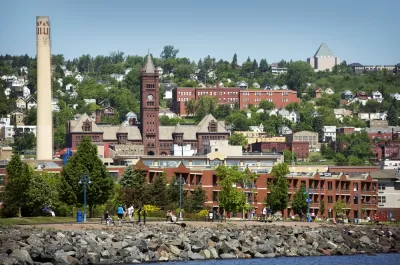
Debra Kamin shares insight into a recent exploration of the trend of Americans relocating to the Great Lakes Region, exemplified by the city of Duluth, Minnesota, to seek a friendlier climate as environmental risks increase in other parts of the country.
“The New York Times has been tracking the global climate migration for several years; four years ago, we covered a report from Jesse Keenan, then a professor at Harvard, zeroing in on a handful of U.S. cities that he believed would become climate havens in the coming years,” writes Kamin. “Many of those cities are in the cooler, landlocked Midwest. But it was Duluth, Minn., which Dr. Keenan nicknamed ‘climate-proof Duluth,’ that he believed would be one of the safest bets.”
The exploration produced an article published earlier in March, linked as the source article below. According to Kamin’s summary of the reportage, recent climate migrants to Duluth share a similar sentiment: “Nowhere on the globe is fully removed from climate change. But as wildfires become more intense and sea levels rise, Duluth might be manageable.”
Planetizen first picked up the news of “climate migrants’ moving to Duluth in October 2021.
Read the full story: Out-of-Towners Head to ‘Climate-Proof Duluth’

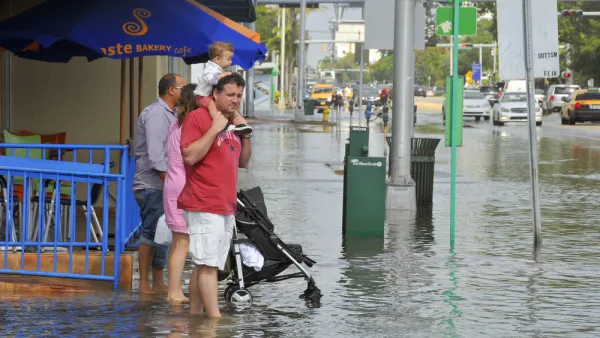
Americans Are Moving Toward Climate Risk
More Americans are ignoring the realities of climate change emigrating—even as more and more climate refugees flee the damage.
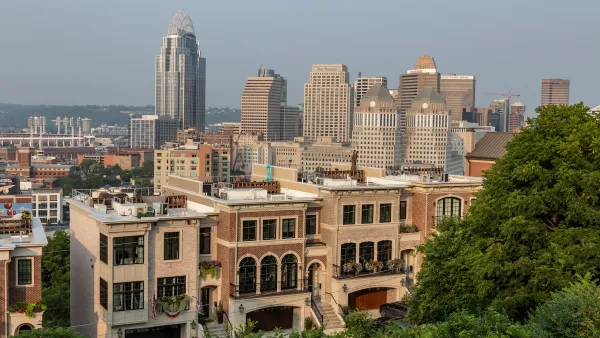
Cincinnati launches nation's first 'Climate Migration Readiness Plan'
City officials say Cincinnati's growth warrants proactive planning climate disruptions coupled with a bigger population.

Sea Level Rise is Drowning This Pacific Island Nation; They Have a Plan
The nation of Tuvalu has created an ambitious plan to relocate its entire population and preserve key cultural and historic resources as rising seas threaten to wipe it out within three decades.

Planetizen Federal Action Tracker
A weekly monitor of how Trump’s orders and actions are impacting planners and planning in America.

Amtrak, CN end decades-long dispute with eight-year agreement
The new operating agreement establishes an updated framework for the companies to work together, including processes to resolve disputes.

Northwest rail fans eager for Sept. 30 debut of Amtrak’s Airo fleet
Get ready for that new train smell and more seats. But they won’t go faster or run more frequently on the Cascades route in Washington and Oregon.

Brightline Florida files for bankruptcy
The transit company is over $5 billion in debt.

St. Louis Metro to test if single-car trains can reduce operating costs, maintain rider satisfaction
The pilot program will run from October to spring 2027, and begin with one single-car train operating on Metrolink’s Red and Blue lines.

Pennsylvania is building data centers in abandoned mines
Housing data centers in mines provides an alternative to destroying local forests and may spare residents from data centers’ noise and air pollution.

FREE Course: Walkable City 1: Why Walkability?
After describing his path towards focusing on walkability as the essence of good planning, Jeff Speck marches through his five principal reasons for making more walkable places.
Reinventing Malls: Planning Alchemy—Turning Gray Fields Into Gold
The course focuses on the opportunities and imperatives that shape reinvention of mall sites.

City of Thousand Oaks
City of Wisconsin Rapids
Harvard University Graduate School of Design
The Architects Foundation
University of Cincinnati Online
The Pocatello Development Authority
The Urban Renewal Agency of the City of Pocatello