Policy makers dealing with housing issues aren't fully absorbing the numbers. In the second of a series on the subject, Ben Brown and Dr. Arthur C. Nelson help clarify what's going on and what we can do about it.


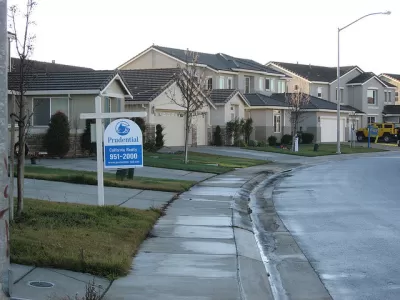
As wealthier boomers escalate demand for small-scale housing in close-in locations where supply-demand gap is already acute, less-well-off boomers are getting stuck in homes they can’t sell for money they need to move to age-friendly situations. This is shaping up to be a major short-sell risk, particularly in suburban locations and regions where population is in decline.
More than half of the counties in the contiguous U.S. seem likely to face the risk of over-supply of senior homes. Even if all new housing units built from 2018 to 2038 were in walkable communities, increasing from about 28 million to 63 million, a little more than half the preference for homes in walkable communities would be met.
Dr. Nelson lays out a number of actions that are required:
- Help policymakers run the numbers and get over some wrong assumptions.
- Rewrite zoning to allow walkable, mixed-use complete communities with smaller housing options.
- Put better suburban retrofit supports in place for those who will be forced to age in place.
Read the full story: Full story here


Planetizen Federal Action Tracker
A weekly monitor of how Trump’s orders and actions are impacting planners and planning in America.

The state-sanctioned urbicide of Austin
People don’t kill cities. Freeways do.

US to reduce Colorado River water deliveries to Mexico
A new Colorado Treaty amendment reduces Mexico’s Colorado River water allocation by 250,000 acre feet.

Nation's most wind-powered state turns to coal as data centers increase energy demand
For the first time in decades, Iowa has increased its generation of coal power.

NYC cools commuters with city's first rain garden above a bus stop
New York City officials say the plants in the rain garden can absorb 16 gallons of rainwater during heavy storms.

Brightline West’s future may rely on $6 billion federal loan
The company has until Nov. 2 to make a $400 million equity investment into its proposed high-speed rail line.

FREE Course: Walkable City 1: Why Walkability?
After describing his path towards focusing on walkability as the essence of good planning, Jeff Speck marches through his five principal reasons for making more walkable places.
Reinventing Malls: Planning Alchemy—Turning Gray Fields Into Gold
The course focuses on the opportunities and imperatives that shape reinvention of mall sites.

Greater Baltimore Committee
Eagle County Government
Harvard University Graduate School of Design
The Architects Foundation
University of Cincinnati Online
The Pocatello Development Authority
The Urban Renewal Agency of the City of Pocatello
Journal of the American Planning Association