The new plaza, part of the Capitol Complex Project, offers a glimpse of the potential of pedestrianized space in the Texas capital.


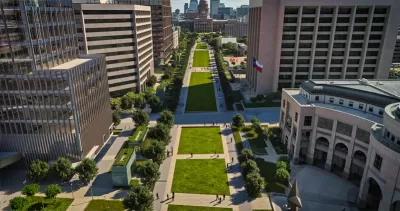
The Texas Mall, part of Austin’s Capitol Complex Project, is finally open to the public. Writing in Towers, James Rambin calls it “the crown jewel of this sprawling multi-phase state redevelopment plan, creating a pedestrian-friendly outdoor green space spanning six acres across several blocks on the north side of the Capitol grounds.”
The mall is fully pedestrianized for now, but will be opened to car traffic in January. However, Rambin ventures that “we can probably cajole the state into closing the stupid street for good in the near future.”
According to Rambin, “Other steps still left to complete are the reopening and repaving of the stretch of MLK Jr. Boulevard north of the site, which is currently full of construction barriers and pretty much torn to pieces by the years of work taking place here.”
Ultimately, the Texas Mall is one small but important step for pedestrian spaces in a famously car-oriented state. See the source article for photos of the Texas Mall and more details.
FULL STORY: Downtown Austin’s Capitol Complex Project Finally Unveils Its Texas Mall

Austin Considers Density Bonus
City officials in Austin are considering a new incentive for builders willing to include public spaces in new projects.
A Grand Public Space in Indianapolis
Civic leaders in Indianapolis are considering closing Monument Circle to traffic. Says one, "From a European perspective, this could be one of the great public spaces in America."
Large projects near Austin's light rail must include affordable housing
Elsewhere in the city, developers can pay into a city bank account for affordable housing rather than providing the required affordable units within their projects.

Planetizen Federal Action Tracker
A weekly monitor of how Trump’s orders and actions are impacting planners and planning in America.

The state-sanctioned urbicide of Austin
People don’t kill cities. Freeways do.

US to reduce Colorado River water deliveries to Mexico
A new Colorado Treaty amendment reduces Mexico’s Colorado River water allocation by 250,000 acre feet.

Guerilla urbanists are building DIY bus stop benches in Chicago
A before-and-after of one of the bus stops with a new bench. The new benches are not officially sanctioned or permitted, but the residents who placed them hope they will be the start of a network of DIY benches across the city.

Mamdani overhauls NYC's Vision Zero plan with 100 new policy goals
The overhaul aims to reduce traffic deaths and make streets safer for pedestrians, cyclists and drivers through lower speed limits, new safety infrastructure and more.

Amtrak not solely to blame for New Jersey commuter rail's unreliability, report finds
A new study from the Garden State Initiative found that NJ Transit’s budget grew 20% across a 4 year period, but reliability declined significantly over the same period.

FREE Course: Walkable City 1: Why Walkability?
After describing his path towards focusing on walkability as the essence of good planning, Jeff Speck marches through his five principal reasons for making more walkable places.
Reinventing Malls: Planning Alchemy—Turning Gray Fields Into Gold
The course focuses on the opportunities and imperatives that shape reinvention of mall sites.

Eagle County Government
Harvard University Graduate School of Design
Nashville Planning Department
The Architects Foundation
University of Cincinnati Online
The Pocatello Development Authority
The Urban Renewal Agency of the City of Pocatello
Journal of the American Planning Association