City officials in Austin are considering a new incentive for builders willing to include public spaces in new projects.


Builders would be allowed to increase the heights of their projects if they include public amenities and spaces as part of their proposals.
"On Dec. 17, the Austin City Council is scheduled to vote on proposals for a voluntary program under which downtown developers would be rewarded with extra space or height for their projects if they provide certain community benefits, such as affordable housing, child care services or cultural spaces.
City leaders have several goals: encouraging density and growing the tax base while ensuring that downtown remains a desirable place to live and work.
The proposals, called density bonuses, already have set off alarms among local developers who say they would raise costs and penalize them for the high-density projects that Austin leaders say they want downtown."
Read the full story: Voluntary program would reward projects providing community benefits with extra space or height.
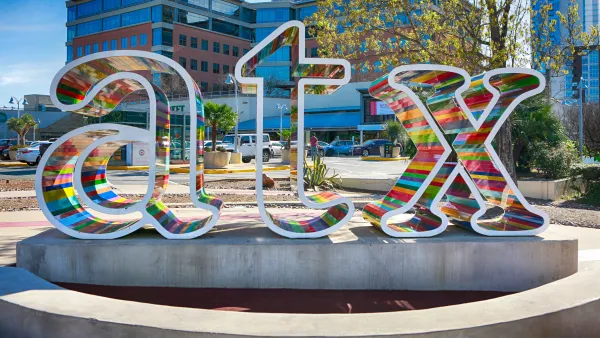
Austin’s ‘Affordability Unlocked’ Initiative Faces Lawsuit
A group of 18 plaintiffs is suing to overturn the city of Austin’s “Affordability Unlocked” planning initiative.
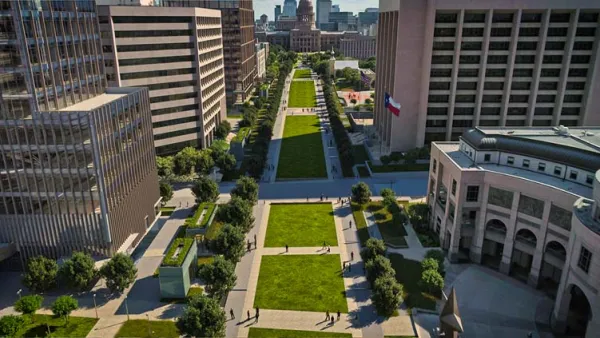
Austin’s Texas Mall Opens to the Public
The new plaza, part of the Capitol Complex Project, offers a glimpse of the potential of pedestrianized space in the Texas capital.
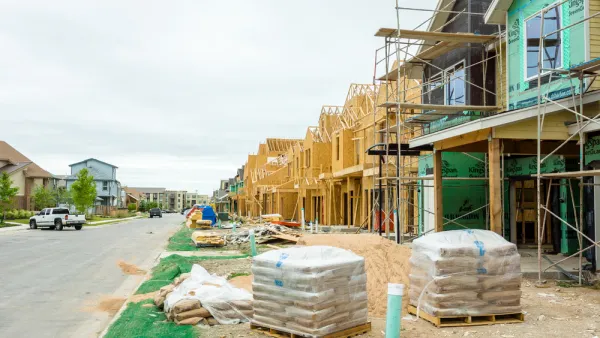
Early Returns on Austin's New Density Bonus Program: 2,337 Affordable Housing Units
Since late 2019, developers who deliver affordable housing units in Austin have received bonuses in height, density, parking, and other regulatory metrics, leading to a large number of new affordable housing units in the pipeline.

Planetizen Federal Action Tracker
A weekly monitor of how Trump’s orders and actions are impacting planners and planning in America.

California plans to bury El Niño’s downpour
If the state plays its cards right, it may be able to store a billion acre-feet of El Niño’s water in aquifers.

Desperate measures: Advocates weigh draining Lake Powell to fill Colorado River
Draining the reservoir could reduce evaporation losses by a couple hundred thousand acre-feet.

US buildings threatened, destroyed by fires set to triple by 2060
Researchers found a high fire risk for socioeconomically vulnerable neighborhoods in the American West.

LA residents may be allowed to paint their own crosswalks
Councilwoman Katy Yaroslavsky put out a motion instructing the Los Angeles Department of Public Transportation to study the feasibility of allowing volunteers to paint crosswalks.

Dallas moves to overhaul its zoning code
The city's zoning reform will allow more multi-family and mixed-use developments.

FREE Course: Walkable City 1: Why Walkability?
After describing his path towards focusing on walkability as the essence of good planning, Jeff Speck marches through his five principal reasons for making more walkable places.
Reinventing Malls: Planning Alchemy—Turning Gray Fields Into Gold
The course focuses on the opportunities and imperatives that shape reinvention of mall sites.

City of Rosemead
Rutgers University, Edward J. Bloustein School of Planning and Public Policy
One Hundred Miles
Hunter College, City University of New York (CUNY)
The Architects Foundation
University of Cincinnati Online
City of Cambridge
Montrose County
The Pocatello Development Authority