On-demand van services are competing with ride-hailing and filling some crucial gaps in public transit networks.



“In addition to Metro Micro, which started in late 2020, microtransit services include MARTA’s Reach in the Atlanta region, Albany’s FLEX service in New York, and Via Jersey City in New Jersey, among many others. Some have even arisen in low-density rural areas and on at least one Native American reservation, the Blackfeet Reservation in Montana, that otherwise have no public transportation options.”
“The New York City-based transportation company Via, which contracts with many agencies to provide microtransit services (including rolling stock and/or app and deployment technologies), estimates that it now serves more than 200 markets globally, with more on the way.”
“Ever since the advent of app-based ride hailing, companies like Uber and Lyft have been accused of eating into public transit’s market share. Whether microtransit will lure meaningful numbers of discretionary riders back, even at fares as low as $1, remains to be seen. But that’s not necessarily the goal, nor is it the driving force behind microtransit’s proliferation.”
FULL STORY: Microtransit Changing The Landscape

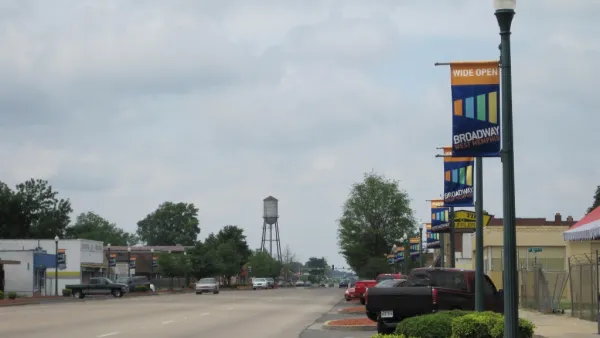
West Memphis to launch new transit system
The city across the Mississippi River from Memphis, Tennessee will soon begin service on its own, on-demand transit system.

El Paso launches improved bus network, new microtransit service
Sun Metro is eliminating some bus lines in favor of more frequent service, estimating that only 1% of riders will have to walk farther to reach a station.

South Florida Microtransit Nears 1.5 Million Rides
Fort Lauderdale’s LauderGO! shuttle service reported 700,000 rides.

Planetizen Federal Action Tracker
A weekly monitor of how Trump’s orders and actions are impacting planners and planning in America.

The state-sanctioned urbicide of Austin
People don’t kill cities. Freeways do.

US to reduce Colorado River water deliveries to Mexico
A new Colorado Treaty amendment reduces Mexico’s Colorado River water allocation by 250,000 acre feet.

5 New England states march closer to 800 megawatt wind energy project
Securing federal approval for the project may be complicated under the Trump administration, which has historically been hostile towards domestic wind power.

Baltimore to break ground on $50 million Transit Priority Project
The project will bring faster bus trips, safer streets and better bike connections to Baltimore.

Airbnb launches $250 million 'last-dollar financing' housing accelerator, makes first investment in Austin
The company will put $6.4 million towards affordable housing development in Texas’ capital.

FREE Course: Walkable City 1: Why Walkability?
After describing his path towards focusing on walkability as the essence of good planning, Jeff Speck marches through his five principal reasons for making more walkable places.
Reinventing Malls: Planning Alchemy—Turning Gray Fields Into Gold
The course focuses on the opportunities and imperatives that shape reinvention of mall sites.

Eagle County Government
Harvard University Graduate School of Design
Nashville Planning Department
The Architects Foundation
University of Cincinnati Online
The Pocatello Development Authority
The Urban Renewal Agency of the City of Pocatello
Journal of the American Planning Association