A new book digs into the politics and contradictions of the gentrification debate.


Leslie Kern, author of Feminist City (one of Planetizen's top urban planning books of 2020), has written a new book called Gentrification Is Inevitable and Other Lies.
The author sat down for an interview with Roshan Abraham for Next City, discussing how the book challenges the conversations about gentrification on multiple sides of the issue—both how some frame gentrification rhetorically as a benefit to communities while others emphasize “the aesthetic markers of gentrification.”
Among the topics of conversation in the full interview, linked below, are how the remote work of the pandemic has changed the conversation about the pandemic (“It’s brought gentrification to the doorstep of smaller cities and communities that weren’t really facing it on any large scale,” says Kern), how communities can develop new services and amenities without catering to forces of gentrification (“the strongest barriers to that happening are when there is a solid stable supply of social housing in a neighborhood,” says Kern), and how to identify the differences between good faith and bad faith opposition to development.
Read the full story: Gentrification Is Complicated. But It’s Not Inevitable.


The Top Urban Planning Books of 2022
An annual list of the must-read books related to urban planning and its intersecting fields.
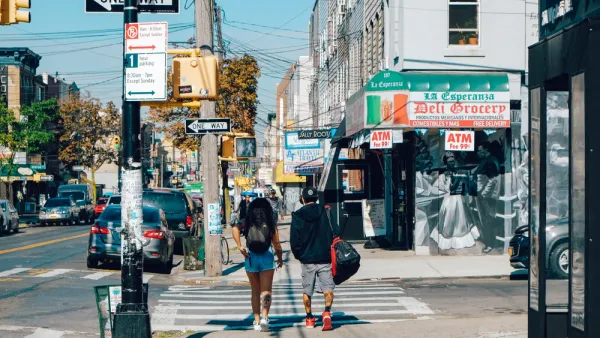
A Theory of Gentrification—And Where It Goes Wrong
Does gentrification always follow massive disinvestment?
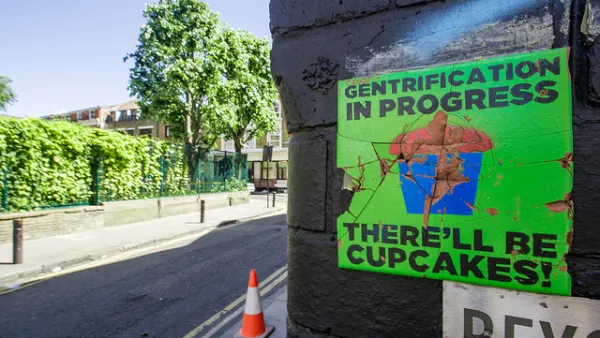
Review: 'The Handbook of Gentrification Studies'
A book by Loretta Lees and Martin Phillips, published in 2018, is reviewed and recommended to "graduates studying anthropology of cities, urbanism, geography, and new urban identities."

Planetizen Federal Action Tracker
A weekly monitor of how Trump’s orders and actions are impacting planners and planning in America.

Amtrak, CN end decades-long dispute with eight-year agreement
The new operating agreement establishes an updated framework for the companies to work together, including processes to resolve disputes.

Judges permit Denver to divert 77,000 acre feet from the Colorado River for reservoir expansion
Overuse and climate change have caused the Colorado River’s water levels to plummet.

Boston has spent millions making the Green Line more accessible — and there’s no end in sight
While the city has invested millions into expanding and adding platforms to the Green Line to make it more accessible, new train cars set to arrive next year will be too tall for disabled passengers to board without raising the current platforms.

Idaho may see an 18% drop in federal surface transit funding — the largest estimated cut in the US
Transit systems in rural communities are much more reliant on federal funding to provide their services.

How ‘post-disaster gentrification’ alters neighborhoods after natural calamities
After hurricanes, fires or other calamities, the original residents of a community are often replaced by younger, wealthier residents.

FREE Course: Walkable City 1: Why Walkability?
After describing his path towards focusing on walkability as the essence of good planning, Jeff Speck marches through his five principal reasons for making more walkable places.
Reinventing Malls: Planning Alchemy—Turning Gray Fields Into Gold
The course focuses on the opportunities and imperatives that shape reinvention of mall sites.

Harvard University Graduate School of Design
KFH Group Inc.
Greater Baltimore Committee
The Architects Foundation
University of Cincinnati Online
The Pocatello Development Authority
The Urban Renewal Agency of the City of Pocatello