A tax on luxury property sales is stalled in the state legislature, causing the city to miss out on millions in potential tax revenue.


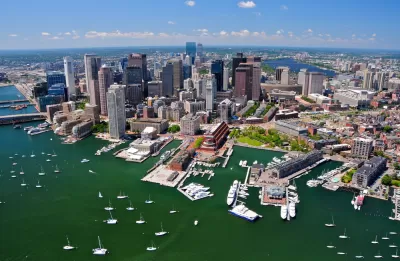
A report from the Institute for Policy Studies assesses the tax revenue lost by Boston due to the state legislature’s failure to implement a new residential real estate transfer tax. As Katie Pyzyk reports for Smart Cities Dive, the so-called “mansion tax” must be approved by the state before it can go into effect, and could have generated $19.8 million in revenue for affordable housing programs from sales at six luxury residential buildings, the report found.
“The report cites three primary ‘invisible forces’ disrupting Boston’s housing market: an explosion in short-term rentals, corporate ownership of rental housing and foreign investors.” Meanwhile, more than half of Boston renters are cost-burdened, meaning they spend more than 30 percent of their income on housing.
The luxury property transfer tax was first proposed in 2019, but struck down by the state legislature. “A luxury transfer tax on properties selling for $2 million or more took effect in New York in 2019, and an additional one is imposed on sales of $3 million or more.” Similar proposals in Los Angeles and Chicago would tax property sales above $5 million and $1 million, respectively.
FULL STORY: Boston missing out on millions for affordable housing due to stalled ‘mansion tax,’ report says

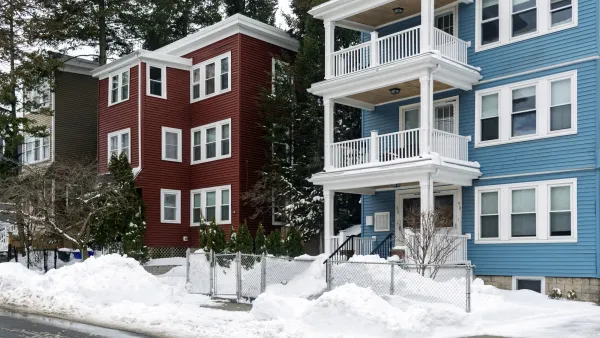
Boston's 'sliver lots' could yield over 1,500 affordable homes
The city has identified over 500 vacant parcels suitable for infill housing.
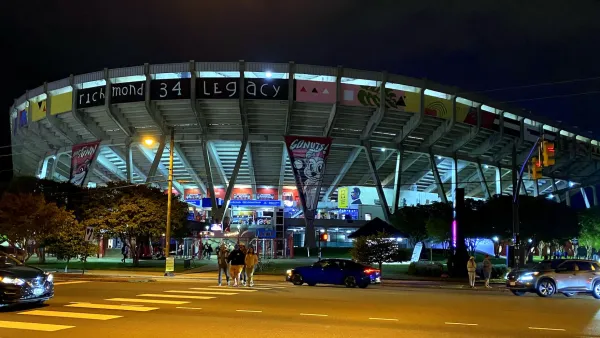
Richmond's new 'stadium district' will include hundreds of homes, offices, jobs
The city is planning for a neighborhood revival in the area around a new baseball stadium.
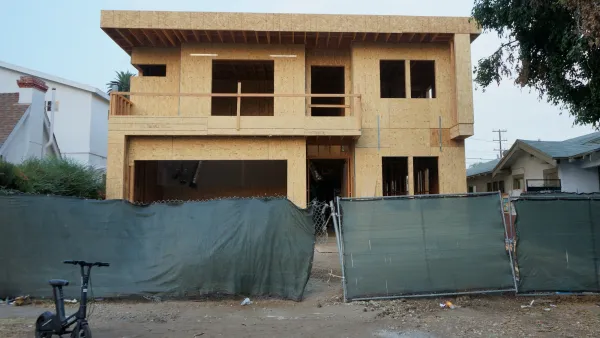
Report: LA Construction Permits Fell 40% After ‘Mansion Tax’
New housing permits fell sharply for both single-family homes and multifamily buildings after the city enacted a tax on property sales over $5 million.

Planetizen Federal Action Tracker
A weekly monitor of how Trump’s orders and actions are impacting planners and planning in America.

The state-sanctioned urbicide of Austin
People don’t kill cities. Freeways do.

US to reduce Colorado River water deliveries to Mexico
A new Colorado Treaty amendment reduces Mexico’s Colorado River water allocation by 250,000 acre feet.

5 New England states march closer to 800 megawatt wind energy project
Securing federal approval for the project may be complicated under the Trump administration, which has historically been hostile towards domestic wind power.

Baltimore to break ground on $50 million Transit Priority Project
The project will bring faster bus trips, safer streets and better bike connections to Baltimore.

Airbnb launches $250 million 'last-dollar financing' housing accelerator, makes first investment in Austin
The company will put $6.4 million towards affordable housing development in Texas’ capital.

FREE Course: Walkable City 1: Why Walkability?
After describing his path towards focusing on walkability as the essence of good planning, Jeff Speck marches through his five principal reasons for making more walkable places.
Reinventing Malls: Planning Alchemy—Turning Gray Fields Into Gold
The course focuses on the opportunities and imperatives that shape reinvention of mall sites.

Eagle County Government
Harvard University Graduate School of Design
Nashville Planning Department
The Architects Foundation
University of Cincinnati Online
The Pocatello Development Authority
The Urban Renewal Agency of the City of Pocatello
Journal of the American Planning Association