Peachtree Corners is putting the ‘smart city’ model into practice, taking a methodical approach to introducing new technology and autonomous devices.


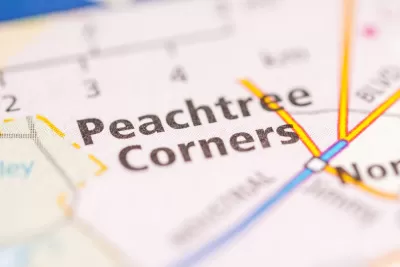
A small Atlanta suburb is rapidly becoming a model for the much-discussed ‘smart city,’ but the city may look less futuristic than you imagine, writes Mohar Chatterjee in Politico.
“The 45,000-person city is home to an unusual public innovation experiment. Peachtree Corners’ chief technology officer, who also happens to be the assistant city manager, runs an incubator called Curiosity Lab, which invites private firms to come test out their prototypes in a 500-acre public space called Technology Park Atlanta.” The concept recalls Walt Disney’s goal for E.P.C.O.T. and Larry Page’s idea for the smart city Sidewalk Labs would build: a living community as an innovation lab for new inventions and technology.
With the new technology, Peachtree will also have to navigate the new waters of data privacy and safety. “It’s the kind of place entrepreneurs and civic leaders will need to reckon with as they make their next round of high-tech promises.” The city is proceeding cautiously. For example, “Right now, Peachtree Corners has gone as far as any American city in integrating self-driving vehicles — but the city’s autonomous shuttles still run only in dedicated lanes.”
The city is using the strictest federal standards for data privacy as it encourages home builders in the community to install data-gathering devices. “[Chief Technology Officer and deputy city manager Brandon Branham] said he is aware of the ‘fine balance’ between ensuring data privacy and having a better operational base to deploy citywide IoT technologies.”
FULL STORY: What smart cities actually need


In Planning, the Possibilities With AI are High. So are the Stakes.
Planning history tells us that public trust is both fragile and essential. With AI, the time to set the right course is now.

Why a Failed ‘Smart City’ Is Still Relevant
A Google-backed proposal to turn an underused section of Toronto waterfront into a tech hub holds relevant lessons about privacy and data.
NYC's Link5G Towers Face Neighborhood Opposition
More than 2,000 32-foot towers are coming to New York City street corners to improve 5G connectivity throughout the city, and residents aren’t happy, citing incompatible design and visual distraction as a threat to safety.

Planetizen Federal Action Tracker
A weekly monitor of how Trump’s orders and actions are impacting planners and planning in America.

The state-sanctioned urbicide of Austin
People don’t kill cities. Freeways do.

US to reduce Colorado River water deliveries to Mexico
A new Colorado Treaty amendment reduces Mexico’s Colorado River water allocation by 250,000 acre feet.

5 New England states march closer to 800 megawatt wind energy project
Securing federal approval for the project may be complicated under the Trump administration, which has historically been hostile towards domestic wind power.

Baltimore to break ground on $50 million Transit Priority Project
The project will bring faster bus trips, safer streets and better bike connections to Baltimore.

Airbnb launches $250 million 'last-dollar financing' housing accelerator, makes first investment in Austin
The company will put $6.4 million towards affordable housing development in Texas’ capital.

FREE Course: Walkable City 1: Why Walkability?
After describing his path towards focusing on walkability as the essence of good planning, Jeff Speck marches through his five principal reasons for making more walkable places.
Reinventing Malls: Planning Alchemy—Turning Gray Fields Into Gold
The course focuses on the opportunities and imperatives that shape reinvention of mall sites.

Eagle County Government
Harvard University Graduate School of Design
Nashville Planning Department
The Architects Foundation
University of Cincinnati Online
The Pocatello Development Authority
The Urban Renewal Agency of the City of Pocatello
Journal of the American Planning Association