New research reveals that the state’s rent cap law is stymied by a lack of transparency and toothless enforcement.



An analysis from the University of California, Berkeley’s Terner Center for Housing Innovation warns that the state’s Tenant Protection Act (AB 1482) is not living up to its promise due to a lack of transparency and enforcement.
Passed in 2019, AB 1482 enacted a rent cap, yet the Terner Center’s research finds that “60 percent of repeat rental listings posted in the spring of 2022 had an annual price increase that would be in excess of the state’s annual rent cap were the cap to apply to units relisted for new tenants.”
While the data did not allow for differentiation between households eligible for rent caps and those ineligible, the authors note that “this analysis reveals market conditions that are hospitable to large rent increases, demonstrating the critical need for education, enforcement, and real-time, accessible data to ensure the law is working as intended to protect renters.”
FULL STORY: Rising Rents, Not Enough Data: How a Lack of Transparency Threatens to Undermine California’s Rent Cap


NYC Bans Charging Tenants Broker’s Fees
Landlords can no longer tack on thousands of dollars in fees to new tenants to pay brokers who show rental units.

How Ownership Structure Impacts Eviction Rates
A new study from Boston reveals that large landlords, who are less likely to live near their tenants, execute far more eviction filings than smaller property owners.
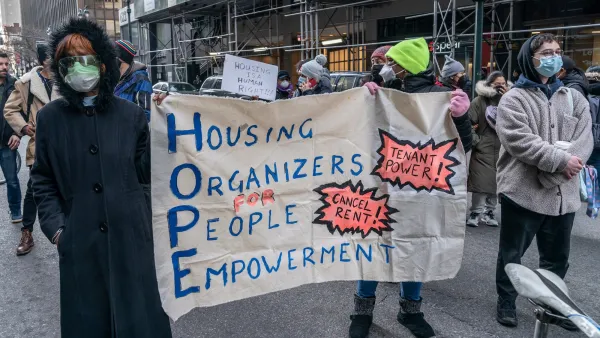
NYC 'Rental Ripoff' report calls for crackdown on negligent landlords
The report outlines strategies for empowering renters and transferring properties from 'low-road' landlords to those who focus on improved tenant outcomes.

Planetizen Federal Action Tracker
A weekly monitor of how Trump’s orders and actions are impacting planners and planning in America.

The state-sanctioned urbicide of Austin
People don’t kill cities. Freeways do.

US to reduce Colorado River water deliveries to Mexico
A new Colorado Treaty amendment reduces Mexico’s Colorado River water allocation by 250,000 acre feet.

5 New England states march closer to 800 megawatt wind energy project
Securing federal approval for the project may be complicated under the Trump administration, which has historically been hostile towards domestic wind power.

Baltimore to break ground on $50 million Transit Priority Project
The project will bring faster bus trips, safer streets and better bike connections to Baltimore.

Airbnb launches $250 million 'last-dollar financing' housing accelerator, makes first investment in Austin
The company will put $6.4 million towards affordable housing development in Texas’ capital.

FREE Course: Walkable City 1: Why Walkability?
After describing his path towards focusing on walkability as the essence of good planning, Jeff Speck marches through his five principal reasons for making more walkable places.
Reinventing Malls: Planning Alchemy—Turning Gray Fields Into Gold
The course focuses on the opportunities and imperatives that shape reinvention of mall sites.

Eagle County Government
Harvard University Graduate School of Design
Nashville Planning Department
The Architects Foundation
University of Cincinnati Online
The Pocatello Development Authority
The Urban Renewal Agency of the City of Pocatello
Journal of the American Planning Association