A new state law allows counties to deny wind and solar projects in their jurisdictions, and at least ten counties have already moved to implement bans.



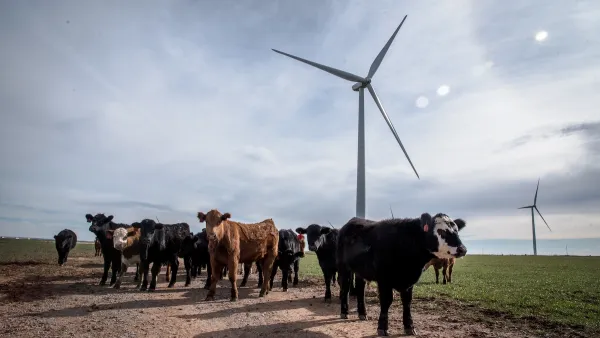
“At least 10 Ohio counties have passed resolutions blocking the development of new utility scale wind and solar projects within all or part of their jurisdictions in the last year,” with two more counties considering similar measures, reports Jake Zuckerman of the Ohio Capital Journal, threatening the growth of the renewable energy industry in the state.
Neil Waggoner, an operative with the Sierra Club’s Beyond Coal campaign, said “These bans close off communities from the investment dollars driving these projects, new sources of revenue for local services and education, and also limit local property owner rights.”
Notably, counties do not have similar authority to block local fossil fuel projects. In fact, Zuckerman points out that “the state passed legislation last year removing authority from local governments seeking to block new buildings within their borders from natural gas hookups, an effort seen in some progressive cities to decarbonize buildings.”
Supporters of the bill say it returns control to local residents, but “Some of the opposition to wind turbines gets a bit more far-fetched,” Zuckerman adds. One local group fighting wind farms uses photos of wind turbines on fire to drum up fear on their website. “The Energy News Network previously reported on other dubious claims about renewables made during the legislative process, including one of solar panels ‘leaking’ chemicals like lead or cadmium into the soil.”
Read the full story: Ten Ohio Counties Ban Wind, Solar Projects Under New State Law

Renewable Energy Overtakes Coal for First Time
Solar and wind power generated close to a third of U.S. electricity supplies in 2024.

States Preempt Local Control on Renewable Energy Projects
To meet ambitious climate and decarbonization goals, some states are barring local governments from restricting wind and solar development.

Solar Farm Moratorium to End, Despite Local Concerns
Delaware County plans to amend its solar zoning ordinance and lift a moratorium on the construction of new solar farms that was implemented after local opposition stalled the project.

Planetizen Federal Action Tracker
A weekly monitor of how Trump’s orders and actions are impacting planners and planning in America.

The state-sanctioned urbicide of Austin
People don’t kill cities. Freeways do.

US to reduce Colorado River water deliveries to Mexico
A new Colorado Treaty amendment reduces Mexico’s Colorado River water allocation by 250,000 acre feet.

NYC cools commuters with city's first rain garden above a bus stop
New York City officials say the plants in the rain garden can absorb 16 gallons of rainwater during heavy storms.

Brightline West’s future may rely on $6 billion federal loan
The company has until Nov. 2 to make a $400 million equity investment into its proposed high-speed rail line.

LA Metro’s ultimatum: no extra buses for LA28 if federal funding isn’t imminently secured
If Metro does not provide additional buses, LA28 organizers will have to find a new way to manage Olympic traffic. LA28’s budget does not include a line item for transit.

FREE Course: Walkable City 1: Why Walkability?
After describing his path towards focusing on walkability as the essence of good planning, Jeff Speck marches through his five principal reasons for making more walkable places.
Reinventing Malls: Planning Alchemy—Turning Gray Fields Into Gold
The course focuses on the opportunities and imperatives that shape reinvention of mall sites.

Eagle County Government
Harvard University Graduate School of Design
Nashville Planning Department
The Architects Foundation
University of Cincinnati Online
The Pocatello Development Authority
The Urban Renewal Agency of the City of Pocatello
Journal of the American Planning Association