A new book illuminates the history and meaning of the bicycle in human society.


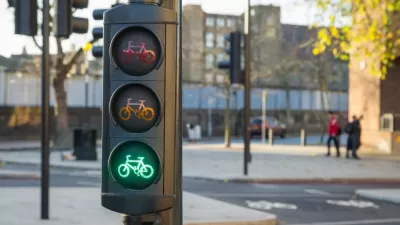
“From their debut in the 1800s, bicycles have been a confounding presence on the streets, their riders’ unpredictable careening infuriating carriage drivers, then car drivers, and, the whole time, pedestrians.” Meanwhile, some cyclists cling to a “sense of moral superiority,” Zoë Beery writes in The Atlantic. “As climate collapse looms, bicycles have taken on a saintly quality, extolled as squeaky-clean instruments of penance for wealthy countries’ carbon emissions.”
This cut-and-dry story doesn’t tell the whole tale, argues a new book by Jody Rosen. “Two Wheels Good: The History and Mystery of the Bicycle takes readers time-traveling and globe-trotting to build up an alternate narrative about a simple machine that becomes harder to categorize the more you learn about it. Through history and across cultures, bicycles are a human denominator.”
The source article outlines Rosen’s book, which details the history of the bicycle and the cultural and historical significance of the machine. As Beery notes, “Fascinating tidbits organized by loose themes, abrupt topical switches within sections, and chapters on trick cycling, exercise bikes, and bikes as sex objects make the book comprehensive but also unfocused. Still, the meandering structure often feels like a leisurely ride, full of spontaneous detours into unexpected delight.”
Beery also calls the book “essential” for its “rigorous reporting” of historical facts and the less pleasant aspects of the bicycle’s history. “In showing that bikes have always been complicated—accessories to some and essential to others, means of recreation and of labor, signifiers of both wealth and poverty—Rosen also shows that they are universal, inviting even the most skeptical readers along with his humility and humor.”
FULL STORY: The Ideology of the Bicycle

2025's 30 Most Bike-friendly Cities
Copenhagenize has released its list of top cities for cyclists. Spoiler alert: the United States doesn’t make the list.
Cyclists may be Right to run Stop Signs and Red Lights. Here’s why
One researcher argues that the Idaho stop might not be such a bad idea after all.

Pilot Project Offers E-Bike Rebates in New York State
The program will start in the Village of Ossining with plans to expand in the greater Hudson River region.

Planetizen Federal Action Tracker
A weekly monitor of how Trump’s orders and actions are impacting planners and planning in America.

The state-sanctioned urbicide of Austin
People don’t kill cities. Freeways do.

US to reduce Colorado River water deliveries to Mexico
A new Colorado Treaty amendment reduces Mexico’s Colorado River water allocation by 250,000 acre feet.

Brightline West’s future may rely on $6 billion federal loan
The company has until Nov. 2 to make a $400 million equity investment into its proposed high-speed rail line.

LA Metro’s ultimatum: no extra buses for LA28 if federal funding isn’t imminently secured
If Metro does not provide additional buses, LA28 organizers will have to find a new way to manage Olympic traffic. LA28’s budget does not include a line item for transit.

Colorado’s Largest Data Center Could Rise Next to Homes — Without a Public Hearing
The proposed campus would consume 11 times the power of Denver International Airport; as it has across the country, opposition mounts.

FREE Course: Walkable City 1: Why Walkability?
After describing his path towards focusing on walkability as the essence of good planning, Jeff Speck marches through his five principal reasons for making more walkable places.
Reinventing Malls: Planning Alchemy—Turning Gray Fields Into Gold
The course focuses on the opportunities and imperatives that shape reinvention of mall sites.

Eagle County Government
Harvard University Graduate School of Design
Nashville Planning Department
The Architects Foundation
University of Cincinnati Online
The Pocatello Development Authority
The Urban Renewal Agency of the City of Pocatello
Journal of the American Planning Association