The Lancet medical journal published a series of articles that explore how to evaluate and guide urban planning decisions to create healthy and sustainable cities. Live long and prosper!


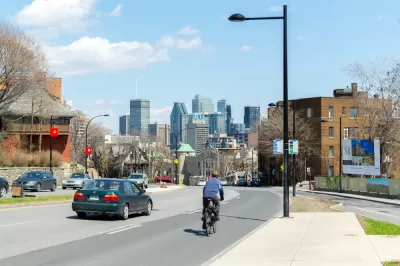
Urban Design, Transport, and Health
The Lancet Global Health, Vol. 10, No. 6
Executive Summary
Good city planning produces co-benefits for individual and planetary health and wellbeing. In 2016, the Lancet Series on urban design, transport, and health drew attention to the importance of integrated upstream city planning policies as a pathway to creating healthy and sustainable cities, and proposed a set of city planning indicators that could be used to benchmark and monitor progress. In this follow-up series, the authors show how the indicators can guide decisions about what must change in order to create healthy and sustainable cities and how research can be used to guide urban policy to achieve urban and population health. They provide tools that other cities can use to replicate the indicators, and explore “where to next” to create healthy and sustainable cities, particularly in light of the COVID-19 pandemic and climate change.
-
Creating healthy and sustainable cities: what gets measured, gets done
Billie Giles-Corti, Anne Vernez Moudon, Melanie Lowe, Deepti Adlakha, Ester Cerin, Geoff Boeing, and others
-
Urban design is key to healthy environments for all
Thiago Herick de Sa, Abraham Mwaura, Cristina Vert, Pierpaolo Mudu, Nathalie Roebbel, Nhan Tran, and others
-
Measuring what matters: supporting cities in tackling climate and health challenges
Honorine van den Broek d’Obrenan, Rachel Huxley
-
The future is urban: integrated planning policies can enable healthy and sustainable cities
Deepti Adlakha, Felix John
-
City planning policies to support health and sustainability: an international comparison of policy indicators for 25 cities
Melanie Lowe, Deepti Adlakha, James F Sallis, Deborah Salvo, Ester Cerin, Anne Vernez Moudon, and others
-
Determining thresholds for spatial urban design and transport features that support walking to create healthy and sustainable cities: findings from the IPEN Adult study
Ester Cerin, James F Sallis, Deborah Salvo, Erica Hinckson, Terry L Conway, Neville Owen, and others
-
Using open data and open-source software to develop spatial indicators of urban design and transport features for achieving healthy and sustainable cities
Geoff Boeing, Carl Higgs, Shiqin Liu, Billie Giles-Corti, James F Sallis, Ester Cerin, and others
-
What next? Expanding our view of city planning and global health, and implementing and monitoring evidence-informed policy
Billie Giles-Corti, Anne Vernez Moudon, Melanie Lowe, Ester Cerin, Geoff Boeing, Howard Frumkin, and others
Read the full story: Urban Design, Transport, and Health


Students Drive Solutions for Environmental Justice Through Video Challenge
The Environmental Justice Video Challenge empowers students and communities to collaboratively address environmental inequities through innovative data-driven strategies, resulting in impactful projects and fostering local leadership.
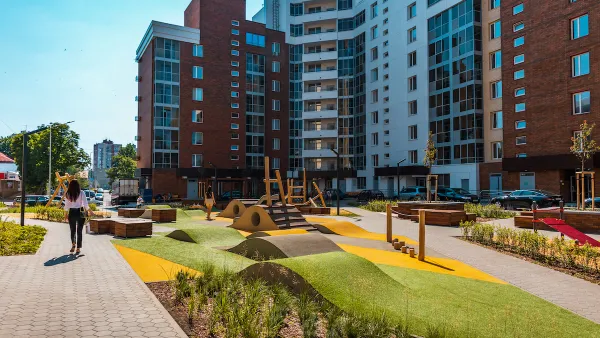
Architecture and the Housing Crisis
A new book brings architects into the housing discussion.
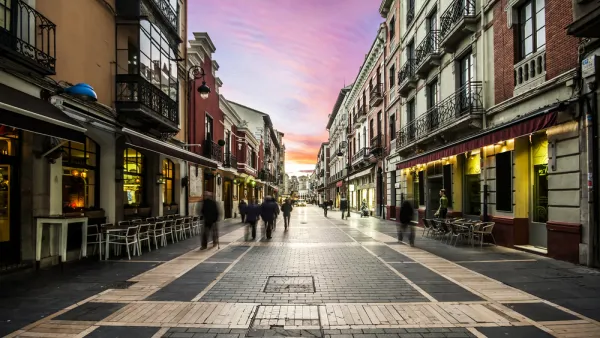
Report: Sustainability Goals Go Unmet in Many Global Cities
Cities around the world are failing to achieve progress toward their sustainability and public health goals, new research finds.

Planetizen Federal Action Tracker
A weekly monitor of how Trump’s orders and actions are impacting planners and planning in America.

The state-sanctioned urbicide of Austin
People don’t kill cities. Freeways do.

US to reduce Colorado River water deliveries to Mexico
A new Colorado Treaty amendment reduces Mexico’s Colorado River water allocation by 250,000 acre feet.

Nation's most wind-powered state turns to coal as data centers increase energy demand
For the first time in decades, Iowa has increased its generation of coal power.

NYC cools commuters with city's first rain garden above a bus stop
New York City officials say the plants in the rain garden can absorb 16 gallons of rainwater during heavy storms.

Brightline West’s future may rely on $6 billion federal loan
The company has until Nov. 2 to make a $400 million equity investment into its proposed high-speed rail line.

FREE Course: Walkable City 1: Why Walkability?
After describing his path towards focusing on walkability as the essence of good planning, Jeff Speck marches through his five principal reasons for making more walkable places.
Reinventing Malls: Planning Alchemy—Turning Gray Fields Into Gold
The course focuses on the opportunities and imperatives that shape reinvention of mall sites.

Greater Baltimore Committee
Eagle County Government
Harvard University Graduate School of Design
The Architects Foundation
University of Cincinnati Online
The Pocatello Development Authority
The Urban Renewal Agency of the City of Pocatello
Journal of the American Planning Association