A viral video is drawing attention to sea-level rise in one of the most at-risk shorelines in the nation: the Outer Banks in North Carolina.


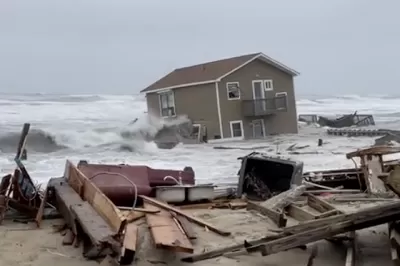
Richard Fausset reports for the New York Times from Rodanthe, North Carolina, a city located in the state’s Outer Banks, where a viral video of the home at 24265 Ocean Drive collapsing into the ocean earlier this month has drawn renewed attention to rising sea levels and the effects of climate change.
“Three prime beachfront lots are now empty on Ocean Drive, a small stretch of a charmingly scruffy Outer Banks subdivision called Trade Winds Beaches that has, to the chagrin of its property owners, become a sort of poster neighborhood for sea-level rise,” writes Fausset.
“The once-generous stretch of beach in front of the houses has largely vanished in recent months, leaving them vulnerable to the destructive power of the Atlantic Ocean.”
While sea-level rise might still seem like a distant threat in some communities, count Outer Banks among the areas where the threat is very present (along with communities along Lake Michigan, the Gulf Coast, and Alaska, among others).
“Federal officials say that sea levels in the area have risen roughly one inch every five years, with climate change being one key reason,” reports Fausset. “State officials say that some Outer Banks beaches are shrinking more than 14 feet per year in some areas.”
More details on the vanishing shoreline of North Carolina can be found in the source article below.
FULL STORY: Beach Houses on the Outer Banks Are Being Swallowed by the Sea

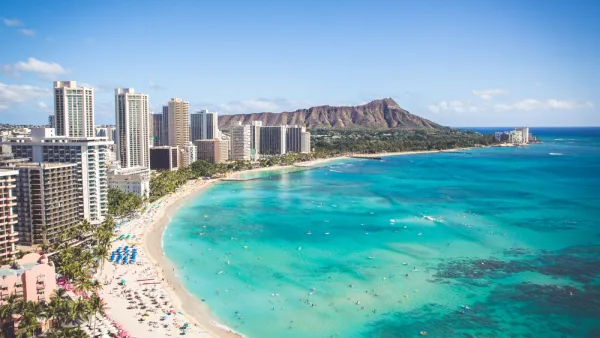
Study: Oahu Could Lose 40 Percent of its Beaches by 2050
A new study calls for changes to coastal management policies to better protect sandy shorelines retreating under the pressure of rising sea levels.
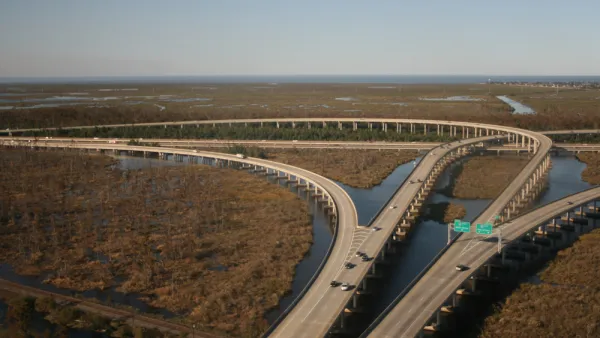
$50 Billion Coastal Master Plan Updated in Louisiana
Louisiana is losing coastal lands, quickly, along with the habitat and economic resources located there. A Coastal Master Plan plots $50 billion in spending to protect the coast.
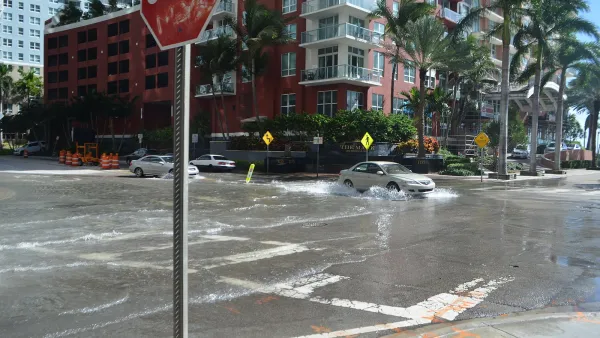
Florida Home Insurance Prices Increasingly a Burden for Residents
Climate change is coming for the state of Florida, and it’s already showing up in the insurance market.

The state-sanctioned urbicide of Austin
People don’t kill cities. Freeways do.

US to reduce Colorado River water deliveries to Mexico
A new Colorado Treaty amendment reduces Mexico’s Colorado River water allocation by 250,000 acre feet.

New Jersey’s second-largest city bans standalone data centers
Jersey City will continue to allow co-location facilities, such as those meant for research institutions that store their own data.

Amtrak not solely to blame for New Jersey commuter rail's unreliability, report finds
A new study from the Garden State Initiative found that NJ Transit’s budget grew 20% across a 4 year period, but reliability declined significantly over the same period.

EPA erases limits on planet-warming pollution from power plants
Under Monday’s plan, power plants would still have some limits on how much mercury, arsenic and other contaminants they can emit.

Phoenix announces new on-demand transit service, more frequent RAPID buses
Both new services will launch in October, and are part of Phoenix's Project Effective Access Solutions for Easing Congestion.

FREE Course: Walkable City 1: Why Walkability?
After describing his path towards focusing on walkability as the essence of good planning, Jeff Speck marches through his five principal reasons for making more walkable places.
Reinventing Malls: Planning Alchemy—Turning Gray Fields Into Gold
The course focuses on the opportunities and imperatives that shape reinvention of mall sites.

Eagle County Government
Harvard University Graduate School of Design
Nashville Planning Department
The Architects Foundation
University of Cincinnati Online
The Pocatello Development Authority
The Urban Renewal Agency of the City of Pocatello
Journal of the American Planning Association