The $4 billion project promises to connect San Diego to its international airport in under ten minutes.


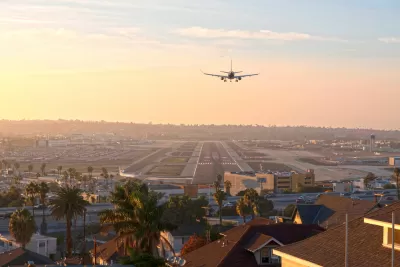
San Diego regional planners are shifting gears with a new proposal to bring a people mover to the city’s airport, report Lori Weisberg and Jennifer Van Grove. “Key to making the latest multibillion-dollar idea work is routing the new transit line — both above and below ground — from a 13-acre piece of government-owned land on Pacific Highway, where the Port of San Diego’s administrative offices are located.” Additionally, “A second route would go between the airport and the Santa Fe Depot with a stop at the County Administration Building.”
According to the article, “The two routes would take no longer than eight or nine minutes to traverse on an automated people mover.”
The San Diego Association of Governments (SANDAG) plans to break ground on the project in two years. “Envisioned as part of the proposed port transit center would be new port facilities, low-cost accommodations, a maintenance facility to service the transit vehicles, and direct access ramps to Interstate 5.”
The source article outlines the agency’s plan to expedite the people mover while still pursuing future plans for a centralized mobility hub, which were largely scrapped due to concerns that SANDAG’s preferred location was too out of the way and would delay the project for too long.
FULL STORY: New, $4B people mover plan promises faster link to San Diego airport

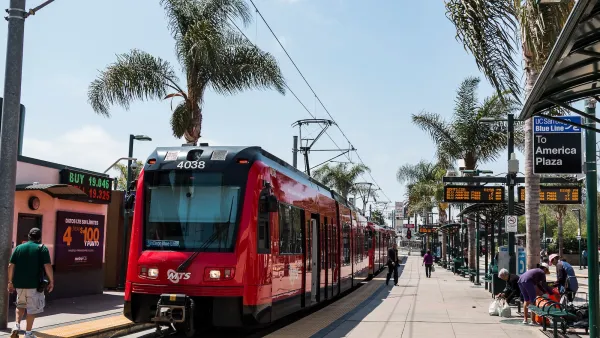
San Diego could raise fares for North County buses and trolleys
A SANDAG committee voted to raise single-ride fares from $2.50 to $3.
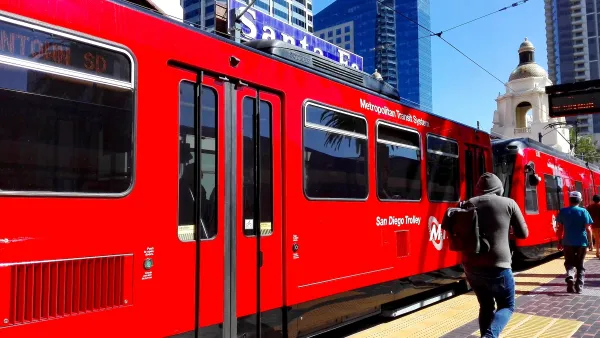
San Diego wants to limit upzoning law to just 16% of transit-adjacent parcels
The city's planning director says some areas are unfit for immediate upzoning due to a lack of resources or hazards such as wildfire risk.
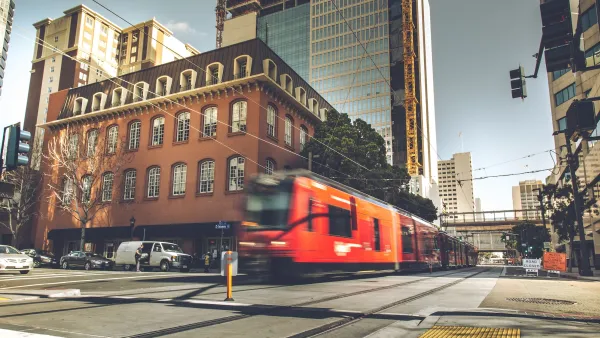
San Diego Transit Awarded $60 Million for Trolley, Electric Buses
The funding will support the electrification of San Diego’s bus system and safety and efficiency enhancements on the Orange Line trolley.

The state-sanctioned urbicide of Austin
People don’t kill cities. Freeways do.

US to reduce Colorado River water deliveries to Mexico
A new Colorado Treaty amendment reduces Mexico’s Colorado River water allocation by 250,000 acre feet.

New Jersey’s second-largest city bans standalone data centers
Jersey City will continue to allow co-location facilities, such as those meant for research institutions that store their own data.

Amtrak not solely to blame for New Jersey commuter rail's unreliability, report finds
A new study from the Garden State Initiative found that NJ Transit’s budget grew 20% across a 4 year period, but reliability declined significantly over the same period.

EPA erases limits on planet-warming pollution from power plants
Under Monday’s plan, power plants would still have some limits on how much mercury, arsenic and other contaminants they can emit.

Phoenix announces new on-demand transit service, more frequent RAPID buses
Both new services will launch in October, and are part of Phoenix's Project Effective Access Solutions for Easing Congestion.

FREE Course: Walkable City 1: Why Walkability?
After describing his path towards focusing on walkability as the essence of good planning, Jeff Speck marches through his five principal reasons for making more walkable places.
Reinventing Malls: Planning Alchemy—Turning Gray Fields Into Gold
The course focuses on the opportunities and imperatives that shape reinvention of mall sites.

Eagle County Government
Harvard University Graduate School of Design
Nashville Planning Department
The Architects Foundation
University of Cincinnati Online
The Pocatello Development Authority
The Urban Renewal Agency of the City of Pocatello
Journal of the American Planning Association