Almost every county in the country has more Hispanics than in 2010, according to recent Census data now searchable by interactive map.



"The nation's Hispanic population grew 23 percent to 61.1 million over the last 10 years," according to a recent article by Frank Bass for Social Explorer based on data recently published by the U.S. Census. The increase in Hispanic population spread evenly across the country: 2,826 of the nation's 3,143 counties increased their number of Hispanic residents, according to the article.
Many of the places that lost Hispanic population—all in Texas, actually—already had some of the largest percentages of Hispanic residents, according to Bass's analysis of the data.
The source article below includes a link to an interactive map that allows users to explore Hispanic population changes at the county level.
Read the full story: Change in Hispanic Population, 2020-20


Census Data: U.S. Household Growth Slower Than Ever in the 2010s
A growing number of signs show major shifts in U.S. population growth—most emerged before the pandemic.

A Look at Houston's Demographic Future
Using the Urban Institute's Mapping America's Futures tool, the Kinder Institute overviews likely racial demographics in Texas and elsewhere by 2030.
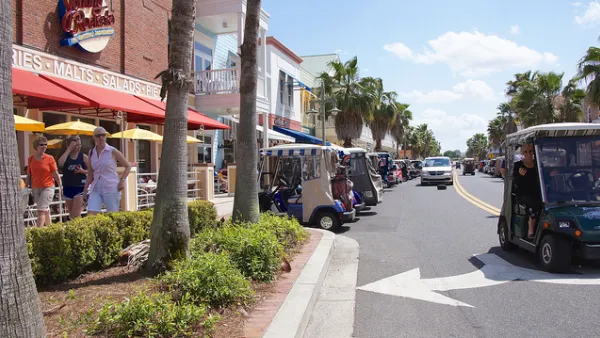
The Fastest Growing Small Cities In America
Joel Kotkin explores the small cities that are growing the fastest in the United States, and what factors lead to this growth.

Planetizen Federal Action Tracker
A weekly monitor of how Trump’s orders and actions are impacting planners and planning in America.

Amtrak, CN end decades-long dispute with eight-year agreement
The new operating agreement establishes an updated framework for the companies to work together, including processes to resolve disputes.

Northwest rail fans eager for Sept. 30 debut of Amtrak’s Airo fleet
Get ready for that new train smell and more seats. But they won’t go faster or run more frequently on the Cascades route in Washington and Oregon.

Pittsburg launches 'EZ permits,' aims for one-day turnaround for low-risk permits
The pilot ‘fast lane’ for permits is part of a bundle of modernization efforts for Pittsburg’s permitting process.

Eating, littering on Singapore buses now a fineable offense
Passengers who put other riders in danger may be charged thousands of Singapore dollars.

This rural Oklahoma town doesn’t want a data center. It may not be able to stop the project
With the project outside city limits and little county oversight of unincorporated land, officials are considering measures to gain local control.

FREE Course: Walkable City 1: Why Walkability?
After describing his path towards focusing on walkability as the essence of good planning, Jeff Speck marches through his five principal reasons for making more walkable places.
Reinventing Malls: Planning Alchemy—Turning Gray Fields Into Gold
The course focuses on the opportunities and imperatives that shape reinvention of mall sites.

City of Thousand Oaks
City of Wisconsin Rapids
Harvard University Graduate School of Design
The Architects Foundation
University of Cincinnati Online
The Pocatello Development Authority
The Urban Renewal Agency of the City of Pocatello