Albuquerque is the largest U.S. city yet to offer free rides on its entire system of buses with a one-year pilot program that launched at the beginning of the year.


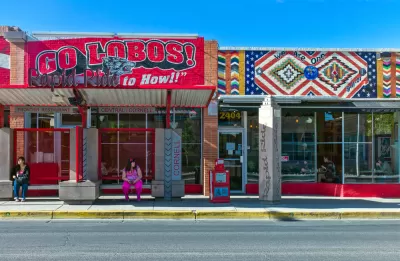
"On Jan. 1, Albuquerque started a year-long experiment: allowing everyone to use city buses — which normally cost $1 per ride — for free," reports Savannah Maher for Marketplace.
Albuquerque is joining a growing list of cities to offer fare-free access to some or all bus routes in the city. Maher lists cities like Missoula, Montana, Olympia, Washington, and Richmond, Virginia as examples. The mayor of Boston, Michelle Wu, also recently announced a plan to make some bus routes in that city free to ride. "But with more than half a million residents, Albuquerque is the largest U.S. city to experiment with zero-fare transit at this scale," according to Maher.
Lan Sena, city council representative for the west side of the city, home to "a lot of people we’ve come to know as essential workers," is quoted in the article saying that fare-free transit will attract riders back to the system and give low-income residents a break during tough times.
The article digs into some of the personal experiences of bus riders in Albuquerque and some of the implications of fare-free transit in the broader field of transportation planning and funding.
FULL STORY: Albuquerque’s bus system starts zero-fare experiment for 2022

Opinion: Free Fares Won’t Solve the Transit Crisis
“The biggest US transit agencies must be allowed to simply focus on delivering high-quality service. There is no Plan B.”
Free Rides, Overnight Service Considered for Metro Transit in D.C.
Washington, D.C. councilmembers are making a bold commitment to public transit.
D.C. Metro Seeks Public Input on Proposed Service Cuts
D.C. Metro Seeks Public Input on Proposed Service Cuts

The state-sanctioned urbicide of Austin
People don’t kill cities. Freeways do.

US to reduce Colorado River water deliveries to Mexico
A new Colorado Treaty amendment reduces Mexico’s Colorado River water allocation by 250,000 acre feet.

New Jersey’s second-largest city bans standalone data centers
Jersey City will continue to allow co-location facilities, such as those meant for research institutions that store their own data.

Amtrak not solely to blame for New Jersey commuter rail's unreliability, report finds
A new study from the Garden State Initiative found that NJ Transit’s budget grew 20% across a 4 year period, but reliability declined significantly over the same period.

EPA erases limits on planet-warming pollution from power plants
Under Monday’s plan, power plants would still have some limits on how much mercury, arsenic and other contaminants they can emit.

Phoenix announces new on-demand transit service, more frequent RAPID buses
Both new services will launch in October, and are part of Phoenix's Project Effective Access Solutions for Easing Congestion.

FREE Course: Walkable City 1: Why Walkability?
After describing his path towards focusing on walkability as the essence of good planning, Jeff Speck marches through his five principal reasons for making more walkable places.
Reinventing Malls: Planning Alchemy—Turning Gray Fields Into Gold
The course focuses on the opportunities and imperatives that shape reinvention of mall sites.

Eagle County Government
Harvard University Graduate School of Design
Nashville Planning Department
The Architects Foundation
University of Cincinnati Online
The Pocatello Development Authority
The Urban Renewal Agency of the City of Pocatello
Journal of the American Planning Association