The Capital City Development Corp. is considering a plan to revamp and extend existing bike infrastructure on 8th Street in Downtown Boise.


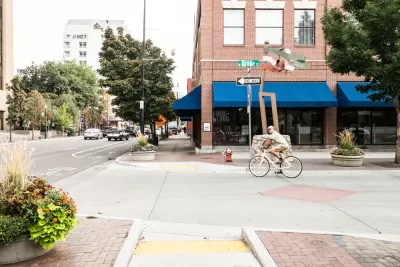
"The long multi-year project to make 8th St. in Downtown Boise a north-south bicycle corridor could continue," reports Don Day for Boise Dev.
The final product could be more than a mile of bike lane through Downtown Boise, adding to the existing lane that connects State Street to Franklin Street via 8th Street, according to Day.
The project, under consideration by the Capital City Development Corp., would revamp the existing lane, which includes some sections of dedicate bike lane, a few sections with sharrows, and a section that cuts the Grove Plaza pedestrian plaza. Three options for reconfiguring the street to make space for the bike lane are under consideration.
"The options differ on the configuration of parking – with variations that would keep parallel parking on both sides, limit parallel parking to a single side, or add back-in angle parking. Trade-offs for the different options include possible removal of some landscaping, cost or loss of parking spots," reports Day.
More on the potential configurations for the revamp and extension of Boise's 8th Street bike corridor are included in the source article below.
Read the full story: Project could further extend north-south downtown Boise bike corridor
Bikelash in Boise
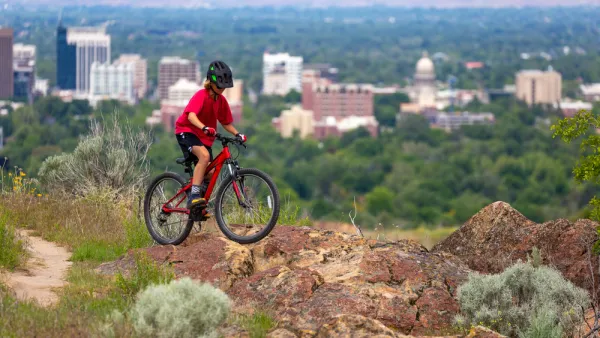
Parents don’t want bike lanes to interfere with the pick up and drop off zone near two churches and schools in Boise.
Idaho Bills Limit New Bike Lanes, Sidewalks
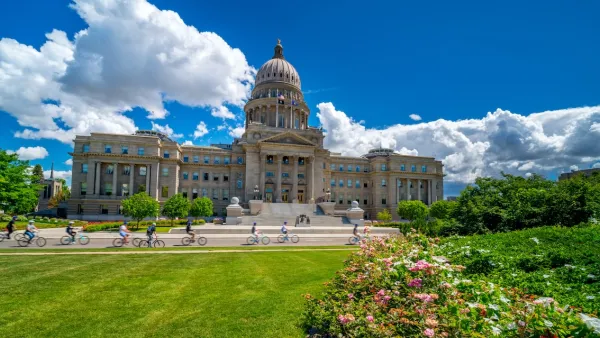
Cities in the county surrounding Boise will have to prove a “secondary benefit” before adding bike lanes or sidewalks to road projects.
Dallas Makes First-Ever Annual Commitment to its Bike Lane Program
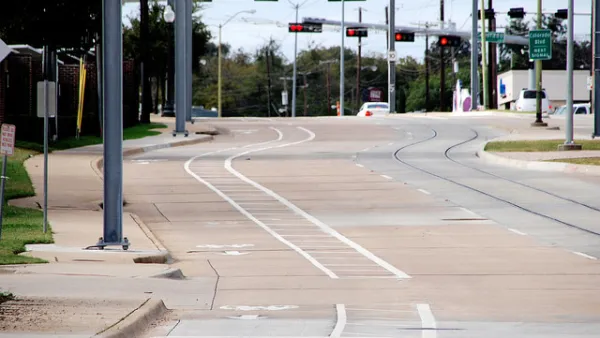
Dallas is making new commitments to alternative transportation options—the latest example is found in a budget expenditure for several bike lane projects.

Planetizen Federal Action Tracker
A weekly monitor of how Trump’s orders and actions are impacting planners and planning in America.

Eastern Nebraska is running out of electricity
Data centers and electrification are straining eastern Nebraska’s grid, throttling economic development.
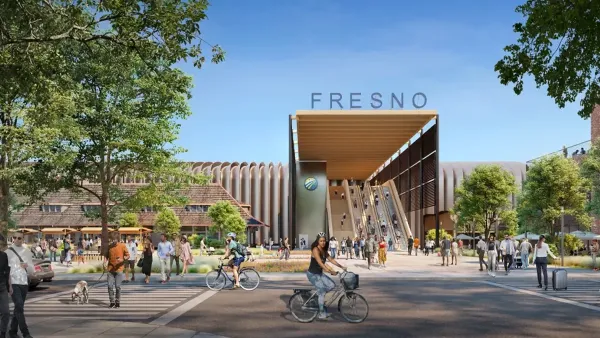
California High-Speed Rail Authority picks trainset manufacturer
The California High-Speed Rail Authority aims to start servicing passengers by 2033.

Massachusetts bogs generate both power, and cranberries
Putting solar panels above farmland is one way Massachusetts is advancing toward its goal of net-zero carbon emissions by 2050.

What could the future of LA transit look like under Raman?
The mayor-elect views broken sidewalks and potholes as crises that can be fixed with better governance.

States are counting on battery farms. Some towns don’t want them.
While fire safety has improved, some communities are still wary.

FREE Course: Walkable City 1: Why Walkability?
After describing his path towards focusing on walkability as the essence of good planning, Jeff Speck marches through his five principal reasons for making more walkable places.
Reinventing Malls: Planning Alchemy—Turning Gray Fields Into Gold
The course focuses on the opportunities and imperatives that shape reinvention of mall sites.

City of Rosemead
Rutgers University, Edward J. Bloustein School of Planning and Public Policy
One Hundred Miles
University of Michigan School for Environment and Sustainability (SEAS)
Hunter College, City University of New York (CUNY)
The Architects Foundation
City of Cambridge
The Pocatello Development Authority
The Urban Renewal Agency of the City of Pocatello