Americans fled cities in waves during the pandemic, right? Not to so fast.



Writing for the Joint Center for Housing Studies of Harvard University, Riordan Frost presents the latest change-of-address data from the United States Postal Service to shed a little more light on one of the dominant narratives of the pandemic: that Americans moved en masse away from cities during the pandemic.
According to Frost, "change-of-address requests submitted to the US Postal Service (USPS) indicate that while an unusually large number of people did move early in the pandemic and again in late 2020, there has not been a significant change from prior years in the total number of moves since the pandemic began."
"The data, moreover, show notable increases in the number of individuals who moved but decreases in the number of families that moved," adds Frost.
The amount of moving during the pandemic is even compared to a low bar: "the share of Americans moving each year has been falling for several decades," notes Frost.
A lot more detail on the methodology and findings of this data analysis are available in the source article below.
FULL STORY: HAVE MORE PEOPLE MOVED DURING THE PANDEMIC?


Measuring the Urban Exodus
New data reveals truths about one of the biggest questions to emerge from the pandemic: Did the public health risks and economic disruptions of 2020 and 2021 spur an urban exodus away from the urban cores of large metropolitan areas?
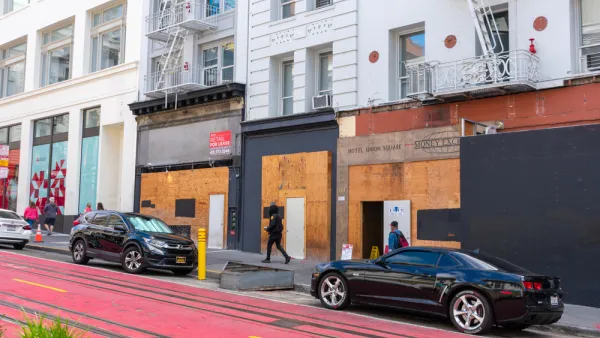
The Demographics of San Francisco’s Pandemic Urban Exodus
New Census data break down San Francisco’s population losses during the first year-plus of the pandemic by race and age.
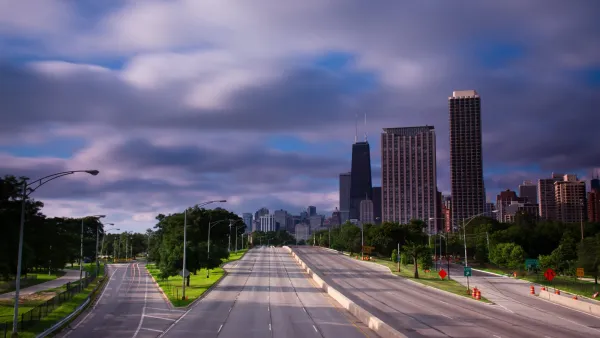
Americans Are Moving, but Staying Close to Home
Despite fears of a mass exodus, most cities are seeing only modest population losses, with the majority of movers staying in the same metro area.

Planetizen Federal Action Tracker
A weekly monitor of how Trump’s orders and actions are impacting planners and planning in America.

The state-sanctioned urbicide of Austin
People don’t kill cities. Freeways do.

US to reduce Colorado River water deliveries to Mexico
A new Colorado Treaty amendment reduces Mexico’s Colorado River water allocation by 250,000 acre feet.

5 New England states march closer to 800 megawatt wind energy project
Securing federal approval for the project may be complicated under the Trump administration, which has historically been hostile towards domestic wind power.

Baltimore to break ground on $50 million Transit Priority Project
The project will bring faster bus trips, safer streets and better bike connections to Baltimore.

Airbnb launches $250 million 'last-dollar financing' housing accelerator, makes first investment in Austin
The company will put $6.4 million towards affordable housing development in Texas’ capital.

FREE Course: Walkable City 1: Why Walkability?
After describing his path towards focusing on walkability as the essence of good planning, Jeff Speck marches through his five principal reasons for making more walkable places.
Reinventing Malls: Planning Alchemy—Turning Gray Fields Into Gold
The course focuses on the opportunities and imperatives that shape reinvention of mall sites.

Eagle County Government
Harvard University Graduate School of Design
Nashville Planning Department
The Architects Foundation
University of Cincinnati Online
The Pocatello Development Authority
The Urban Renewal Agency of the City of Pocatello
Journal of the American Planning Association