Construction of the $87-million wildlife crossing on the 101 Freeway in Agoura Hills will begin in 2022.


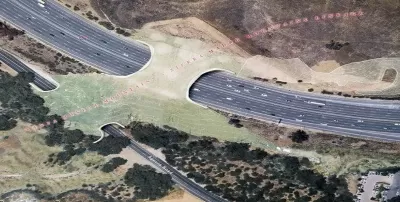
Los Angeles is infamous for its many freeways and horrible traffic. But it can soon be known for something more positive: the creation of the world's largest wildlife bridge. Located in Agoura Hills in western L.A. County, the proposed Wallis Annenberg Wildlife Crossing will measure 200-foot-long and 165-foot-wide when completed, and span over a busy eight-lane stretch of the 101 Freeway that is used by about 300,000 vehicles daily.
This massive project is supported by various public and private organizations, including the California Department of Transportation and the National Wildlife Federation. Construction is set to begin in early 2022 and anticipated to be completed by October 2023. The project will be divided into two phases: the first will cover the area across the 101 Freeway and the second will cover the two-lane stretch across Agoura Road. The bridge is designed to look like part of the natural landscape with native vegetation and irrigation systems. It will shield animals from the commotion below with sound walls and light deflectors to mitigate the effects of the noise and glare of headlights.
For more information, please read the source article by Laura Anaya-Morga of the L.A. Times.
Read the full story: Caltrans projected to break ground on wildlife bridge over 101 Freeway in January 2022
California invests $2.7 billion in over 150 transportation projects
The fund allocates money to transit upgrades and safety improvements to streets surrounding schools, among other ventures.

Colorado creates wildlife crossings fund
Residents will have the option to add $5 to their car registration to fund infrastructure that prevents wildlife-vehicle collisions.
Arizona emerges as national leader in wildlife crossings
Arizona has been building bridges to prevent wildlife-vehicle collisions at various hotspots throughout the state.

Planetizen Federal Action Tracker
A weekly monitor of how Trump’s orders and actions are impacting planners and planning in America.

California plans to bury El Niño’s downpour
If the state plays its cards right, it may be able to store a billion acre-feet of El Niño’s water in aquifers.

Desperate measures: Advocates weigh draining Lake Powell to fill Colorado River
Draining the reservoir could reduce evaporation losses by a couple hundred thousand acre-feet.

Chicago voters approve permanent festival grounds, penalty for vacant property owners
Currently, major summer and fall festivals take over public parks for weeks at a time, drawing criticism from nearby residents

NYC votes to cut outdoor dining red tape, speed up permitting
New York City also voted to allow the Department of Transportation to begin work on urgent projects before notifying elected officials.

California appears to reject Prop. 45
The proposition would have expanded the projects that qualify for a streamlined environmental review, effectively paring down the California Environmental Quality Act.

FREE Course: Walkable City 1: Why Walkability?
After describing his path towards focusing on walkability as the essence of good planning, Jeff Speck marches through his five principal reasons for making more walkable places.
Reinventing Malls: Planning Alchemy—Turning Gray Fields Into Gold
The course focuses on the opportunities and imperatives that shape reinvention of mall sites.

City of Rosemead
Rutgers University, Edward J. Bloustein School of Planning and Public Policy
One Hundred Miles
Hunter College, City University of New York (CUNY)
The Architects Foundation
University of Cincinnati Online
City of Cambridge
Montrose County
The Pocatello Development Authority