A recent scandal and leadership changes have produced an almost unprecedented decision by the Development Authority of Fulton County.


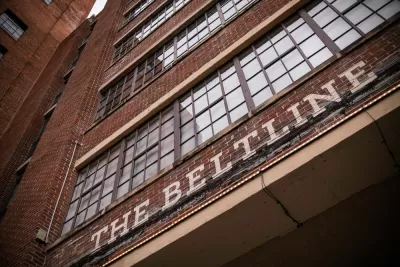
"The Development Authority of Fulton County (DAFC) on Tuesday shot down a proposed tax break for luxury housing along the Atlanta Beltline and voted to overhaul the governance of its board," reports J. Scott Trubey. According to Trubey, DAFC's rejection of a $4.5 million subsidy for Fairfield Residential "reflects a changing of the guard for the controversial agency," because DAFC has been "long criticized as a rubberstamp that grants lucrative tax breaks for projects in well-off parts of the county."
"Earlier this month, an AJC analysis showed DAFC gave preliminary or final approval to more than $328 million in tax breaks since the beginning of 2018, with the overwhelming majority going to projects in hot markets like Buckhead, Midtown and the length of the Beltline loop," writes Trubey.
Following a 4-4 deadlock on the Fairfield Residential tax break, the DAFC also voted to overhaul the governance of its board. All of this follows a series of investigative reports by the Atlanta Journal-Constitution revealing "a culture of loose financial oversight at DAFC under the leadership of former chairman Bob Shaw."
"Shaw resigned from the board and in recent months four new members have joined," adds Trubey.
More details on the Fairfield Residential project, which had been previously granted preliminary approval for its tax break, and the recent changes of the DAFC board can be found in the source article below.
Read the full story: Fulton development authority quashes incentive for Beltline project

Three Years of Inclusionary Zoning Nets More Affordable Housing, Multi-Family Development in Atlanta
The city of Atlanta has released an analysis of the first three years of an Inclusionary Zoning policy for neighborhoods around the Beltline.

How Did Cities Boost Affordable Housing in 2017?
Affordability is elusive in many of America's cities, but some of them made concrete efforts to fight that trend in 2017.

Learning loss and urban schools, part 2
Did test scores in progressive cities drop more post-COVID than test scores in moderate ones?

Planetizen Federal Action Tracker
A weekly monitor of how Trump’s orders and actions are impacting planners and planning in America.

California plans to bury El Niño’s downpour
If the state plays its cards right, it may be able to store a billion acre-feet of El Niño’s water in aquifers.

Desperate measures: Advocates weigh draining Lake Powell to fill Colorado River
Draining the reservoir could reduce evaporation losses by a couple hundred thousand acre-feet.

Chicago voters approve permanent festival grounds, penalty for vacant property owners
Currently, major summer and fall festivals take over public parks for weeks at a time, drawing criticism from nearby residents

NYC votes to cut outdoor dining red tape, speed up permitting
New York City also voted to allow the Department of Transportation to begin work on urgent projects before notifying elected officials.

California appears to reject Prop. 45
The proposition would have expanded the projects that qualify for a streamlined environmental review, effectively paring down the California Environmental Quality Act.

FREE Course: Walkable City 1: Why Walkability?
After describing his path towards focusing on walkability as the essence of good planning, Jeff Speck marches through his five principal reasons for making more walkable places.
Reinventing Malls: Planning Alchemy—Turning Gray Fields Into Gold
The course focuses on the opportunities and imperatives that shape reinvention of mall sites.

City of Rosemead
Rutgers University, Edward J. Bloustein School of Planning and Public Policy
One Hundred Miles
Hunter College, City University of New York (CUNY)
The Architects Foundation
University of Cincinnati Online
City of Cambridge
Montrose County
The Pocatello Development Authority