Learn about efforts from across the country to expand access to public lands via public transit.


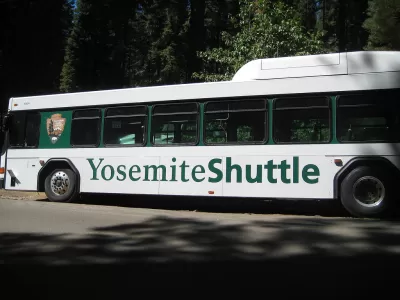
Outdoor destinations, including beaches, parks, natural areas, and trails, have become very popular during the pandemic. For those with cars, getting to these places is usually not too difficult. However, for those without a vehicle, it is challenging to get anywhere outside the urban core of most cities. In this article, Gregory Scruggs writes about how King County (WA) and a number of cities and organizations are working to expand public transit service to parks and trailheads so that more people can access and enjoy the great outdoors. (To better understand how the pandemic has impacted outdoor recreation, read this article and the report it references.)
Specifically, the article features King County's Trailhead Direct which is a pilot project co-led by King County Metro and King County Parks. This project seeks to ease vehicle congestion, reduce safety hazards, and expand access to hiking destinations along I-90. For the 2021 season, Trailhead Direct is offering service to Mt Si and Issaquah on weekends and holidays from June 5th, 2021 to September 26th, 2021.
To learn more about this model transit to trails system and other efforts nationwide, please read the source article.
Read the full story: The Cities Trailblazing Transit Service into the Wilderness
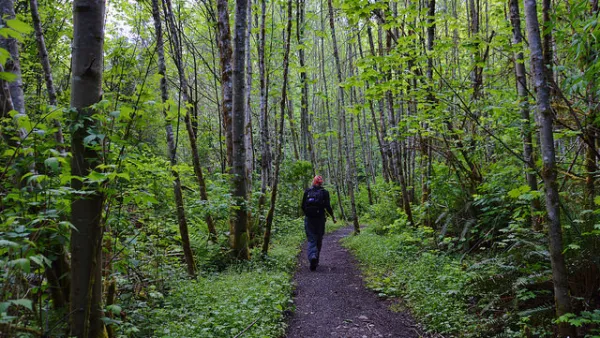
A Shuttle Ride to the Trailhead
A pilot program by King County Metro and the King County Parks Department in the state of Washington found success in 2017, and is spending the beginning of 2018 looking at options to expand.
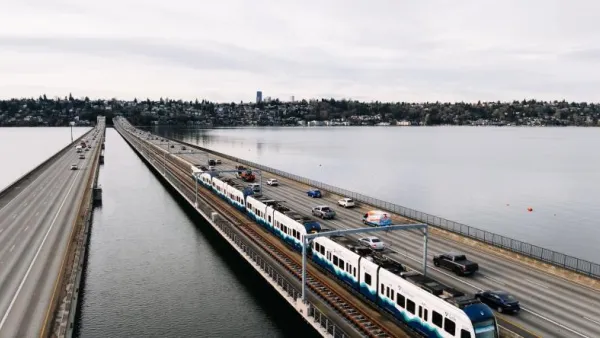
Seattle’s Floating Light Rail Bridge to Open March 28
The new East Link segment of King County’s light rail system crosses Lake Washington on a first-of-its-kind floating bridge.
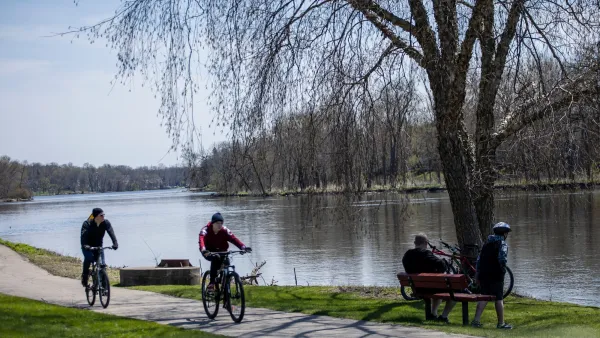
Illinois Funds New ‘Transit to Trails’ Program to Make Parks More Accessible by Bus
A major transit bill includes a new program aimed at connecting more people with parks and green spaces.

Washington state to charge fee to drivers with fuel-efficient cars
Revenue from the fee will go towards supporting the state’s highways.

Illinois considers spending $1 billion in taxpayer money on data center
A quantum computing campus and data center are currently under construction in Chicago.

Trump to blast ‘hydrocarbon highway’ through ‘world’s longest art gallery’
Environmental and historic preservation groups are suing to stop the project.

NYC, state sue feds over mixed-immigration-status housing assistance rule
The state’s lawsuit argues that the rule change violates the Administrative Procedure Act.

Michigan to turn neighborhood into virtual power plant
Residents will soon be able to divert their excess energy to the grid in exchange for compensation.

Data center, mining project swarm to long-awaited Alaska railroad line
The state-owned railroad approved final plans for the spur line this week; the project is expected to cost $311 million, mostly funded by the federal government

FREE Course: Walkable City 1: Why Walkability?
After describing his path towards focusing on walkability as the essence of good planning, Jeff Speck marches through his five principal reasons for making more walkable places.
Reinventing Malls: Planning Alchemy—Turning Gray Fields Into Gold
The course focuses on the opportunities and imperatives that shape reinvention of mall sites.

City of Charlotte
City of Rosemead
Rutgers University, Edward J. Bloustein School of Planning and Public Policy
University of Michigan School for Environment and Sustainability (SEAS)
Hunter College, City University of New York (CUNY)
The Architects Foundation
University District Partnership