The 148-year old tunnel, which slows trains to 30 miles per hour, is the biggest bottleneck between Washington, D.C. and New Jersey.


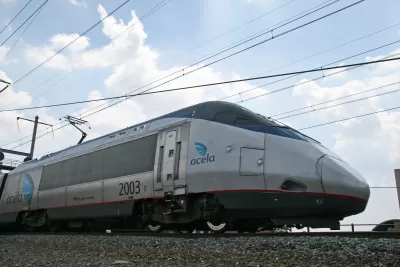
Maryland's "decrepit Baltimore and Potomac Tunnel" could soon be getting an upgrade after "Amtrak and Maryland announced an agreement Friday on a $4 billion plan to build a replacement in the next decade." As Luz Lazo writes in the Washington Post, "[t]he 148-year-old tunnel under West Baltimore is a major bottleneck for Amtrak, Maryland’s MARC commuter trains and commercial rail traffic that moves through the Northeast Corridor."
As "[o]ne of the oldest structures in the Northeast rail corridor, the B&P tunnel is a crucial piece of the network connecting Washington to Boston, moving more than 259 million passengers each year." But the 1.4-mile tunnel slows trains to 30 miles per hour as they pass through, making the tunnel "the biggest chokepoint between Washington and New Jersey." The tunnel also "has critical structural problems, including water issues and brick deterioration, according to a federal review of the project." The new tunnel would only accommodate electric trains, and "Maryland officials said the state agreed to electrify all MARC trains by the time the tunnel would open in as early as 2032."
"The proposal is a scaled-down version of a plan approved four years ago by the Federal Railroad Administration that called for four single-track tunnel tubes. Railroad officials say by building only two tunnels, the project will save $1 billion and up to two years on construction while still tripling train capacity to accommodate future demand." To move forward, Amtrak and state leaders must still secure state and federal funding for the project.
Read the full story: A 148-year-old tunnel is the biggest rail bottleneck between D.C. and New Jersey. Here’s the new plan to replace it.
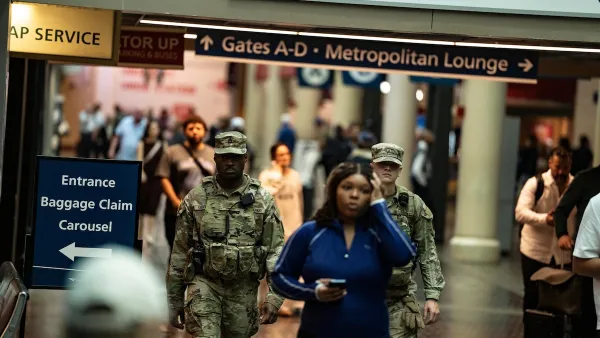
Trump Plans Takeover of DC's Union Station
USDOT says it will take over management duties for the commercial spaces managed by Amtrak since last year and address the building’s infrastructure needs.
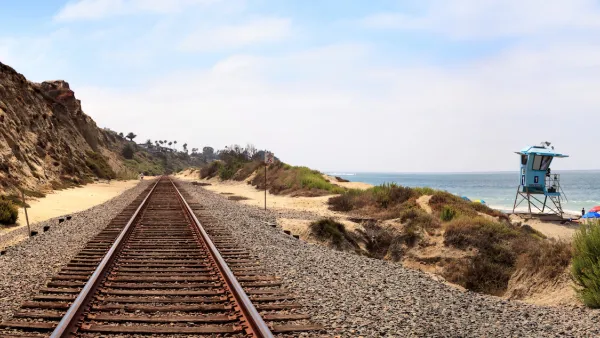
Southern California Rail Service Resumes After Landslide
The corridor has been closed multiple times in the past year as erosion and landslides put coastal rail infrastructure in jeopardy.
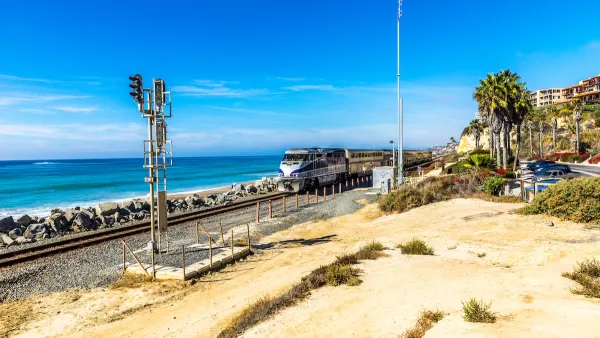
Storms Sever California Rail Line—Again
The coast-hugging rail corridor linking Los Angeles and San Diego faces an uncertain future as mudslides once again force part of the line to close.

Planetizen Federal Action Tracker
A weekly monitor of how Trump’s orders and actions are impacting planners and planning in America.

California plans to bury El Niño’s downpour
If the state plays its cards right, it may be able to store a billion acre-feet of El Niño’s water in aquifers.

Desperate measures: Advocates weigh draining Lake Powell to fill Colorado River
Draining the reservoir could reduce evaporation losses by a couple hundred thousand acre-feet.

US buildings threatened, destroyed by fires set to triple by 2060
Researchers found a high fire risk for socioeconomically vulnerable neighborhoods in the American West.

LA residents may be allowed to paint their own crosswalks
Councilwoman Katy Yaroslavsky put out a motion instructing the Los Angeles Department of Public Transportation to study the feasibility of allowing volunteers to paint crosswalks.

Dallas moves to overhaul its zoning code
The city's zoning reform will allow more multi-family and mixed-use developments.

FREE Course: Walkable City 1: Why Walkability?
After describing his path towards focusing on walkability as the essence of good planning, Jeff Speck marches through his five principal reasons for making more walkable places.
Reinventing Malls: Planning Alchemy—Turning Gray Fields Into Gold
The course focuses on the opportunities and imperatives that shape reinvention of mall sites.

City of Rosemead
Rutgers University, Edward J. Bloustein School of Planning and Public Policy
One Hundred Miles
Hunter College, City University of New York (CUNY)
The Architects Foundation
University of Cincinnati Online
City of Cambridge
Montrose County
The Pocatello Development Authority