The Biden administration is promising a "whole-of-government" approach to prevent an impending wave of displacement and effectively distribute rental assistance.


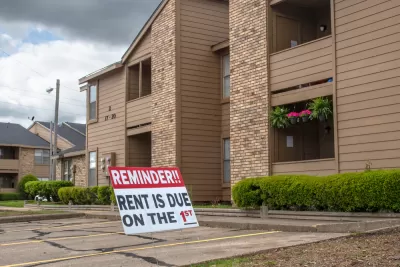
"The Biden administration announced today that it will extend the federal eviction moratorium issued by the Centers for Disease Control and Prevention (CDC) through July 31, and it will implement a whole-of-government approach to prevent a historic wave of evictions this summer," according to a press release from the National Low Income Housing Coalition (NLIHC). "Extending the eviction moratorium through July gives state and local governments more time to distribute more than $46 billion in emergency rental assistance (ERA) to those most in need." The CDC says the extension is intended to be the last in a series of moratoriums meant to prevent evictions during the COVID-19 pandemic.
Additional actions include:
- Convene a summit to bring together local teams to develop eviction-prevention action plans.
- Issue new guidance from Treasury for the ERA program to accelerate and broaden state and local delivery of funds.
- Have the Department of Justice send guidance to state courts encouraging them to adopt anti-eviction diversion practices.
- Provide guidance from HUD to help prevent Fair Housing Act violations related to evictions.
- Activate a whole-of-government effort to raise awareness about emergency rental assistance, tapping agencies including Treasury, HUD, CFPB, DOJ, and USDA to inform tenants and landlords of available support.
According to NLIHC, "At least 6 million renter households are still behind on rent: state and local governments must use the next month to quickly and aggressively strengthen their emergency rental assistance programs to avert an historic wave of evictions this summer and fall."


Supreme Court Strikes Down Federal Eviction Moratorium
The majority opinion claims the CDC overstepped its authority and calls for congressional approval of any further eviction moratoriums.
750,000 Evictions Predicted as Moratoria End
Analysts from Goldman Sachs predict a wave of evictions as eviction moratoriums end with millions of households still behind on rent.

Seattle Extends Eviction Moratorium, Struggles to Distribute Rental Assistance
The city's mayor announced an extension to the city's eviction moratorium as millions in emergency rental assistance remain undisbursed.

The state-sanctioned urbicide of Austin
People don’t kill cities. Freeways do.

US to reduce Colorado River water deliveries to Mexico
A new Colorado Treaty amendment reduces Mexico’s Colorado River water allocation by 250,000 acre feet.

New Jersey’s second-largest city bans standalone data centers
Jersey City will continue to allow co-location facilities, such as those meant for research institutions that store their own data.

Amtrak not solely to blame for New Jersey commuter rail's unreliability, report finds
A new study from the Garden State Initiative found that NJ Transit’s budget grew 20% across a 4 year period, but reliability declined significantly over the same period.

EPA erases limits on planet-warming pollution from power plants
Under Monday’s plan, power plants would still have some limits on how much mercury, arsenic and other contaminants they can emit.

Phoenix announces new on-demand transit service, more frequent RAPID buses
Both new services will launch in October, and are part of Phoenix's Project Effective Access Solutions for Easing Congestion.

FREE Course: Walkable City 1: Why Walkability?
After describing his path towards focusing on walkability as the essence of good planning, Jeff Speck marches through his five principal reasons for making more walkable places.
Reinventing Malls: Planning Alchemy—Turning Gray Fields Into Gold
The course focuses on the opportunities and imperatives that shape reinvention of mall sites.

Eagle County Government
Harvard University Graduate School of Design
Nashville Planning Department
The Architects Foundation
University of Cincinnati Online
The Pocatello Development Authority
The Urban Renewal Agency of the City of Pocatello
Journal of the American Planning Association