The administration's support of a Conoco-Phillips project is at odds with its suspension of Trump-era oil leases in the Arctic National Wildlife Refuge.


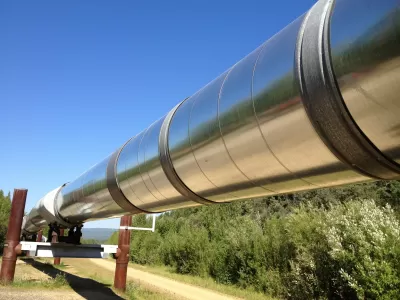
The Biden administration's contradicting stances on drilling in Alaska, writes Frederick Hewett for WBUR's Cognoscenti, is "characteristic of an administration trying to drive an aggressive climate agenda without alienating strategic constituencies and potential political allies."
"There has been no drilling in ANWR except for a single test well in 1986. And although the Trump administration auctioned off 11 oil leases this past January, the Biden administration suspended them earlier this month, citing possible legal irregularities." But the administration also supports ConocoPhillips' Willow project, which "will be just as damaging to the climate and the Arctic environment as similar projects within ANWR would be," says Hewett. "The decarbonization of the economy that Biden is trying to instigate is profoundly at odds with Alaska's economic trajectory and the health of its state budget. The state's popular Permanent Fund, primarily reliant on oil and gas revenues, pays a dividend averaging roughly $1,600 annually to every resident."
According to Hewett, "Alaska may be viewed as a microcosm in which the tensions between economic growth, ecological preservation, fossil fuel exploitation and carbon reduction must eventually be resolved. Projects such as Willow will likely be around for decades, but, at least for now, ANWR is protected."
Read the full story: Does Biden Support Or Oppose Drilling For Oil In Alaska? Yes

Biden Administration Moves to Protect Alaskan Refuge From Drilling
The administration is taking quick action to cement some of Biden’s key environmental accomplishments before the new Trump administration takes the reins.
Do Environmentalists Confuse Oil Production With Oil Demand?
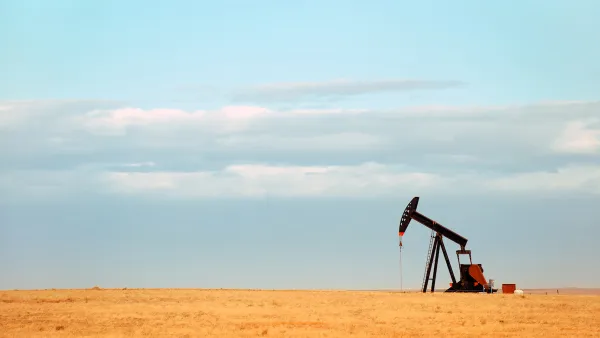
Samantha Gross, the director of the Energy Security and Climate Initiative at the Brookings Institution, argues that the key to reducing emissions is to do the hard work of reducing oil demand rather than focusing on ending U.S. oil drilling.
Mapping Groundwater Risks from Orphan Wells Across U.S. Aquifers
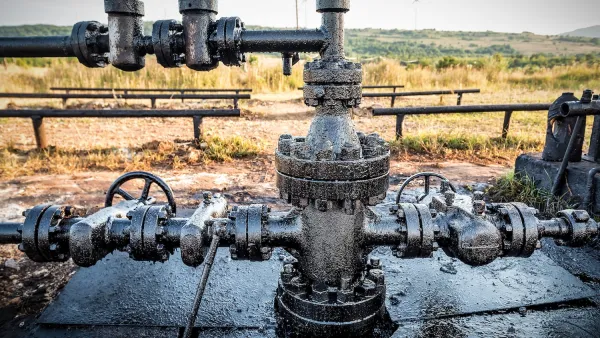
A new USGS study reveals that more than half of the nation’s documented orphan wells lie within aquifers supplying the vast majority of U.S. groundwater, posing widespread risks of contamination from aging, unplugged infrastructure.

Planetizen Federal Action Tracker
A weekly monitor of how Trump’s orders and actions are impacting planners and planning in America.

California plans to bury El Niño’s downpour
If the state plays its cards right, it may be able to store a billion acre-feet of El Niño’s water in aquifers.

Desperate measures: Advocates weigh draining Lake Powell to fill Colorado River
Draining the reservoir could reduce evaporation losses by a couple hundred thousand acre-feet.

Mamdani’s pied-à-terre tax survives legal challenge
A panel of judges found that the plaintiffs failed to demonstrate injury as a result of New York City's implementation of the tax.

Eastern Nebraska is running out of electricity
Data centers and electrification are straining eastern Nebraska’s grid, throttling economic development.

Seattle passes record-breaking transit services expansion
Proposition 1 will double the city’s transit tax to add 95,000 more bus trips and preserve 180,000 bus trips annually.

FREE Course: Walkable City 1: Why Walkability?
After describing his path towards focusing on walkability as the essence of good planning, Jeff Speck marches through his five principal reasons for making more walkable places.
Reinventing Malls: Planning Alchemy—Turning Gray Fields Into Gold
The course focuses on the opportunities and imperatives that shape reinvention of mall sites.

City of Rosemead
Rutgers University, Edward J. Bloustein School of Planning and Public Policy
One Hundred Miles
University of Michigan School for Environment and Sustainability (SEAS)
Hunter College, City University of New York (CUNY)
The Architects Foundation
City of Cambridge
Montrose County
The Pocatello Development Authority