Under the new regulations, homeowners must register for a license and collect city hotel taxes for short-term rental properties.


Atlanta's city council has passed new regulations governing short-term rentals like Airbnb, voting "13-1 to allow homeowners to rent rooms or entire houses to guests for up to 30 days, as long as the owners apply for an annual license, pay a $150 license fee, and collect city hotel-motel taxes from guests." Wilborn P. Nobles III, writing in the Atlanta Journal-Constitution, notes that the measure comes as a compromise after "Councilman Howard Shook initially proposed a ban on short-term rentals."
Short-term rental giant Airbnb called the new rules "clear and equitable," telling the Atlanta Journal Constitution that the new regulatory environment will allow "responsible hosts to continue earning crucial income." To address community concerns about noise, vandalism, and safety, the law "subjects owners to a $500 fine for violations such as noise nuisances" and "allows the city to revoke an owner’s rental license for a year if the owner’s property commits three violations within a year."
Recently, San Diego also passed new regulations limiting the number of short-term rental units in the city amid concerns about housing affordability.
FULL STORY: Airbnb praises Atlanta’s passage of short-term rental laws


Short-Term Rentals Continue to Evade Regulations
City leaders around the world are struggling to control the short-term rental market, which many fear is jeopardizing the housing supply and displacing longtime residents.
Proposed Short-Term Rental Tax Would Fund Affordable Housing in California
A state bill would impose a tax similar to a hotel tax on short-term rental owners, with the revenue funding affordable housing projects.
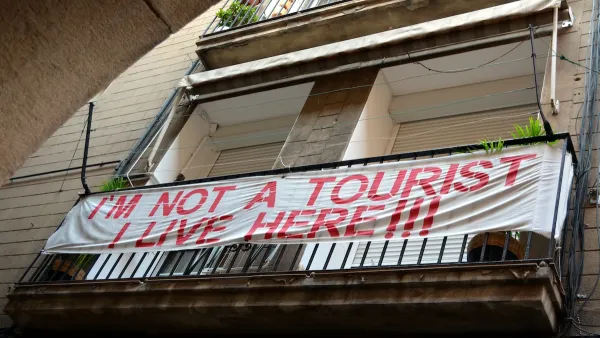
Barcelona Buys Building to Prevent Tenant Evictions
One apartment building — and its tenants who faced eviction — became a potent symbol of the city’s growing housing crisis.

Planetizen Federal Action Tracker
A weekly monitor of how Trump’s orders and actions are impacting planners and planning in America.

The state-sanctioned urbicide of Austin
People don’t kill cities. Freeways do.

US to reduce Colorado River water deliveries to Mexico
A new Colorado Treaty amendment reduces Mexico’s Colorado River water allocation by 250,000 acre feet.

Baltimore to break ground on $50 million Transit Priority Project
The project will bring faster bus trips, safer streets and better bike connections to Baltimore.

Airbnb launches $250 million 'last-dollar financing' housing accelerator, makes first investment in Austin
The company will put $6.4 million towards affordable housing development in Texas’ capital.

Guerilla urbanists are building DIY bus stop benches in Chicago
A before-and-after of one of the bus stops with a new bench. The new benches are not officially sanctioned or permitted, but the residents who placed them hope they will be the start of a network of DIY benches across the city.

FREE Course: Walkable City 1: Why Walkability?
After describing his path towards focusing on walkability as the essence of good planning, Jeff Speck marches through his five principal reasons for making more walkable places.
Reinventing Malls: Planning Alchemy—Turning Gray Fields Into Gold
The course focuses on the opportunities and imperatives that shape reinvention of mall sites.

Eagle County Government
Harvard University Graduate School of Design
Nashville Planning Department
The Architects Foundation
University of Cincinnati Online
The Pocatello Development Authority
The Urban Renewal Agency of the City of Pocatello
Journal of the American Planning Association