A pied-à-terre tax proposed by New York State legislators faced the scrutiny of the Independent Budget Office.


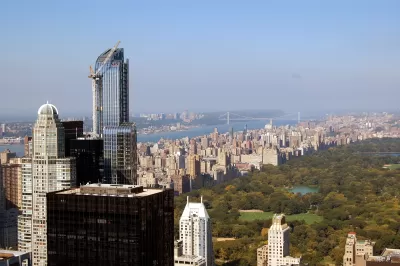
"A tax on luxury second homes in New York City would yield far less revenue than expected," reports Erin Hudson, sharing findings of a report by the New York City Independent Budget Office (IBO).
The IBO reduced its revenue estimate for a proposed pied-à-terre tax by 41 percent, estimating total revenue generated to total $232 million. "George Sweeting, deputy director of IBO, said the agency realized far fewer homes than originally thought would qualify as pieds-à-terre worth $5 million or more," Hudson explains of the report's findings.
Still, Sweeting also said that with so many unknowns, the numbers could change again. As proposed by State Senator Brad Hoylan (D-Manhattan), the pied-à-terre tax would increase property taxes for one- to -three-family homes worth $5 million or more if the homes are not a primary residence.
The state, which would approve any potential pied-à-terre tax, has been flirting with the idea for a few years now, dating back to 2019 and the budget process that culminated in March 2020.
Read the full story: Pied-à-terre tax revenue estimate slashed by 41%

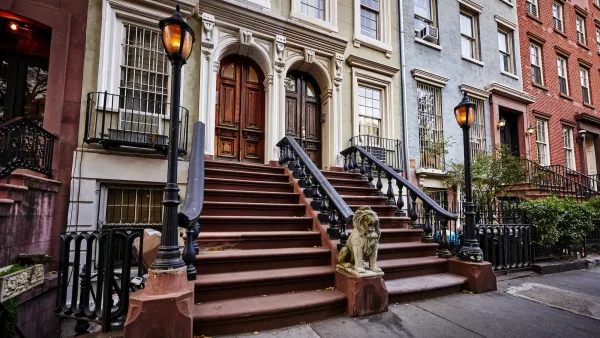
NYC announces new 'pied-à-terre tax' on second homes
The tax applies to homes worth over $5 million whose owners have other primary residences.
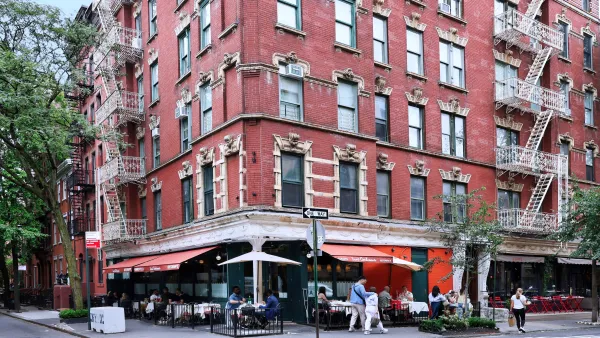
Over half of NYC luxury second properties may be exempt from pied-à-terre tax
Complicated laws around buildings owned by LLCs are making it difficult for NYC officials to determine which buildings can be taxed.
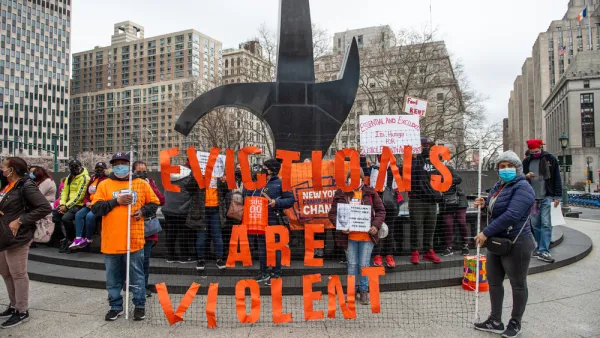
New York's 'Good Cause Eviction' Bill, Explained
Here's a slightly humorous approach to a serious topic: the Good Cause Eviction law making its way through the New York State Legislature.

Planetizen Federal Action Tracker
A weekly monitor of how Trump’s orders and actions are impacting planners and planning in America.

The state-sanctioned urbicide of Austin
People don’t kill cities. Freeways do.

US to reduce Colorado River water deliveries to Mexico
A new Colorado Treaty amendment reduces Mexico’s Colorado River water allocation by 250,000 acre feet.

Nation's most wind-powered state turns to coal as data centers increase energy demand
For the first time in decades, Iowa has increased its generation of coal power.

NYC cools commuters with city's first rain garden above a bus stop
New York City officials say the plants in the rain garden can absorb 16 gallons of rainwater during heavy storms.

Brightline West’s future may rely on $6 billion federal loan
The company has until Nov. 2 to make a $400 million equity investment into its proposed high-speed rail line.

FREE Course: Walkable City 1: Why Walkability?
After describing his path towards focusing on walkability as the essence of good planning, Jeff Speck marches through his five principal reasons for making more walkable places.
Reinventing Malls: Planning Alchemy—Turning Gray Fields Into Gold
The course focuses on the opportunities and imperatives that shape reinvention of mall sites.

Eagle County Government
Harvard University Graduate School of Design
Nashville Planning Department
The Architects Foundation
University of Cincinnati Online
The Pocatello Development Authority
The Urban Renewal Agency of the City of Pocatello
Journal of the American Planning Association