Remote workers are flocking to small, amenity-rich towns in the West, changing their social and economic landscape.


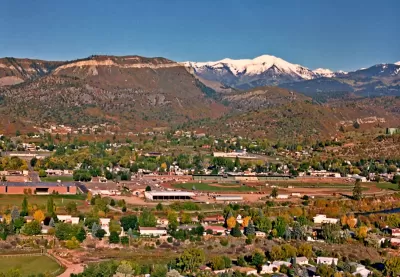
The sudden growth in telecommuting brought on by the COVID-19 pandemic has upended the commercial real estate industry as companies rethink their need for physical office space and workers embrace the benefits of the new work-from-home lifestyle. The change is also having impacts on small towns that are simultaneously losing some major employers while gaining a new influx of newly 'free' workers untethered from offices in big cities.
As the need to stay close to the work opportunities and amenities of major urban centers dissipates, more Americans are seeking out small, amenity-rich towns that offer high quality of life at low cost. These so-called "Zoom towns" offer lower taxes and relatively affordable real estate for former urban dwellers, but the double-edged "Zoom boom" is also driving up housing costs and threatening to drive out older residents in places with limited housing stock. At the same time, commercial landlords and city officials struggle to find uses for formerly occupied office buildings. One possible solution, writes Jonathan Thompson for High Country News, is converting unused offices into affordable housing to alleviate the crunch facing many of the most desirable rural communities now seeing an explosive growth in demand.
Read the full story: How the Zoom boom is changing the West


Orlando Now Less Affordable than San Francisco
An analysis of housing affordability shows rising costs in America's smaller cities.
Remote Work is Dying in the Bay Area — and Tech is Leading the Charge
Roughly two-thirds of Bay Area workers are back in the office full-time.
The Rise of Crowdfunded Real Estate
Enabled by provisions in the JOBS Act of 2012 that allow smaller scale investing, community members are becoming co-owners of local real estate projects.

Planetizen Federal Action Tracker
A weekly monitor of how Trump’s orders and actions are impacting planners and planning in America.

Amtrak, CN end decades-long dispute with eight-year agreement
The new operating agreement establishes an updated framework for the companies to work together, including processes to resolve disputes.

Judges permit Denver to divert 77,000 acre feet from the Colorado River for reservoir expansion
Overuse and climate change have caused the Colorado River’s water levels to plummet.

Atlanta City Council unanimously backs $3.5 billion Beltline light rail project
The resolution was drafted after Atlanta Mayor Andre Dickens pulled support for the Atlanta Streetcar extension last year.

SEPTA to bring nearby frequent transit to over 1 million new riders as part of decade-long plan
The agency's Accelerate plan will also bring frequent transit to twice the amount of jobs that are currently located near it.

NYC plants over 18,000 trees, the most new foliage in a decade
Many of the trees were planted in communities vulnerable to extreme heat.

FREE Course: Walkable City 1: Why Walkability?
After describing his path towards focusing on walkability as the essence of good planning, Jeff Speck marches through his five principal reasons for making more walkable places.
Reinventing Malls: Planning Alchemy—Turning Gray Fields Into Gold
The course focuses on the opportunities and imperatives that shape reinvention of mall sites.


City of Thousand Oaks
City of Wisconsin Rapids
Harvard University Graduate School of Design
The Architects Foundation
University of Cincinnati Online
The Pocatello Development Authority
The Urban Renewal Agency of the City of Pocatello