The Washington Supreme Court struck down an initiative that would have cost state and local governments an estimated $4.2 billion in transportation funding.



"[A] measure promising to cut car-tab taxes to $30 a year has been blocked by Washington state courts," reports Melissa Santos.
"[T]he state Supreme Court struck down Initiative 976, a measure Washington voters approved last November to reduce the cost of annual vehicle licensing fees," adds Santos. "The measure has been on hold for nearly a year as legal challenges worked their way through the court system."
The state Supreme Court rejected the initiative on technicalities: because it combined more than one subject in one initiative. Eight of nine of the court's judges also said the initiative had a misleading title.
Santos provides the history of I-976, including information about its champion, anti-tax activist Tim Eyman. "One of Eyman’s main targets with the initiative was Sound Transit, which is building a regional light rail network paid for in part by higher car-tab fees. Puget Sound voters approved that transit expansion, and the increased fees, in 2016," according to Santos. This is the third setback for Eyman's anti-tax crusade in the state's courts.
More details on the expected consequences of the court's ruling is included in the source article. Heidi Groover provides additional news coverage of the court decision for The Seattle Times.
Previous Planetizen coverage of Initiative 976:
FULL STORY: WA Supreme Court rules $30 car tab initiative is unconstitutional


Judge Puts Washington's Transportation-Busting Initiative on Hold
Washington state voters expecting to see their vehicle registration fees drop to $30 on Thursday due to the passage of Initiative 976 on Nov. 5 might have to wait much longer after a King County Superior Court judge put the measure on hold.
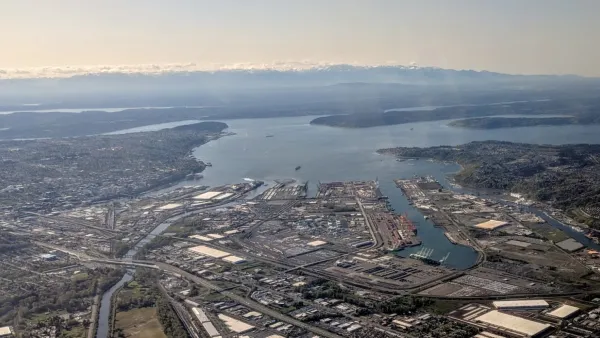
Election 2019: Devastating Transportation Funding Loss in Pacific Northwest
Washington voters' approval of Initiative 976, which put a limit on car tab increases as well as repealing many motor vehicle fees, will have far-reaching consequences for funding road maintenance, transit, and bike and pedestrian projects.
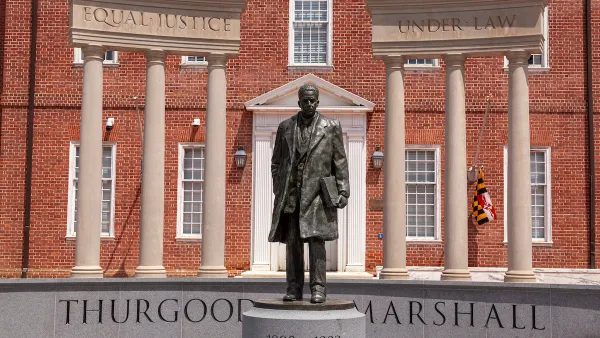
State Supreme Court Clears Way for Defunct Airport Redevelopment in Maryland
The legal controversies over a zoning amendment approved in 2019 went all the way to the top court in the state of Maryland, but by the time the court ruled, the Bowie City Council had already repealed the amendment in question.

The state-sanctioned urbicide of Austin
People don’t kill cities. Freeways do.

US to reduce Colorado River water deliveries to Mexico
A new Colorado Treaty amendment reduces Mexico’s Colorado River water allocation by 250,000 acre feet.

New Jersey’s second-largest city bans standalone data centers
Jersey City will continue to allow co-location facilities, such as those meant for research institutions that store their own data.

Amtrak not solely to blame for New Jersey commuter rail's unreliability, report finds
A new study from the Garden State Initiative found that NJ Transit’s budget grew 20% across a 4 year period, but reliability declined significantly over the same period.

EPA erases limits on planet-warming pollution from power plants
Under Monday’s plan, power plants would still have some limits on how much mercury, arsenic and other contaminants they can emit.

Phoenix announces new on-demand transit service, more frequent RAPID buses
Both new services will launch in October, and are part of Phoenix's Project Effective Access Solutions for Easing Congestion.

FREE Course: Walkable City 1: Why Walkability?
After describing his path towards focusing on walkability as the essence of good planning, Jeff Speck marches through his five principal reasons for making more walkable places.
Reinventing Malls: Planning Alchemy—Turning Gray Fields Into Gold
The course focuses on the opportunities and imperatives that shape reinvention of mall sites.

Eagle County Government
Harvard University Graduate School of Design
Nashville Planning Department
The Architects Foundation
University of Cincinnati Online
The Pocatello Development Authority
The Urban Renewal Agency of the City of Pocatello
Journal of the American Planning Association