A fitness tracking app reports dramatic increases in bike ridership since the onset of the coronavirus pandemic.



Fitness tracking app Strava is recording year-over-year surges in bike ridership since COVID-19 lockdown with impressive accuracy.
The cities with the greatest reported increase in bike ridership aren't the cycle gear-clad cities typically making waves in the bike world. "Houston and Los Angeles, two sprawling metropolises where just .5% and 1% of the respective populations biked to work in pre-pandemic times, stand out. In Houston, the total volume of cycling trips in Houston was 138% higher in May 2020 than in May 2019. In Los Angeles, the jump was 93%," writes Laura Bliss.
Strava's 68 million global users are telling a digital, data-laden story of increased bike usage consistent with research by the U.S. Centers for Disease Control. Even cycling experts and advocates confirm that "Strava numbers are consistent with data from local bike-counters and bike-share systems," Bliss reports.
Bliss notes one city notably missing from the list of cities with ridership increases: Portland. Despite a reputation for bike-friendliness, Portland saw year-over-year declines in bike ridership. There is speculation that protests or the canceled Seattle-to-Portland bike ride could be the cause of the drop, according to Bliss.
"Washington, D.C. also did not see the kind of surge that other cities did," says Bliss. Both Portland and Washington, D.C.'s drop could be explained by an already high level of bike commutes reduced by shelter-in-place mandates.
For the cities that did see an increase in ridership, the question is now how to keep community members on bikes, says L.A. County Bicycle Coalition executive director Eli Akira Kaufman.
FULL STORY: The Pandemic Bike Boom Hits in Some Unexpected American Cities


Bike Share Lessons From the Pandemic
Bike share data from six U.S. cities offer insight into how Americans have changed travel patterns during the pandemic.
The Growing Urban Inequality Gap, Visualized
Inequality is growing faster in large metropolitan areas, according to a New York Times data visualization.
A Preview of the Year Ahead in U.S. Transit Projects
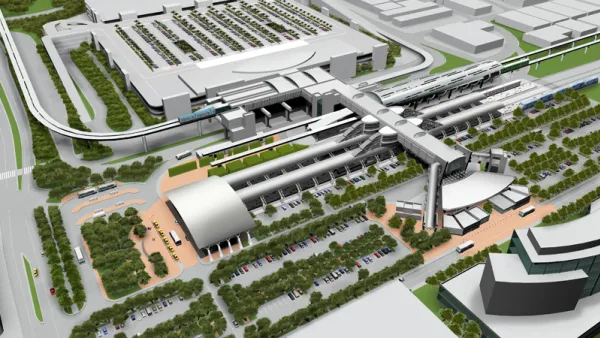
Dozens of transit expansion projects will start, continue, or complete construction this year across America. Yonah Freemark delivers a thorough rundown of the exciting year ahead in transit construction and makes note of a dark cloud on the horizon.

The state-sanctioned urbicide of Austin
People don’t kill cities. Freeways do.

US to reduce Colorado River water deliveries to Mexico
A new Colorado Treaty amendment reduces Mexico’s Colorado River water allocation by 250,000 acre feet.

New Jersey’s second-largest city bans standalone data centers
Jersey City will continue to allow co-location facilities, such as those meant for research institutions that store their own data.

Amtrak not solely to blame for New Jersey commuter rail's unreliability, report finds
A new study from the Garden State Initiative found that NJ Transit’s budget grew 20% across a 4 year period, but reliability declined significantly over the same period.

EPA erases limits on planet-warming pollution from power plants
Under Monday’s plan, power plants would still have some limits on how much mercury, arsenic and other contaminants they can emit.

Phoenix announces new on-demand transit service, more frequent RAPID buses
Both new services will launch in October, and are part of Phoenix's Project Effective Access Solutions for Easing Congestion.

FREE Course: Walkable City 1: Why Walkability?
After describing his path towards focusing on walkability as the essence of good planning, Jeff Speck marches through his five principal reasons for making more walkable places.
Reinventing Malls: Planning Alchemy—Turning Gray Fields Into Gold
The course focuses on the opportunities and imperatives that shape reinvention of mall sites.

Eagle County Government
Harvard University Graduate School of Design
Nashville Planning Department
The Architects Foundation
University of Cincinnati Online
The Pocatello Development Authority
The Urban Renewal Agency of the City of Pocatello
Journal of the American Planning Association