Declining rents won't be a silver lining in the post-pandemic housing crisis.


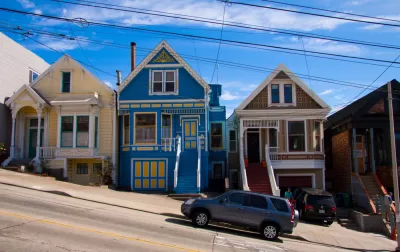
Before the pandemic, millions of Americans were struggling to pay rent and home ownership was a distant dream for more and more young Americans, and nothing about the economic outcomes of the pandemic have improved the prospects of the housing market. According to an article by Jake Blumgart, the coronavirus pandemic is worsening the pre-existing housing crisis for Americans living in expensive cities.
Building could slow down in the medium term, as construction loans (risky bets in the best of times) become harder to come by. Unsubsidised affordable housing is often owned by small landlords, who are more likely to struggle during recessions, prompting flips to home ownership or sales to rental empires.
For more insight into the pandemic's effect on the pre-existing housing affordability crisis, Blumgart interviews New York Times reporter Conor Dougherty, who released a book, Golden Gates, on the causes of the housing crisis just prior to the outbreak.
One particularly insightful section of the interview discusses the different kinds of housing crisis facing different cities. According to Dougherty, "There are the really out of control, fast-growing, rich cities: the Bay Area, Seattle, New York. There are declining Detroits and Clevelands, usually manufacturing-centric cities. Then there are sprawling Sun Belt cities."
Much of the interview, like Doughery's book, focuses on cities in that first group. As for Dougherty's opinion about what some of these prosperous cities will look like after the pandemic, and whether the predictions of an urban exodus will come to fruition, Dougherty stops short of making a prediction, and instead raises several salient questions.
If unemployment remains over 12% in San Francisco, yes, rent is going to be a lot cheaper. But is that really the reality we're all looking for? If restaurants and bars that were key to the city's cultural life remain shut, but rent is cheaper, is that what everyone wants? I bet you when this is all over, we're going to find out the tech people left at a much lower rate than others. Yes, they can all work from home, but what do you think has a bigger impact on a city: a couple of companies telling people they can work from home or the total immolation of entire industries basically overnight?
FULL STORY: How the pandemic is magnifying structural problems in America's housing market

The 'Eviction Tsunami' and Other Pandemic Projections
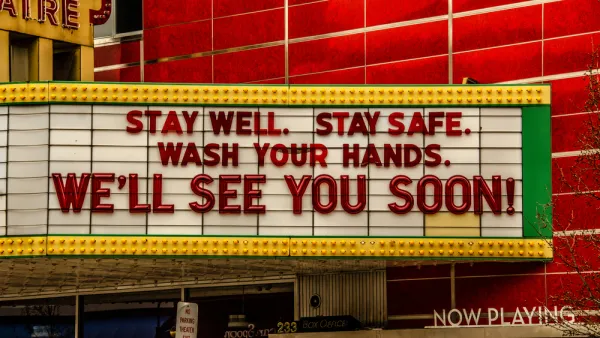
The ups and downs of the pandemic have been extremely hard to predict, so the consequences of the pandemic have been just as unforeseeable—despite the efforts of a nation of armchair prognosticators.
Emergency Rental Relief Gaining Momentum in Some States
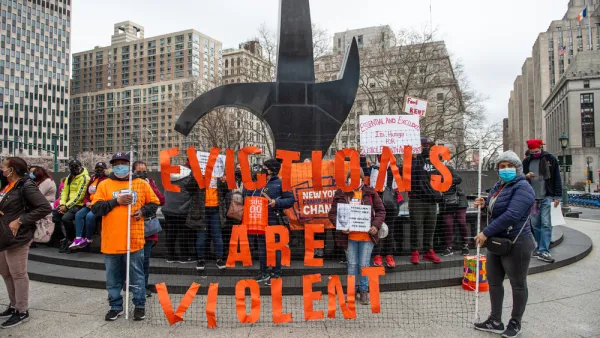
Rental assistance spending in June surpassed the entire year's total so far, but there's still a long way to go.
Survey Measures Consequences of the Pandemic for Small Landlords
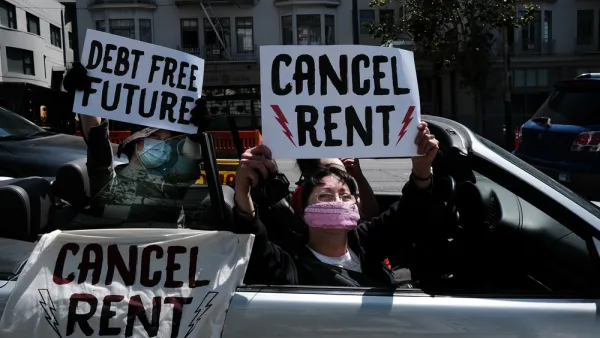
A new survey reveals details about the financial crunch facing owners of small rental properties as tenants struggle to pay rent during the pandemic and emergency aid is slow to reach those in need.

Planetizen Federal Action Tracker
A weekly monitor of how Trump’s orders and actions are impacting planners and planning in America.

The state-sanctioned urbicide of Austin
People don’t kill cities. Freeways do.

US to reduce Colorado River water deliveries to Mexico
A new Colorado Treaty amendment reduces Mexico’s Colorado River water allocation by 250,000 acre feet.

5 New England states march closer to 800 megawatt wind energy project
Securing federal approval for the project may be complicated under the Trump administration, which has historically been hostile towards domestic wind power.

Baltimore to break ground on $50 million Transit Priority Project
The project will bring faster bus trips, safer streets and better bike connections to Baltimore.

Airbnb launches $250 million 'last-dollar financing' housing accelerator, makes first investment in Austin
The company will put $6.4 million towards affordable housing development in Texas’ capital.

FREE Course: Walkable City 1: Why Walkability?
After describing his path towards focusing on walkability as the essence of good planning, Jeff Speck marches through his five principal reasons for making more walkable places.
Reinventing Malls: Planning Alchemy—Turning Gray Fields Into Gold
The course focuses on the opportunities and imperatives that shape reinvention of mall sites.

Eagle County Government
Harvard University Graduate School of Design
Nashville Planning Department
The Architects Foundation
University of Cincinnati Online
The Pocatello Development Authority
The Urban Renewal Agency of the City of Pocatello
Journal of the American Planning Association