Tenant organizers and legal services groups are working vigorously to get ahead of eviction cases as housing court processes restart.


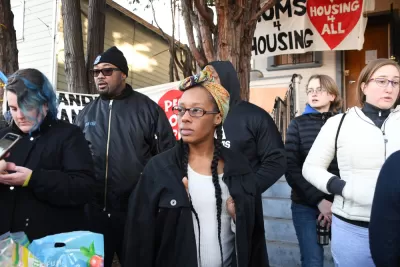
Though many advocates are working on extensions, eviction moratoriums across the country are drawing closer to an end, though extreme levels of unemployment continue. While the Federal Housing Finance Agency’s moratorium on single-family home foreclosures and evictions from properties it owns has been extended to at least Aug. 31, the broader CARES Act moratorium on eviction filings for subsidized properties and those with federally backed mortgages still expires on July 25, and the patchwork of state and local moratoriums varies widely in length and coverage.
It is difficult to keep track of moratorium expirations around the country, especially because moratoriums are often extended very shortly before they are scheduled to expire. According to Eviction Lab’s scorecard as of mid-June, there are 17 states that, at one point during the pandemic, had a statewide moratorium but now do not, including Louisiana, Tennessee, Colorado, and Texas. An additional six states never had a statewide moratorium, including Georgia, Ohio, and Missouri. Many cities also had local versions that differ from their states, if their state has one, in length or strength.
Advocates have been fearing the wave of eviction proceedings that would overtake housing courts once moratoriums were lifted. A May 28 report from the UCLA Luskin Institute on Inequality and Democracy estimates that without a substantial infusion of resources or new legislation, 120,000 families, including 184,000 children, are likely to become homeless in Los Angeles County alone in the next few months.
In fact, eviction proceedings were already rising prior to states’ moratoriums being lifted. Few moratoriums cover all the phases of eviction, from notice to filing to removal. In places where the earlier steps are not covered and housing courts have reopened, eviction cases filed since March are proceeding. That means many may have reached the stage of actually removing tenants by the time that is legally allowed again.
While they are still hoping that large-scale rent relief or forgiveness will come through to make it less necessary, housing advocates and tenant organizing groups are working tirelessly to brace for the evictions surge, preparing a range of responses.
....
Read the full story: As Moratoriums Start to Lift, Preparing for an Eviction Wave
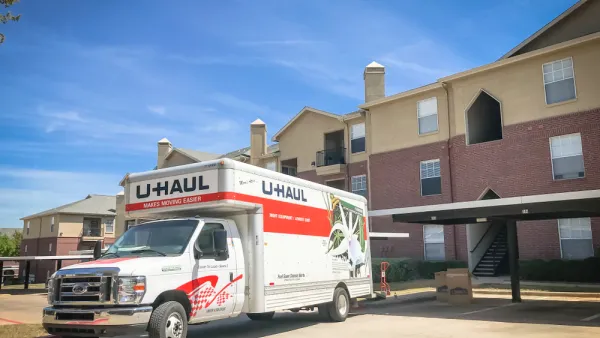
Phoenix Eviction and Foreclosure Rates Doubled the National Average—Then the Pandemic Hit
A new report looks at pre-existing foreclosure and eviction rates to predict where the worst outcomes of the pandemic's economic downturn for homeowners and renters are likely to happen.
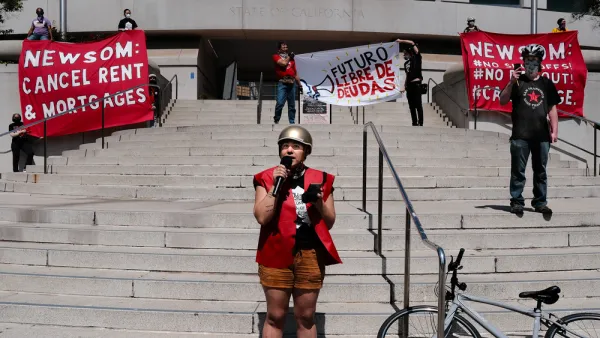
What Happens if 23 Million Renters Are Evicted?
Shelterforce spoke with researchers, advocates, lawyers, housing economists, and rental housing industry representatives to understand what that crisis would do to evicted families, public health, and the housing market.
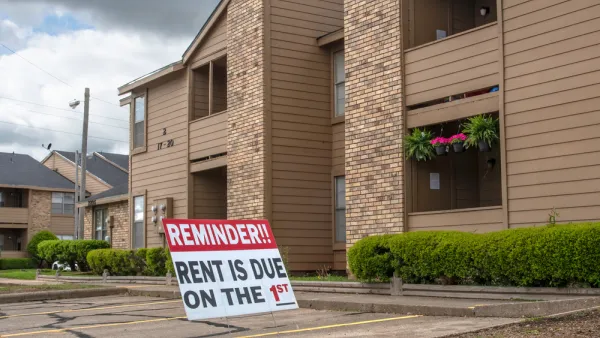
CDC's Eviction Moratorium Extended
The CDC's eviction moratorium will stay in place until at least June 30, 2021.

Planetizen Federal Action Tracker
A weekly monitor of how Trump’s orders and actions are impacting planners and planning in America.

Washington state to charge fee to drivers with fuel-efficient cars
Revenue from the fee will go towards supporting the state’s highways.

Illinois considers spending $1 billion in taxpayer money on data center
A quantum computing campus and data center are currently under construction in Chicago.

Senate passes bill overhauling permitting
The bill still needs to pass the House.

Did data centers change how voters cast their ballots?
Texas, Ohio, and Georgia all flipped party control. But in rural counties, the effect of local data centers was mixed.

Amtrak invests in eight new Airo trainsets
The new trainsets will begin serving passengers in 2031.

FREE Course: Walkable City 1: Why Walkability?
After describing his path towards focusing on walkability as the essence of good planning, Jeff Speck marches through his five principal reasons for making more walkable places.
Reinventing Malls: Planning Alchemy—Turning Gray Fields Into Gold
The course focuses on the opportunities and imperatives that shape reinvention of mall sites.

City of Charlotte
City of Rosemead
Rutgers University, Edward J. Bloustein School of Planning and Public Policy
University of Michigan School for Environment and Sustainability (SEAS)
Hunter College, City University of New York (CUNY)
The Architects Foundation
University District Partnership