The Houston story gets a new telling in a recently published book by Stephen Klineberg.



Evan Mintz reviews a new book called Prophetic City: Houston on the Cusp of a Changing America, written by Stephen Klineberg, founding director of the Kinder Institute for Urban Research at Rice University.
Throughout the review, Mintz makes it clear that this is a new kind of book about Houston. In most famous books about the city, "Houston is the place where outlandish stories just happen to take place," writes Mintz. "Portrayed as having little character of its own, it’s an exotic-enough setting for non-Texas readers, but it might as well be San Diego or Atlanta. So it’s a relief to read a book where Houston isn’t just the backdrop—it’s the story."
A key point from the book examined here by Mintz is Klineberg's discussion of how Houston has been spared the decline of Rust Belt cities, despite the working class lineage they share in common. The city owes its growth and continued success not to its Anglo population, but to continued waves of non-white immigrants, according to the book.
Read the full story: Is Houston a Prophetic City? Or a Pathetic City?

The New Milwaukeeans: Making Sense of Population Growth In The Cream City
After forty years in the statistical doldrums, what does Milwaukee make of a sudden, slight increase in population? Local expert and urban enthusiast Dave Steele reports.
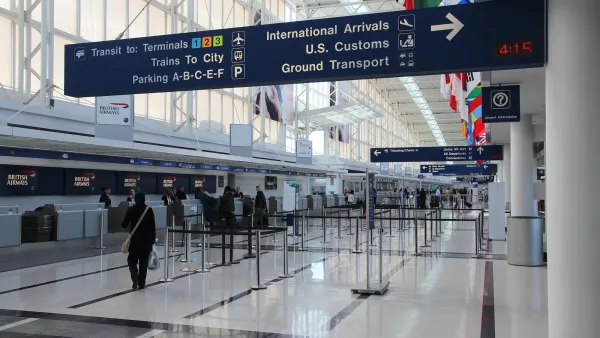
US Population Growth Slowest Since 2020 Due to Declining Immigration
Net international migration dropped from 2.7 million to 1.3 million in the year spanning July 2024 to July 2025.
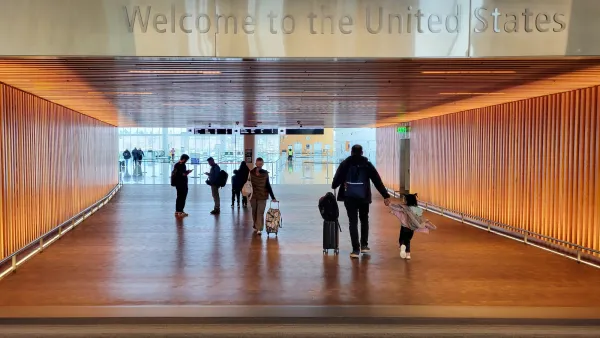
Adult Immigration to the US Dropped by Over 1.4M in 2025
Mass deportations and stricter immigration restrictions are causing a drop in new immigrants.

Planetizen Federal Action Tracker
A weekly monitor of how Trump’s orders and actions are impacting planners and planning in America.

California plans to bury El Niño’s downpour
If the state plays its cards right, it may be able to store a billion acre-feet of El Niño’s water in aquifers.

Desperate measures: Advocates weigh draining Lake Powell to fill Colorado River
Draining the reservoir could reduce evaporation losses by a couple hundred thousand acre-feet.

California city breaks ground on transit connector
The project includes three mobility hubs and a pedestrian bridge.

After public outcry, Massachusetts city releases housing development tracker
Cambridge’s tracker currently shows 250 housing projects in various stages of development.

40 years after approval, Chicago breaks ground on new park
The park honors Jean Baptiste Point du Sable, the city’s first permanent non-native settler.

FREE Course: Walkable City 1: Why Walkability?
After describing his path towards focusing on walkability as the essence of good planning, Jeff Speck marches through his five principal reasons for making more walkable places.
Reinventing Malls: Planning Alchemy—Turning Gray Fields Into Gold
The course focuses on the opportunities and imperatives that shape reinvention of mall sites.

City of Rosemead
Rutgers University, Edward J. Bloustein School of Planning and Public Policy
One Hundred Miles
Hunter College, City University of New York (CUNY)
The Architects Foundation
University of Cincinnati Online
City of Cambridge
Montrose County
The Pocatello Development Authority