Baltimore is taking steps to divest from policing and makes decisions about where to invest $22 million in reallocated funds. One proposal: use the money to support public transit.


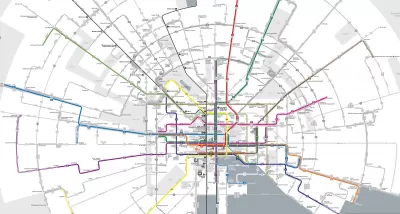
Massive ongoing protests around the country and the world call for police defunding and reallocation of public funds to under-resourced black communities and communities of color. In Baltimore, demands were heard and met when City Council voted to cut $22 million of the city's $550 million police budget.
Martin Csongradi suggests that the slashed funds could end up with transit: "One area the city could consider investing into is the city’s transit system. For decades, unequal access to affordable transit options have weighed down Baltimore’s Black community and have exacerbated racial inequality in the city. An infusion of funds may help to bridge the transit gap." Tracking the history of unequal access to transit and white flight of the 1900s, Csongradi relates the transit decision-making and policy to systemic racism. Now is the time for the City of Baltimore to divest from policing and invest in transit, and by extension, racial equity.
Read the full story: Could defunding Baltimore’s police department help transit?
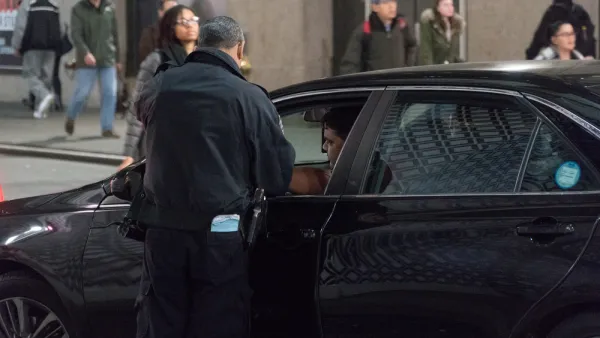
Investment in Public Transit Could Reduce the Need for Police Traffic Enforcement
In Nick Demarsh and Rick Banks' opinion, defunding the police requires cities to reconsider car culture.
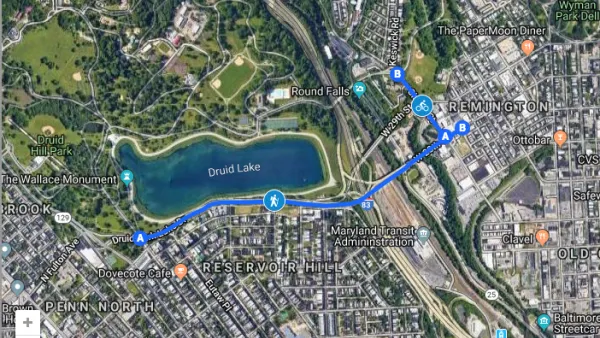
Baltimore's 'Big Jump'
A temporary bike and pedestrian path is changing the street design game in Baltimore.
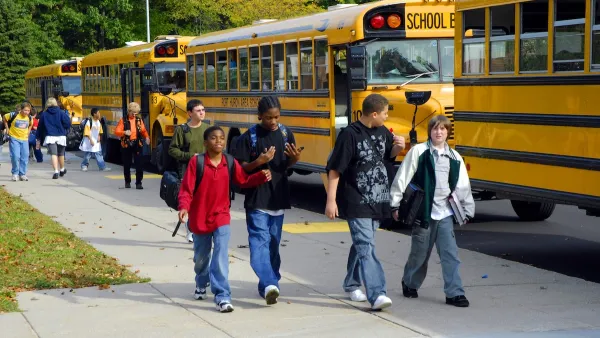
Learning loss and urban schools, part 2
Did test scores in progressive cities drop more post-COVID than test scores in moderate ones?

Planetizen Federal Action Tracker
A weekly monitor of how Trump’s orders and actions are impacting planners and planning in America.

California plans to bury El Niño’s downpour
If the state plays its cards right, it may be able to store a billion acre-feet of El Niño’s water in aquifers.

Desperate measures: Advocates weigh draining Lake Powell to fill Colorado River
Draining the reservoir could reduce evaporation losses by a couple hundred thousand acre-feet.

US buildings threatened, destroyed by fires set to triple by 2060
Researchers found a high fire risk for socioeconomically vulnerable neighborhoods in the American West.

LA residents may be allowed to paint their own crosswalks
Councilwoman Katy Yaroslavsky put out a motion instructing the Los Angeles Department of Public Transportation to study the feasibility of allowing volunteers to paint crosswalks.

Dallas moves to overhaul its zoning code
The city's zoning reform will allow more multi-family and mixed-use developments.

FREE Course: Walkable City 1: Why Walkability?
After describing his path towards focusing on walkability as the essence of good planning, Jeff Speck marches through his five principal reasons for making more walkable places.
Reinventing Malls: Planning Alchemy—Turning Gray Fields Into Gold
The course focuses on the opportunities and imperatives that shape reinvention of mall sites.

City of Rosemead
Rutgers University, Edward J. Bloustein School of Planning and Public Policy
One Hundred Miles
Hunter College, City University of New York (CUNY)
The Architects Foundation
University of Cincinnati Online
City of Cambridge
Montrose County
The Pocatello Development Authority