The pandemic has raised alarms about density. Post-pandemic, urban planners should fight more passionately than ever for progressive principles that make cities more equitable, pleasant, and, yes, healthy.


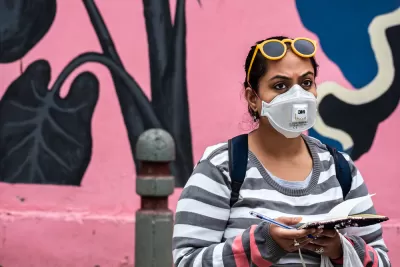
"This crisis is a failure of many things. It is a failure of public health policy. It is a failure of information dissemination. It's arguably a failure of foreign policy. It’s definitely a failure of procurement. It is a failure of leadership at the highest levels. But it is not a failure of urban planning. And don’t let anyone tell you differently."
"To prepare for the next pandemic we can stock up on ventilators and masks. We can invest in virology research. We can draft pandemic action plans and quarantine guidelines. We can shelter at home sooner. We can choose not disband the federal Pandemic Response Team."
"Many planners are low-key sorts, happy to focus on details and the often-quiet work of policymaking. In the post-covid19 world, low-key isn’t going to cut it. COVID is a crisis, but it’s also a call to arms. Planners will have to explain, more forcefully and proactively than ever, why density is good."
Read the full story: Planners Should Not Let Density Debate Infect Their Work
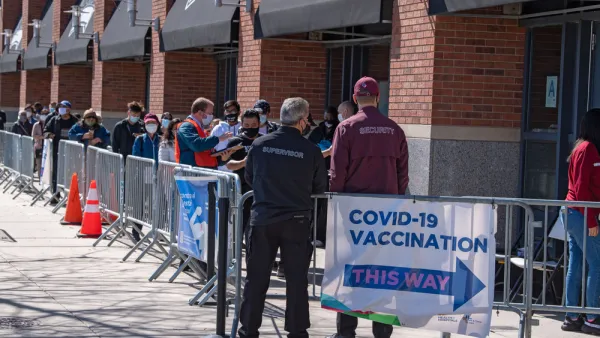
Light at the End of the Tunnel Reveals the Work to Come
The latest edition of an ongoing compendia of articles trying to make sense of the deep uncertainties of the pandemic—and what it all means for the future of cities.
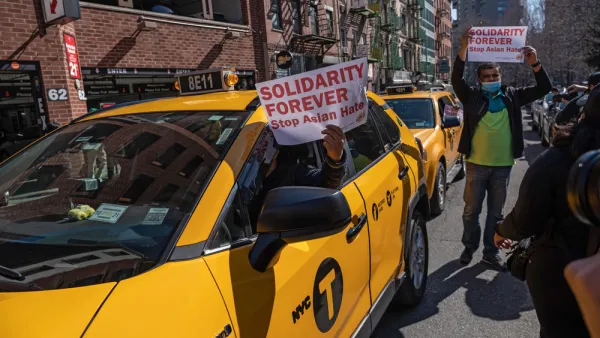
'Never Let a Good Crisis Go to Waste' and Planning in the Pandemic
The latest in a series of compendia collecting news and commentary focusing on the complexities of the COVID-19 pandemic's effect on communities.
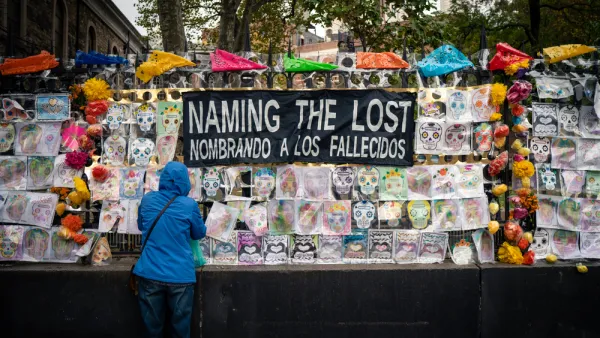
Haves and Have Nots: Planning and the Deep Divides of the Pandemic
The latest in a series of compendia gathering news and analysis about the effects of the COVID-19 on the built and natural environments—now and long into the future.

Planetizen Federal Action Tracker
A weekly monitor of how Trump’s orders and actions are impacting planners and planning in America.

California plans to bury El Niño’s downpour
If the state plays its cards right, it may be able to store a billion acre-feet of El Niño’s water in aquifers.

Desperate measures: Advocates weigh draining Lake Powell to fill Colorado River
Draining the reservoir could reduce evaporation losses by a couple hundred thousand acre-feet.

In Texas, data centers are swallowing promised parkland
Residents who moved to Taylor, Texas for a rural community now have to contend with three data centers in their backyard.

How a Chicago-sized wind farm beat the odds and powered on
The project spanned five presidential administrations and a standoff with a U.S. military base.

MTA gives itself 30 days to transform pit into basketball court
The site has been under construction since 2022; the city originally estimated it would finish the court in 2024.

FREE Course: Walkable City 1: Why Walkability?
After describing his path towards focusing on walkability as the essence of good planning, Jeff Speck marches through his five principal reasons for making more walkable places.
Reinventing Malls: Planning Alchemy—Turning Gray Fields Into Gold
The course focuses on the opportunities and imperatives that shape reinvention of mall sites.

City of Rosemead
Rutgers University, Edward J. Bloustein School of Planning and Public Policy
One Hundred Miles
Hunter College, City University of New York (CUNY)
The Architects Foundation
University of Cincinnati Online
City of Cambridge
Montrose County
The Pocatello Development Authority