The Architecture Billings Index for March 2020 set new standards of collapse.


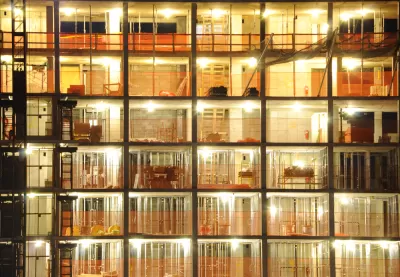
The Architecture Billings Index (ABI) for March 2020 paints a "dire portrait of the state of architectural services demand," reports Jonathan Hilburg. In more detail:
Whereas the ABI in February 2020 painted a rosy picture of demand at 53.4 (50 is the baseline and represents no change, higher numbers represent an increase and lower numbers a decrease), March billings came in 33.3. This 20.1 swing is, according to the AIA, the largest downturn ever recorded in the ABI’s 25-year history. Even the 2001 recession only pushed demand down by 9.4 points, while the housing crash in 2008 decreased billings by 8.3 points.
According to Hilburg, the March report shouldn't come as a surprise after the special report the AIA released on April 10, but the April report should provide more insight about the depths of the economic downturn expected for the built environment fields.
The construction industry is already reporting large numbers of layoffs, as states like New York and Pennsylvania have halted construction projects. New York City recently ordered a halt to all public design work, and major architecture firms are furloughing employees.
Read the full story: Architecture Billings Index bottoms out to historic lows


More Support Needed for Organizations Serving the Underserved
A new report details how policymakers and community leaders can improve California's efforts to advance an equitable recovery from COVID by supporting and empowering community-based organizations in underserved communities.
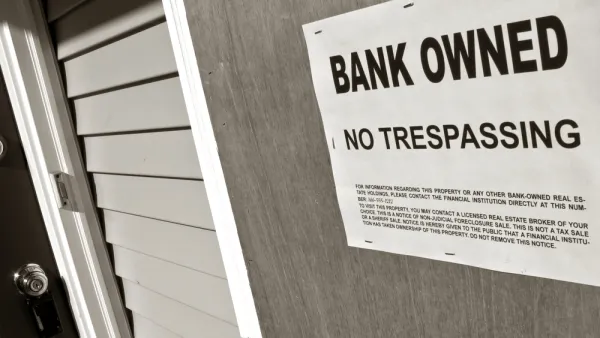
Federal Government Developing More Foreclosure Protections
Millions of American property owners are behind on mortgage payments and facing the prospect of foreclosure and eviction later this year.
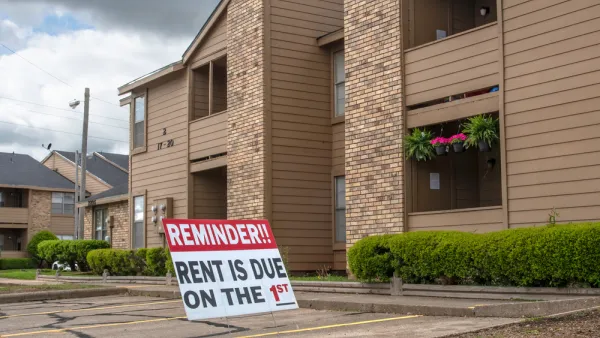
CDC's Eviction Moratorium Extended
The CDC's eviction moratorium will stay in place until at least June 30, 2021.

Planetizen Federal Action Tracker
A weekly monitor of how Trump’s orders and actions are impacting planners and planning in America.

The state-sanctioned urbicide of Austin
People don’t kill cities. Freeways do.

US to reduce Colorado River water deliveries to Mexico
A new Colorado Treaty amendment reduces Mexico’s Colorado River water allocation by 250,000 acre feet.

Nation's most wind-powered state turns to coal as data centers increase energy demand
For the first time in decades, Iowa has increased its generation of coal power.

NYC cools commuters with city's first rain garden above a bus stop
New York City officials say the plants in the rain garden can absorb 16 gallons of rainwater during heavy storms.

Brightline West’s future may rely on $6 billion federal loan
The company has until Nov. 2 to make a $400 million equity investment into its proposed high-speed rail line.

FREE Course: Walkable City 1: Why Walkability?
After describing his path towards focusing on walkability as the essence of good planning, Jeff Speck marches through his five principal reasons for making more walkable places.
Reinventing Malls: Planning Alchemy—Turning Gray Fields Into Gold
The course focuses on the opportunities and imperatives that shape reinvention of mall sites.

Eagle County Government
Harvard University Graduate School of Design
Nashville Planning Department
The Architects Foundation
University of Cincinnati Online
The Pocatello Development Authority
The Urban Renewal Agency of the City of Pocatello
Journal of the American Planning Association