Donovan Rypkema and Adrian Scott Fine highlight myth-busting findings on the impacts of historic preservation overlay zones (HPOZs) on affordability, density, diversity, and economic resilience of neighborhoods across Los Angeles.


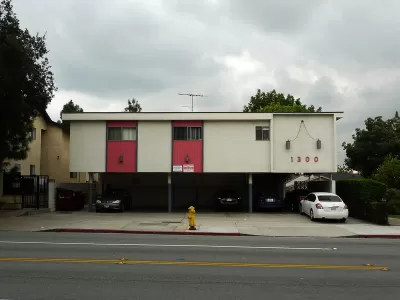
With state efforts to increase new housing production threatening local processes for identifying and preserving historic sites, buildings, and neighborhoods, the LA Conservancy, as part of its 40th anniversary celebration, recently published Preservation Positive Los Angeles. The study’s goal: to unpack the economic impacts of historic preservation in Los Angeles.
TPR interviewed the report’s author, Donovan Rypkema, principal of PlaceEconomics, and LA Conservancy’s Adrian Scott Fine, to highlight the report’s myth-busting findings on the impacts of HPOZs on affordability, density, diversity, and economic resilience of neighborhoods across Los Angeles. Rypkema reminds state policymakers that preserving old, dense housing inherently preserves what the state asserts it most needs: affordable housing. Rypkema points out:
"In LA, you have to build more housing, but step one is to—designation or not—quit tearing down stuff that provides affordable housing." —Donovan Rypkema
To read the full article or subscribe, visit The Planning Report.
FULL STORY: Economic Argument for Historic Preservation: Older Housing is Affordable Housing

LA delays state housing mandate with 'low-rise ordinance'
The new ordinance allows the city to delay implementing SB 79, a state law requiring more density near transit.

LA Metro Opposes TOD Law, Fearing Backlash to Transit Expansion
Metro wants an exemption from California’s new housing law, despite the law’s potential to increase ridership by putting more housing near transit stations.
Survey: 59% of LA Residents Want Dense Housing in Their own Neighborhoods
A UCLA survey reveals strong support for new apartments across the city, bucking the notion that Angelenos are NIMBYs.

Planetizen Federal Action Tracker
A weekly monitor of how Trump’s orders and actions are impacting planners and planning in America.

The state-sanctioned urbicide of Austin
People don’t kill cities. Freeways do.

US to reduce Colorado River water deliveries to Mexico
A new Colorado Treaty amendment reduces Mexico’s Colorado River water allocation by 250,000 acre feet.

5 New England states march closer to 800 megawatt wind energy project
Securing federal approval for the project may be complicated under the Trump administration, which has historically been hostile towards domestic wind power.

Baltimore to break ground on $50 million Transit Priority Project
The project will bring faster bus trips, safer streets and better bike connections to Baltimore.

Airbnb launches $250 million 'last-dollar financing' housing accelerator, makes first investment in Austin
The company will put $6.4 million towards affordable housing development in Texas’ capital.

FREE Course: Walkable City 1: Why Walkability?
After describing his path towards focusing on walkability as the essence of good planning, Jeff Speck marches through his five principal reasons for making more walkable places.
Reinventing Malls: Planning Alchemy—Turning Gray Fields Into Gold
The course focuses on the opportunities and imperatives that shape reinvention of mall sites.

Eagle County Government
Harvard University Graduate School of Design
Nashville Planning Department
The Architects Foundation
University of Cincinnati Online
The Pocatello Development Authority
The Urban Renewal Agency of the City of Pocatello
Journal of the American Planning Association