The idea of filtering is key to pro-housing-development arguments of the benefits of market-rate housing to the affordability of housing. New research finds that filtering is highly variable depending on location.



Filtering is described in a new paper by researchers at the Federal Home Loan Mortgage Corporation (Freddie Mac)) as "the process by which properties, as they age, depreciate in quality and hence price and thus tend to be purchased by lower-income households."
"This is the primary mechanism by which competitive markets supply low-income housing," adds the abstract of the paper before revealing findings that reveal new insight into how, where, and when housing filters in the market. The report's main takeaway: that there's a great deal of variety in filtering rates both across and within metropolitan statistical areas. "Notably, in some markets, properties “filter up” to higher-income households," adds the abstract.
Len Keifer, deputy chief economist at Freddie Mac and a colleague of the study's authors, took to Twitter to provide more insight into the study's findings.
FULL STORY: Geographic and Temporal Variation in Housing Filtering Rates

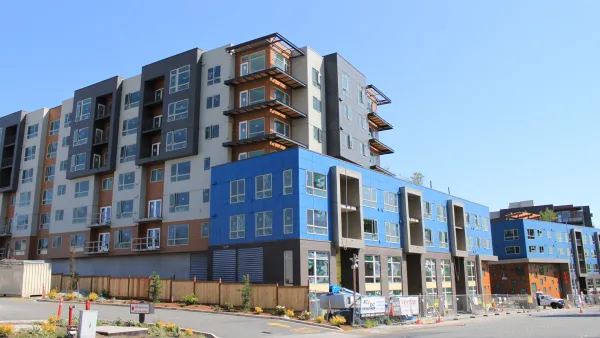
How Filtering Increases Housing Affordability
Good research indicates that building middle-priced housing increases affordability through "filtering," as some lower-priced housing occupants move into more expensive units, and over time as the new houses depreciate and become cheaper.
Upzoning Modestly Increases Housing Supply and Affordability, Study Says
A new study by researchers at the Urban Institute finds new evidence that upzoning produces housing supply and reduces costs, while downzoning does the opposite.
Study: Market-Rate Development Filters Into Naturally Occurring Affordable Housing
New research sheds new light on one of the most hotly debated questions in planning and development.

Planetizen Federal Action Tracker
A weekly monitor of how Trump’s orders and actions are impacting planners and planning in America.

The state-sanctioned urbicide of Austin
People don’t kill cities. Freeways do.

US to reduce Colorado River water deliveries to Mexico
A new Colorado Treaty amendment reduces Mexico’s Colorado River water allocation by 250,000 acre feet.

5 New England states march closer to 800 megawatt wind energy project
Securing federal approval for the project may be complicated under the Trump administration, which has historically been hostile towards domestic wind power.

Baltimore to break ground on $50 million Transit Priority Project
The project will bring faster bus trips, safer streets and better bike connections to Baltimore.

Airbnb launches $250 million 'last-dollar financing' housing accelerator, makes first investment in Austin
The company will put $6.4 million towards affordable housing development in Texas’ capital.

FREE Course: Walkable City 1: Why Walkability?
After describing his path towards focusing on walkability as the essence of good planning, Jeff Speck marches through his five principal reasons for making more walkable places.
Reinventing Malls: Planning Alchemy—Turning Gray Fields Into Gold
The course focuses on the opportunities and imperatives that shape reinvention of mall sites.

Eagle County Government
Harvard University Graduate School of Design
Nashville Planning Department
The Architects Foundation
University of Cincinnati Online
The Pocatello Development Authority
The Urban Renewal Agency of the City of Pocatello
Journal of the American Planning Association