Areas like St-Denis Street used to be bustling shopping destinations, but a shift in recent years has resulted in many empty storefronts.


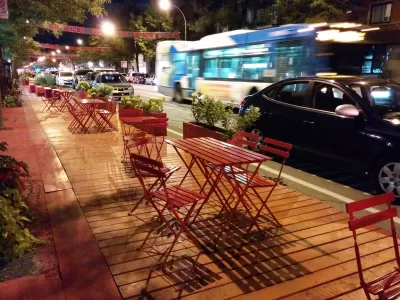
René Bruemmer explores the issue of commercial vacancies in Montreal, where 15 percent of street-level retail spaces are empty. "Among the causes cited are some of the highest commercial property taxes in Canada, avaricious landlords demanding high rents, online shopping, restrictive zoning policies and debilitating road construction."
St-Denis Street is one commercial area that has been hit especially hard. Once a premiere shopping area, the corridor is now struggling with vacancies and decreases in foot traffic. "Experts say the vacancies are also a symptom of stores failing to adapt as consumers shift to buying local instead of driving to destination streets, seeking neighbourhood shops for vegetables or manicures or shoe repair. St-Denis has relatively few stores and shops catering to local needs, and merchants say that’s killing their businesses," says Bruemmer.
Solutions for revitalizing areas like St-Denis are not always clear. The causes of decline vary from street to street and are dependent on local policies and regulations as well as external factors, such as online shopping. "Arteries that are flourishing, like Fleury St. in Ahuntsic or Wellington St. in Verdun, have strong business associations that have reconsidered their needs," notes Bruemmer.
FULL STORY: Montreal's vacant storefronts: 'I think this street is dead'

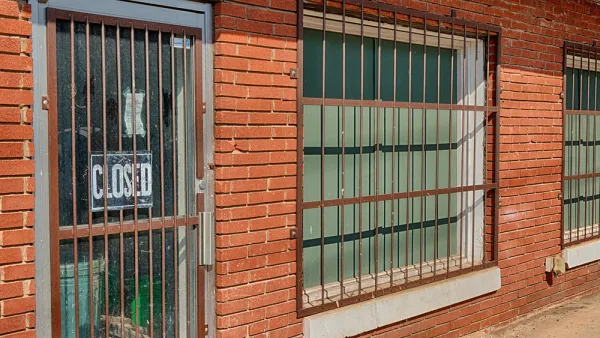
Analysis: Parking Won't Save Struggling Commercial Corridors
Research suggests that more and more parking won't solve the woes of struggling commercial corridors, even if it's difficult for business owners located on those corridors to believe.
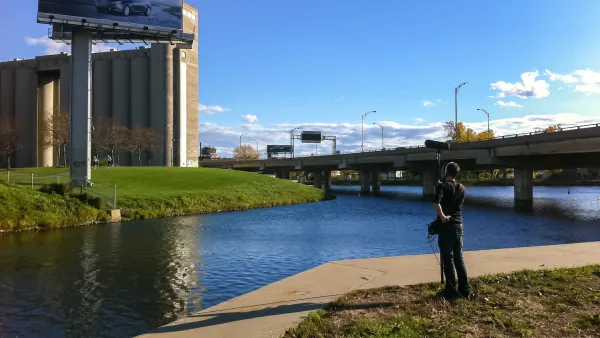
Montreal Artist Envisions What Cities Would Sound Like if we Deprioritized Cars
What would a city sound like without the noise of vehicles?
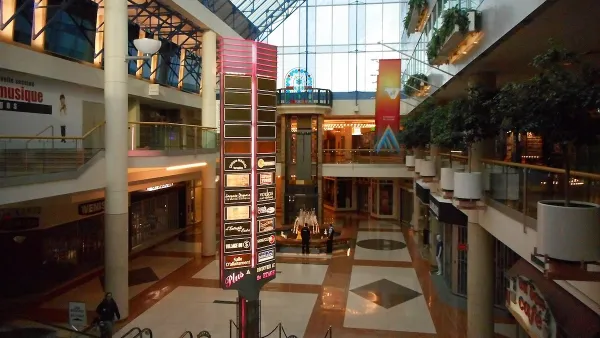
Montreal Mall to Become 6,000 Housing Units
Place Versailles will be transformed into a mixed-use complex over the next 25 years.

Planetizen Federal Action Tracker
A weekly monitor of how Trump’s orders and actions are impacting planners and planning in America.

The state-sanctioned urbicide of Austin
People don’t kill cities. Freeways do.

US to reduce Colorado River water deliveries to Mexico
A new Colorado Treaty amendment reduces Mexico’s Colorado River water allocation by 250,000 acre feet.

5 New England states march closer to 800 megawatt wind energy project
Securing federal approval for the project may be complicated under the Trump administration, which has historically been hostile towards domestic wind power.

Baltimore to break ground on $50 million Transit Priority Project
The project will bring faster bus trips, safer streets and better bike connections to Baltimore.

Airbnb launches $250 million 'last-dollar financing' housing accelerator, makes first investment in Austin
The company will put $6.4 million towards affordable housing development in Texas’ capital.

FREE Course: Walkable City 1: Why Walkability?
After describing his path towards focusing on walkability as the essence of good planning, Jeff Speck marches through his five principal reasons for making more walkable places.
Reinventing Malls: Planning Alchemy—Turning Gray Fields Into Gold
The course focuses on the opportunities and imperatives that shape reinvention of mall sites.

Eagle County Government
Harvard University Graduate School of Design
Nashville Planning Department
The Architects Foundation
University of Cincinnati Online
The Pocatello Development Authority
The Urban Renewal Agency of the City of Pocatello
Journal of the American Planning Association