Neighborhoods in Nebraska, located in areas already deemed blighted, will receive priority funding and homebuyer tax credits from the state.


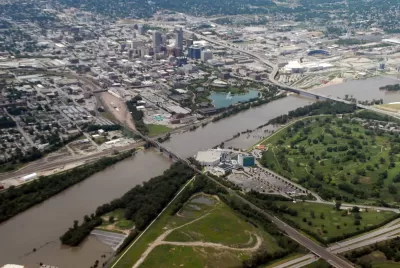
The term "blight" and the designation of blighted areas are part of a long history rooted in racist urban policies, writes Jared Brey. "But in Nebraska, some cities are taking advantage of a change in state law that doubles down on the term, hoping it will help generate economic development and new affordable housing in areas that need it the most."
Last year the state started recognizing "extremely blighted" areas in neighborhoods already deemed blighted, with very high poverty and unemployment levels. "A bill approved by the legislature this spring gives priority to extremely blighted areas in applications for funding from the Nebraska Affordable Housing Trust Fund," says Brey.
Brey considers in more depth the implications of equating blight with disinvestment and urban renewal policies that decimated neighborhoods, many of which were communities of color. But advocates of the state legislation in Nebraska say it is a way to draw investment back into those communities and help residents build wealth through homeownership.
FULL STORY: Nebraska Cities Deem Areas “Extremely Blighted” in Hopes of Encouraging Investment

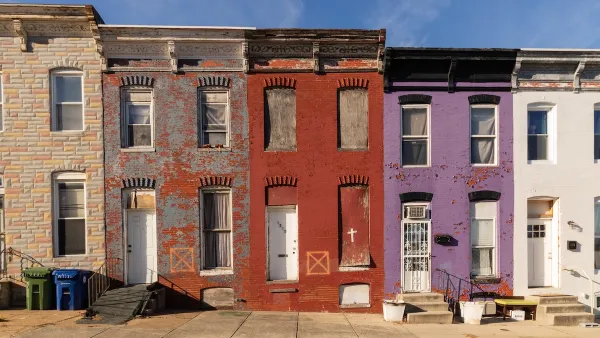
Baltimore Program Could Repurpose Thousands of Vacant Housing Units
The city and state are investing $3 billion in rescuing vacant residential properties to promote homeownership and reduce blight.
Newark Kicks Off $1 Home Sale Program
The city sold seven properties as part of an effort to revive blighted sites and encourage housing production.
The 'Crisis of Non-Replacement' Undermining Black Neighborhoods
A new study shows a troubling reversal of fortunes in many middle-class Black neighborhoods.

Planetizen Federal Action Tracker
A weekly monitor of how Trump’s orders and actions are impacting planners and planning in America.

The state-sanctioned urbicide of Austin
People don’t kill cities. Freeways do.

US to reduce Colorado River water deliveries to Mexico
A new Colorado Treaty amendment reduces Mexico’s Colorado River water allocation by 250,000 acre feet.

5 New England states march closer to 800 megawatt wind energy project
Securing federal approval for the project may be complicated under the Trump administration, which has historically been hostile towards domestic wind power.

Baltimore to break ground on $50 million Transit Priority Project
The project will bring faster bus trips, safer streets and better bike connections to Baltimore.

Airbnb launches $250 million 'last-dollar financing' housing accelerator, makes first investment in Austin
The company will put $6.4 million towards affordable housing development in Texas’ capital.

FREE Course: Walkable City 1: Why Walkability?
After describing his path towards focusing on walkability as the essence of good planning, Jeff Speck marches through his five principal reasons for making more walkable places.
Reinventing Malls: Planning Alchemy—Turning Gray Fields Into Gold
The course focuses on the opportunities and imperatives that shape reinvention of mall sites.

Eagle County Government
Harvard University Graduate School of Design
Nashville Planning Department
The Architects Foundation
University of Cincinnati Online
The Pocatello Development Authority
The Urban Renewal Agency of the City of Pocatello
Journal of the American Planning Association