As the 52nd Street corridor in West Philly attracts new development interest, community leaders are working to ensure that current residents won't get swept away with the new investment.


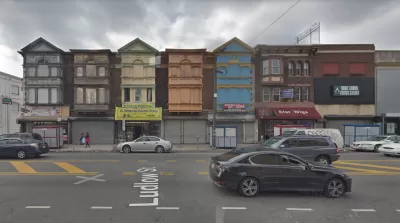
Jason Laughlin reports on the state of 52nd Street, the "corridor once called West Philly’s Main Street," and the "thriving heart for West Philadelphia’s black middle class."
But as industry evaporated and predominantly white store owners departed, 52nd Street fell into a decades-long decline. It hit its nadir in the mid-2000s, after years of disruptive construction on the El brought the collapse of area businesses, and in April 2007, the Daily News called 52nd and Market Streets the city’s most dangerous corner, with 11 shootings, including three homicides, in four months.
Since 2013, the corridor has seen improvements in safety, but the number of residents living below the poverty line in the neighborhood hasn't budged, according to Laughlin. The real estate market and development plans, however, have poised the neighborhood on the precipice of more sweeping changes. "City officials, planners, and nonprofit executives working to rejuvenate the corridor say they are seeking improvement without dislocation," according to Laughlin.
The article focuses on the specific projects that are prioritizing development that benefits the community, and how.
Read the full story: West Philly’s historic main street seeks a 21st-century identity

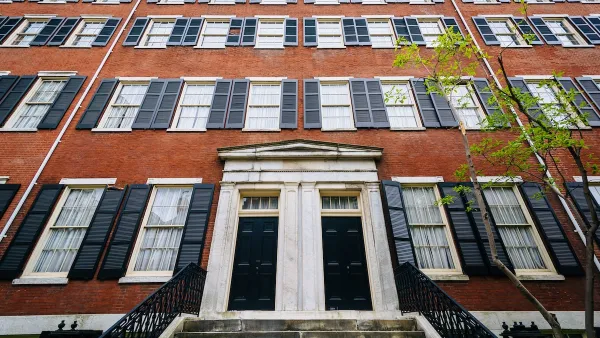
Philly Residents Push Back on New Historic Preservation District
Some residents of Philadelphia’s newly designated Washington Square West Historic District say the community was left out of the decision-making process that could impact housing costs and building requirements.
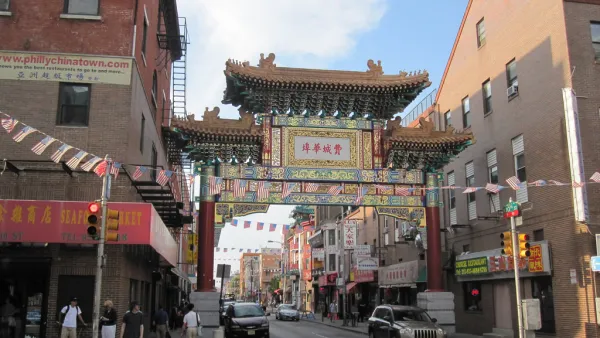
Equitable Development Plan Aims To Protect Philly's Chinatown
As the historic neighborhood experiences increased redevelopment around the new Rail Park, community activists are working to ensure older residents and businesses aren't displaced in the process.
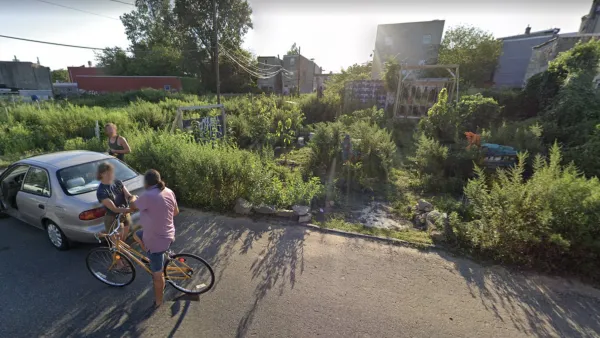
Community Opposition and a Rezoning Controversy in Philadelphia
The local councilmember is seeking a rezoning from commercial to residential in the Kensington neighborhood of Philadelphia, but local community members say the development will be priced out of their range.

Planetizen Federal Action Tracker
A weekly monitor of how Trump’s orders and actions are impacting planners and planning in America.

The state-sanctioned urbicide of Austin
People don’t kill cities. Freeways do.

US to reduce Colorado River water deliveries to Mexico
A new Colorado Treaty amendment reduces Mexico’s Colorado River water allocation by 250,000 acre feet.

Nation's most wind-powered state turns to coal as data centers increase energy demand
For the first time in decades, Iowa has increased its generation of coal power.

NYC cools commuters with city's first rain garden above a bus stop
New York City officials say the plants in the rain garden can absorb 16 gallons of rainwater during heavy storms.

Brightline West’s future may rely on $6 billion federal loan
The company has until Nov. 2 to make a $400 million equity investment into its proposed high-speed rail line.

FREE Course: Walkable City 1: Why Walkability?
After describing his path towards focusing on walkability as the essence of good planning, Jeff Speck marches through his five principal reasons for making more walkable places.
Reinventing Malls: Planning Alchemy—Turning Gray Fields Into Gold
The course focuses on the opportunities and imperatives that shape reinvention of mall sites.

Eagle County Government
Harvard University Graduate School of Design
Nashville Planning Department
The Architects Foundation
University of Cincinnati Online
The Pocatello Development Authority
The Urban Renewal Agency of the City of Pocatello
Journal of the American Planning Association